Wedding planner SEO in India: being found when the wedding is somewhere else
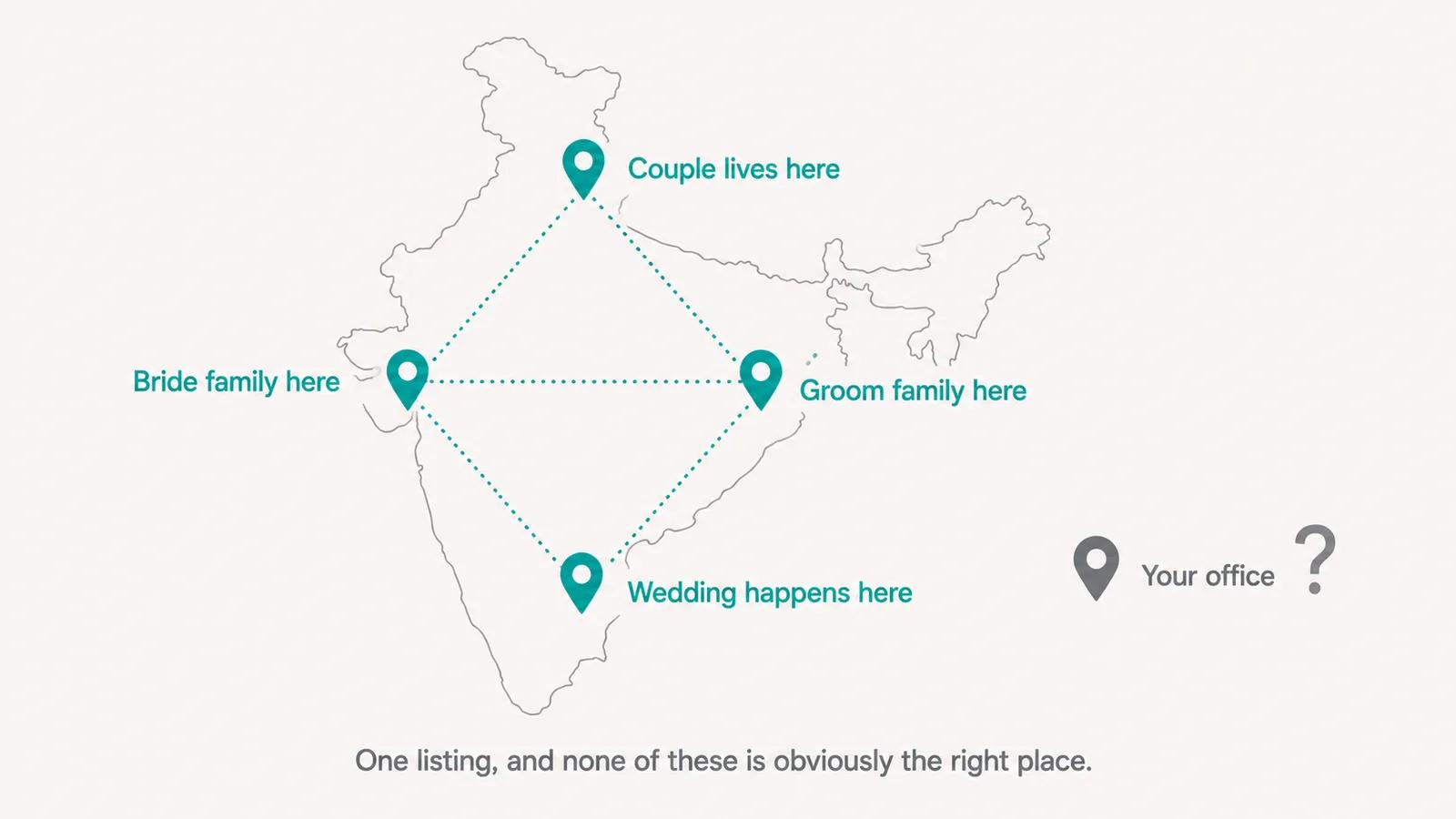
Local search assumes a customer near a business. A wedding planner has to work out which customer, and which near. The couple may live in Bangalore, both sets of parents may be in Delhi and Lucknow, the wedding may be in Udaipur, and you may be in Pune. There are four locations in play and your listing has one pin, which raises a question no other guide in this series has to answer: which city is a wedding planner actually a local business in?
The second peculiarity is the calendar. Almost every seasonal trade guesses at its peaks from last year. Yours are published. Auspicious wedding dates are set by the almanac and listed years in advance, and there are stretches of the year in which effectively no dates fall at all. You are one of very few businesses that can plan a marketing year against a schedule that is externally fixed and knowable to the day.
The third is that you are not selling to a person. You are selling to a committee — a couple, two sets of parents, and usually one relative who controls the budget — each with different priorities and different objections. This guide is about all three, plus the credit wars over wedding photographs, the vendor network that is really your product, the commission question couples have started asking, and reviews that arrive months late.
Which city is a wedding planner actually local in?
Start with the honest version of the problem. In a great many Indian weddings the people paying, the people getting married, the people attending and the place it happens are in four different cities. The couple work somewhere; their parents live where they grew up; the wedding is at a venue chosen for capacity, cost or auspiciousness; and the planner is wherever the planner is. Local search has exactly one field for all of that.
The practical answer is that you must choose, deliberately, which market you are trying to be local in, and it is usually one of two. Either you are the planner for weddings held in your city — which makes you a venue-side operator whose value is knowing the venues, the vendors, the permissions and the traffic — or you are the planner for families from your city, who will travel with you to wherever the wedding is. Those are different businesses with different keywords, different competitors and different proof.
Most planners have never made the choice explicitly and end up half-positioned for both, which reads to a visitor as vagueness at exactly the moment they are assessing competence. A planner who says plainly that they plan weddings in a named city, and know its venues, is making a claim that can be checked and believed. A planner who says they plan destination weddings across India, from a listing pinned to a residential address in one suburb, is making a claim with nothing behind it.
If you are the venue-side operator, your local search work is conventional and genuinely winnable. The searches are wedding planner in a named city, wedding planners near me, and increasingly the venue name plus a service. Your profile matters, proximity to the venue cluster helps, and the content that works is venue-specific: what a particular property allows, what it costs to decorate, how many it seats, where the baraat can enter, what the sound curfew is. That material is enormously useful, is searched by couples and their families, and no national platform will ever write it.
If you are the destination operator, the pin is close to irrelevant and you should stop expecting the listing to generate demand. Its job becomes verification rather than discovery — the place somebody checks after finding you elsewhere. The demand comes from the portfolio, from the venues that recommend you, from the photographers who work with you, and from search terms attached to destinations rather than to your own city: wedding planner for a named destination, or a named palace or resort plus planning.
Whichever you are, the listing should say so in the first sentence of the description. It is the single highest-value sentence on the profile, and it is usually spent on adjectives about making dreams come true rather than on the one fact a visitor is trying to establish.
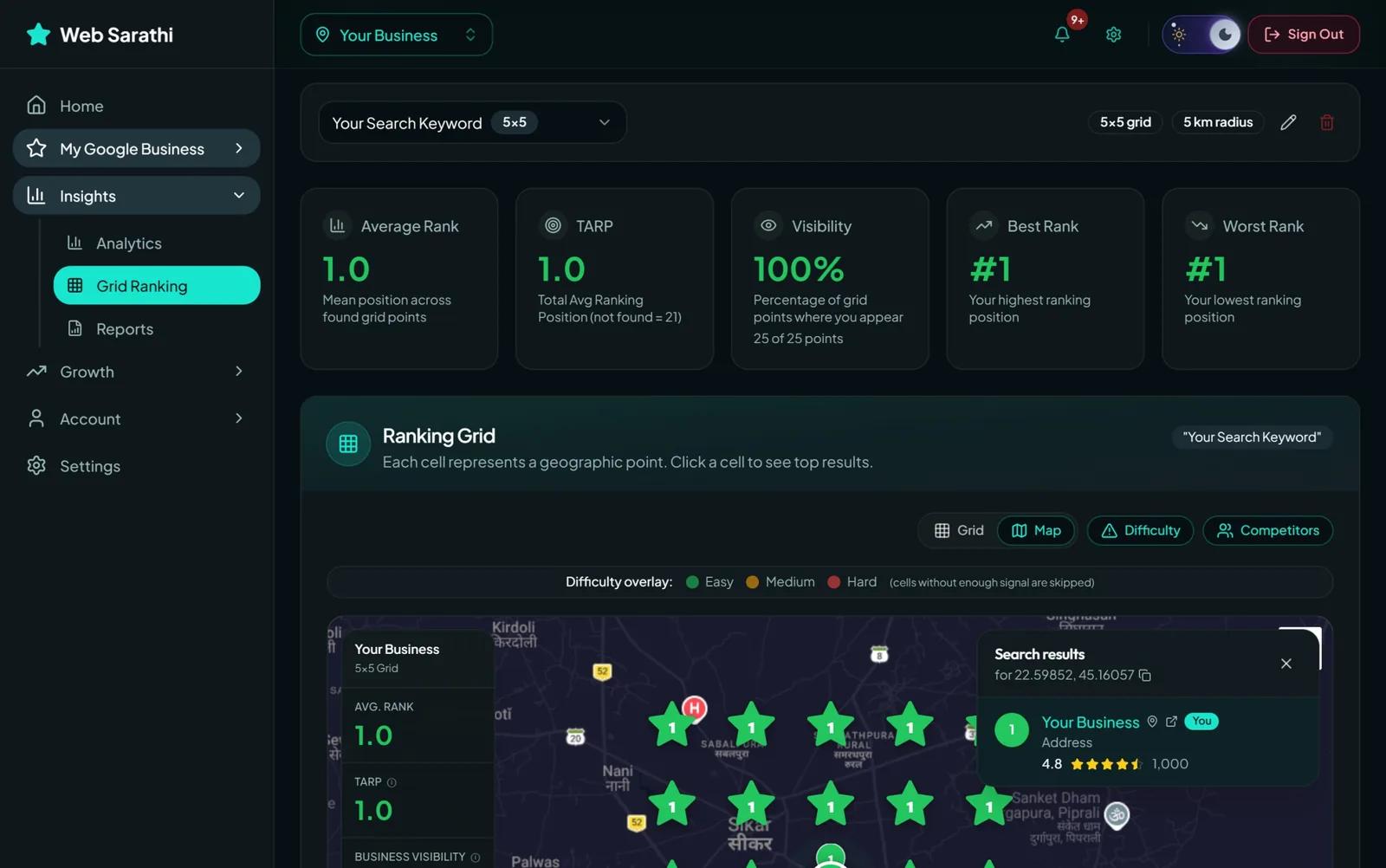
Find out whether you are visible in the city you say you serve
A planner positioned as local to a city, or to a venue cluster, is making a claim that can be measured. Grid ranking shows your position across that area instead of from your own desk.
- See whether the venue districts you work in actually return you
- Track city and venue keywords over weeks rather than guessing
- Decide which position to commit to on evidence rather than instinct
The one trade whose peak dates are published years in advance
Every seasonal business in this series has to infer its peaks from last year and hope. Yours are printed. Hindu wedding dates are set against the almanac, published well ahead, and consulted by families before anything else is decided — the date is frequently fixed before the venue, let alone the planner. There are also stretches of the year during which effectively no auspicious dates fall, the best known being the Chaturmas period and the Kharmas weeks, when weddings simply stop.
That is an unusual planning advantage and most planners use it only operationally, for staffing and logistics, rather than for anything to do with being found. The marketing consequence is straightforward: you know, to the day, when demand exists and when it does not, which means you know exactly when the groundwork has to be finished by.
Work backwards from a date cluster and the shape becomes obvious. Families begin serious planning six to twelve months ahead of the date, which means the enquiries for a winter cluster are made in spring and summer. Your visibility, your portfolio and your reviews therefore need to be in place a full season before the weddings themselves, and building them during a busy cluster is impossible — you will be at a venue at nine in the evening every day for six weeks.
That makes the no-date periods the working months, and they are long enough to do real work in. This is when last season’s photographs finally arrive from photographers and should be published, when reviews from couples who married three months ago can be chased, when venue pages get written, and when the profile gets the attention it cannot get in November. Planners who treat these weeks as downtime are giving up the only time they have.
The calendar also shapes what to publish and when. In the run-up to a cluster, the useful content is availability — which dates in that cluster you still have, since a family whose date is fixed is searching for somebody free on it, and that is a far more specific and more convertible query than a general one. In the quiet months, it is the portfolio and the venue knowledge that persuades somebody who has not yet chosen anybody.
One further point worth planning around: the dates are shared. Every family with the same auspicious date is competing for the same venues, the same decorators, the same caterers and the same photographers on that day. A planner who can say honestly which dates in a cluster they still have capacity for, and who has locked vendor availability early, is solving the problem the family actually has. Publishing that is more useful than any amount of aspirational language, and almost nobody does it.
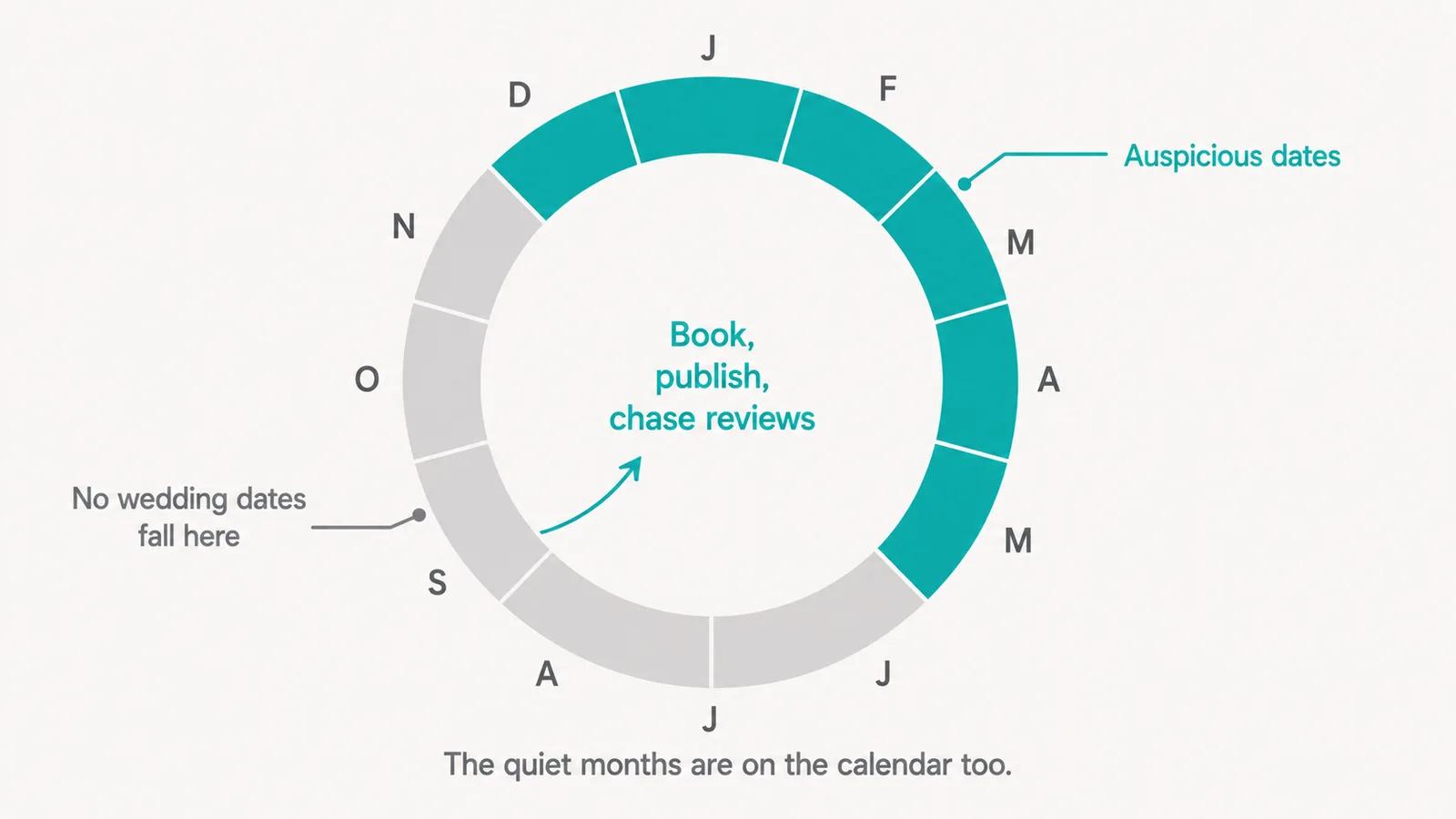
The dates are published. Schedule the year against them.
You know to the day when demand exists and when it does not, and the busy weeks are the ones with no capacity to publish anything. Draft the season in the quiet months and let it run.
- Availability for specific dates in a cluster, live before families search them
- Portfolio and venue content published through the no-date months
- Keeps the profile active in the periods when weddings simply stop
You are not persuading a couple, you are persuading a committee
A wedding is one of the very few purchases in local business where the person who chooses, the person who pays, the person who uses the service and the people who will judge it are all different, and all present. In a typical Indian wedding the working committee is the couple, both sets of parents, and at least one relative who has been given responsibility for the money. Any of them can veto.
Each of them arrives with different questions and each is unconvinced by the material aimed at the others. The couple are looking at aesthetics, at whether you understand what they want, and at whether you will keep the day from being taken over by everybody else. The parents are looking at reliability, scale, whether you have handled a wedding of this size, and whether they will be embarrassed in front of guests. The person holding the budget is looking for a number, for what happens when it is exceeded, and for whether your commission arrangements are what they suspect.
Most planner marketing addresses only the first group. It is visual, aspirational, and built around a couple. It works on Instagram, where the couple are the ones scrolling, and it does very little on the evening the family sits together to decide, which is when the actual decision is made.
So the material needs to answer all three, and the medium usually sorts itself: the visual portfolio for the couple, and plain evidence for everybody else. Guest counts you have handled. Weddings run at venues of comparable scale. A description of how the budget is structured and reviewed. Named references, with permission. What happens when something goes wrong at nine in the evening, and who is physically present on the day. That material is unglamorous and it is what carries the room.
This is also the strongest argument for reviews that are specific about scale and logistics rather than emotional. A review saying it was a beautiful wedding pleases the couple and settles nothing for the uncle. A review saying they handled four hundred guests across three days at a named venue, the budget held, and there was somebody present at every event, is the one that gets read out. Prompt for that, because most people will write whatever they are asked to write.
Finally, respect the decision timeline that follows from a committee. This is not a same-day conversion. The first contact is often an informal message from the couple, followed weeks later by a call from a parent asking entirely different questions, followed by a meeting. Treating the first enquiry as a lead to be closed rather than a relationship to be started is the most common way planners lose weddings they were well placed to win.
| Who | What they are asking | What answers them |
|---|---|---|
| The couple | Do they understand what we want, and will they protect it | Portfolio, aesthetic range, and evidence you have handled competing family opinions before |
| The bride’s parents | Can they run something of this size without embarrassing us | Guest counts handled, comparable venues, named references with permission |
| The groom’s parents | Will the ceremonies be done properly and on time | A day-wise plan, who is physically present at each event, and ritual familiarity |
| Whoever holds the budget | What is the number, and what happens when it moves | A written budget structure, a change process, and clarity on your commissions |
| The relative who has done this before | Are these people actually experienced or just well photographed | Specific reviews naming scale, venue and logistics rather than emotion |
Instagram finds you. Google is where they check you are real.
The discovery funnel in this trade runs in an order most planners never make explicit, and getting it wrong leads to spending on the wrong channel. Couples overwhelmingly discover planners visually — a photographer tags you, a friend’s wedding appears in a feed, a venue account shares a set-up, a reel of a mandap is saved. That is where interest begins and it is genuinely where the aesthetic sale happens.
What follows is the part that is missed. Having found a name, the family then searches it. They search your business name on Google, they look at what comes back, they read the reviews, and they look for signs that this is a real company rather than a personal account with good photographs. That search is due diligence, not discovery, and it is where a meaningful share of interested families quietly stop.
This gives your Google presence a job quite different from the one it has in most verticals. It is not the top of the funnel; it is the credibility check in the middle of it. The question it has to answer is not are you talented, which the feed already answered. It is are you a business — is there an entity, an address, a phone number that gets answered, reviews from people who are not friends, and evidence you have existed for more than one season.
The practical implications are specific. Make sure your business name search returns you clearly, with a listing that has a real address and consistent details. Get reviews, even a modest number, because a planner with a beautiful feed and no reviews at all reads as new rather than as exclusive. Keep the profile photographs current with real weddings. Publish the boring corroboration — registered name, how long you have operated, the team — somewhere findable, because that is what the search was for.
There is a second search worth being ready for, which is your name plus the word review, or your name plus complaint. Families about to spend a large sum look for the bad news deliberately. What they should find is a profile where negative feedback, if any, has been answered calmly and specifically. A single unanswered complaint at the top of that search does disproportionate damage precisely because they went looking for it.
None of this argues against Instagram, which remains where this trade is discovered. It argues for recognising that the two channels do different jobs, and that a planner investing everything in the feed and nothing in the verification layer is filling the top of a funnel that leaks at the exact point where money starts being discussed.
A photographer or venue tags you
Discovery is visual and it is not happening on Google. This part of the funnel is fed by the vendor network, not by search.
The couple saves it and shows the family
Interest is now real, and the audience has just expanded from one person to five with different questions.
Somebody searches your business name
This is the moment your Google presence matters, and its job is verification rather than persuasion. A beautiful feed with no listing and no reviews reads as new, not exclusive.
Somebody searches your name plus review
Families about to spend a large sum go looking for the bad news deliberately. An unanswered complaint at the top of that search does damage out of all proportion to its content.
Then, and only then, the enquiry arrives
Usually as a message rather than a call, and usually from the couple rather than from whoever will actually decide.
Whose wedding is it: photographs, credit and the vendor you did not pay
Your portfolio is the single most important asset you own and, almost without exception, you do not own it. The photographs were taken by a photographer the family hired, at a wedding belonging to a family who did not hire you to make marketing, featuring decor built by a decorator who also wants to post it. Every image in your feed has at least three parties with a claim on it.
The copyright position is the part planners most often get wrong. In the ordinary case the photographer owns the copyright in their photographs, and the fact that you were the planner at that wedding does not give you a licence to publish them. Using them without permission and without credit is a genuine dispute waiting to happen, and it happens regularly enough in this industry that photographers now watch for it. Ask, agree the terms, and credit them.
That is far easier to arrange before the wedding than after. Settle it in the planning stage, as a three-way understanding: the family agrees that images may be used, the photographer agrees you may publish a defined set with credit, and everyone knows who gets tagged. Trying to negotiate this six weeks later, when the photographer is busy and the family have gone quiet, is how planners end up with a portfolio they are nervous about.
The family’s permission is a separate question from the photographer’s, and it is about privacy rather than copyright. Some couples are delighted to be shown; some are private; many are happy for the decor and the venue to appear but not close portraits of guests, and almost everyone objects to being used in an advertisement they did not know about. Ask specifically what may be shown, whether they may be named, and whether the venue may be named. Most people say yes to a version.
Credit is also a practical business matter rather than a courtesy. This trade runs on reciprocal referral: the photographer, the decorator, the caterer and the venue all send work to people who make them look good. A planner who consistently credits every vendor in a post is buying goodwill in the network that actually generates their enquiries. A planner who crops out the decorator is saving nothing and losing a referral source.
One last thing worth stating because it is common and corrosive: do not publish weddings you did not plan. Coordinating one function, or supplying one element, is not planning the wedding, and the industry is small enough that it gets noticed. The reputational cost when a photographer or a competing planner points it out publicly is far larger than the benefit of one more set of images, and it is the kind of thing families ask about once they have heard it.
Publishing photographs without the photographer’s permission
In the ordinary case the photographer owns the copyright, and having planned the wedding gives you no licence. Agree the terms during planning, publish a defined set, and credit them.
Treating family consent and photographer consent as one thing
They are different questions — privacy and copyright. Ask the family specifically what may be shown, whether they may be named, and whether the venue may be named. Most people say yes to some version.
Cropping out the decorator or the caterer
This trade runs on reciprocal referral. Consistent credit buys goodwill in the network that actually generates your enquiries; cropping saves nothing and costs a referral source.
Showing weddings you did not plan
Coordinating one function or supplying one element is not planning the wedding. The industry is small, it gets noticed, and the damage when somebody says so publicly far outweighs one more gallery.
The vendor network is the product, and it is also the referral engine
It is worth being clear about what a family is buying when they hire a planner, because the marketing rarely says it. They are not buying taste, which they have opinions of their own about. They are buying a network and the coordination of it — a decorator who will turn up, a caterer who can handle four hundred, a photographer who is free on a date that half the city wants, a venue relationship that gets a problem solved at nine in the evening. The network is the product.
That has a direct consequence for what belongs on your website and profile, and it is the opposite of what most planners publish. Vagueness about vendors reads as not having any. Being concrete — the categories you cover, roughly how many vendors you work with regularly in each, the venues you have worked at, whether you handle bookings and payments or only recommendations — is describing the actual service. It also answers the budget-holder’s question about how the money flows.
The venue relationships deserve specific treatment because they are searchable. Families search a venue name alongside planning, decor and wedding, and a planner with a real page about a venue they know — capacity, layout, what the property allows, the decor constraints, where the baraat enters, what the timing restrictions are — appears for those searches and simultaneously proves competence. This is the single most productive content a venue-side planner can write, and almost nobody writes it because it feels like giving away knowledge. It is not; it is demonstrating that you have it.
The referral direction runs both ways and is the largest source of work in this trade after the feed. Photographers, decorators, caterers, makeup artists and venue managers all get asked for planner recommendations constantly, and they recommend the people who make their own jobs easier and who credit them publicly. Being easy to work with is a marketing strategy in this industry in a way that it is not in most others.
Those relationships are also a legitimate and badly under-used source of reviews. A venue manager, a photographer or a caterer who has worked alongside you several times can honestly review the experience of working with you, and that review answers a question no couple’s review can: whether you are organised, whether you pay on time, and whether the day runs. In a trade where client reviews arrive months late and in small numbers, this is not a workaround, it is a genuine second channel.
Manage the network deliberately rather than by memory. Knowing which vendors you have used, at which venues, on which dates, and who has referred work to you is ordinary business hygiene that a surprising number of planners run entirely out of a phone. It is also the raw material for every venue page, every credit, and every referral conversation you should be having in the quiet months.
What planners usually publish
- Aspirational language about creating unforgettable moments
- A gallery with no venue, scale or date attached
- End-to-end wedding solutions, undefined
- A contact form, and nothing about how money is handled
What families and vendors are looking for
- Which venues you have actually worked at, and what you know about them
- Guest counts and number of functions you have handled
- Which vendor categories you cover, and whether you book or only recommend
- How the budget is structured, and how your fee and commissions work
Venue pages that prove you actually know the venue
Families search a venue name alongside planning and decor. A page on what a property allows, seats and costs to dress appears for those searches and demonstrates competence in the same move.
- A page per venue you genuinely work at, with real constraints and capacities
- City and service pages for the half of demand that is proximity-led
- Written from your own event files rather than generic copy
The commission question couples have started asking
For a long time the economics of wedding planning were opaque by convention. A planner charged a fee, and separately received a commission from the vendors they brought work to, and the family did not ask. That has changed. Couples now research this specifically, forums discuss it openly, and a direct question about whether you take vendor commissions is a normal part of a first meeting.
The question underneath it is not really about the commission. It is whether your vendor recommendations are advice or sales — whether the decorator you suggested is the right one for their wedding or the one who pays you most. That is a reasonable thing to want to know when you are about to spend a large sum on the recommendations of somebody you met three weeks ago.
Planners generally respond in one of three ways. Some deny taking commissions while taking them, which is the worst option because the vendor community knows and eventually somebody says so. Some charge a pure fee and take nothing, which is clean and simple to explain. Some take commissions and disclose them, either as a stated practice or by rebating them against the fee. The second and third both work; only the first is a problem.
Whichever model you run, publishing it is a differentiator precisely because it is uncomfortable and therefore rare. A short, plain paragraph on your site describing how you are paid, whether you receive anything from vendors, and how you choose who to recommend, will be read carefully by exactly the person who was going to ask the awkward question in the meeting. Answering it before they ask changes the character of that meeting entirely.
The same transparency applies to the budget itself, which is the other source of disputes and therefore of bad reviews in this trade. A written budget with categories, a stated process for approving anything that exceeds it, and clarity about what your fee covers and what it does not, prevents the argument that otherwise happens in the last fortnight before the wedding, when everyone is exhausted and nobody remembers what was agreed in March.
It is worth connecting this back to reviews, because the pattern is consistent across every trade in this series. The negative reviews are rarely about the quality of the work; they are about money that was not discussed clearly enough in advance. In a purchase this large, this emotional and this public, the planner who over-communicates about cost is buying reputational insurance at no cost at all.
Denying commissions you actually take
The vendor community knows, the industry is small, and it eventually gets said out loud. Charging a clean fee or disclosing the commission both work; only pretending does not.
A budget agreed verbally in March
Nobody remembers it in the last fortnight, which is when the argument happens and the review gets shaped. A written budget with a change-approval process prevents most of it.
Leaving what the fee covers undefined
Every excluded item later reads as a hidden charge. State what is in, what is out, and what is billed at cost with a commission or a markup.
Never publishing how you are paid
It is the awkward question the budget-holder was going to ask in the meeting. Answering it plainly on your site before they ask changes the whole conversation, and almost no competitor will have done it.
The review that waits for the photographs to arrive
Review supply in this trade is the most awkward in this series, and for a reason that has nothing to do with satisfaction. The wedding ends, the family is exhausted, the couple leave on a holiday, and everybody involved goes quiet for weeks. Then the photographs arrive from the photographer, often a month or two later, and the wedding becomes a happy memory rather than a logistical ordeal. That is when people feel like saying something nice.
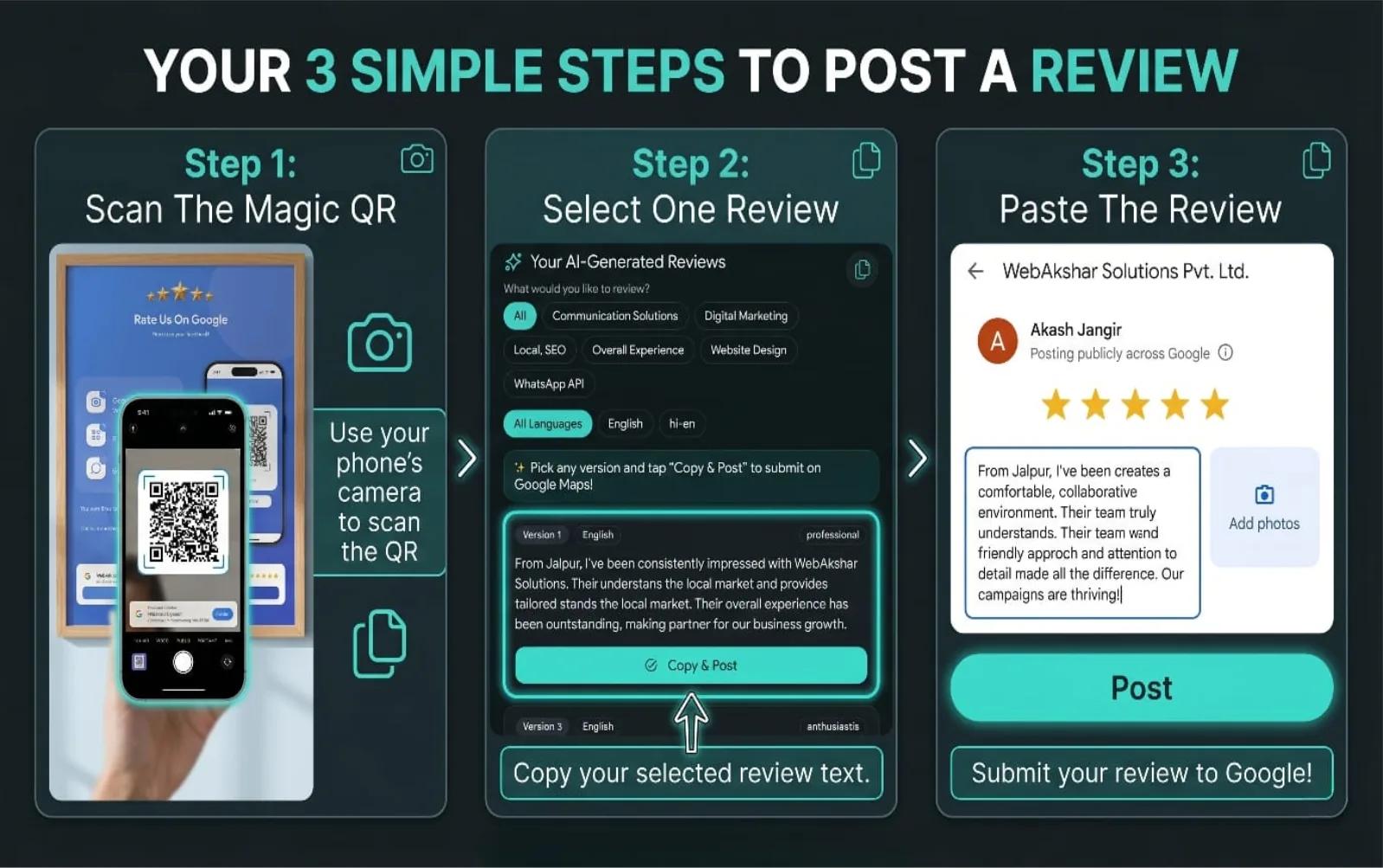
Which means the natural review moment is not at the event and not immediately after it, but at the point the images land — and almost no planner is watching for it. Asking on the day is asking somebody in the middle of the most tiring week of their life. Asking a fortnight later reaches a couple who are still recovering. Asking when the album arrives reaches people who have just spent an evening looking at the best photographs of their lives, with your work in every frame.
This is one more reason to be close to the photographer. Knowing when the album is being delivered lets you time the request, and it also gives you something to send with it — a note, the images you are permitted to publish, a thank-you. A request attached to something is answered far more often than a bare one.
Volume will always be low. A planner handles a handful of weddings a season, and each produces at most one review from a family. So each has to carry more weight, which makes prompting for specifics essential rather than optional. Number of guests, number of functions, the venue, the city, whether the budget held, and whether somebody was present throughout: those are the details the next family reads. Emotional praise, however warm, settles none of the committee’s questions.
Use the other legitimate sources, because in a low-volume trade they matter. Vendors you have worked with repeatedly can honestly review working with you. So can venue managers. So, occasionally, can a family whose wedding you quoted for, advised honestly and did not win — those people frequently think well of you, and they attended a real interaction. None of this substitutes for client reviews and all of it stops a profile from gaining two entries a year.
Finally, treat the quiet months as review season in the same way they are portfolio season. The families whose weddings you ran in the last cluster are, right now, at exactly the point where the photographs have arrived and the memory is good. In three months they will have moved on entirely. That window is short, it is predictable from the calendar, and it is the difference between a profile that accumulates and one that does not.
Do not ask
They are in the most tiring week of their lives and cannot see the wedding as anything but logistics yet. Anything you get now will be short and unspecific.
Still too early
The couple are away or recovering, the families are dealing with the aftermath, and the memory has not settled into a good one yet.
This is the moment
They have just spent an evening looking at the best photographs of their lives with your work in every frame. Stay close to the photographer so you know when it lands.
Ask with something attached
A note, the images you are permitted to publish, a thank-you. A request attached to something is answered far more often than a bare one.
Chase the whole cluster, and the vendors
Everyone from the last season is at the same point at the same time, which the calendar told you in advance. Vendors and venue managers can review working with you too.
Ask when the album lands, not on the day
A handful of weddings a season means every review counts, and the only good moment arrives a month or two late — when the photographs turn an ordeal into a memory.
- Prompts for guests, functions, venue and whether the budget held
- Works for vendors and venue managers, who can review working with you
- Chase a whole cluster in the quiet months, which the calendar predicts
Wedding Planner SEO questions, answered
The questions Indian wedding planner businesses ask us most often.