Physiotherapy clinic SEO in India: getting found by the patients no doctor sent you
Physiotherapy has a pipeline problem that looks like a blessing. A large share of a typical Indian clinic’s patients arrive because an orthopaedic surgeon, a neurologist or a sports physician sent them, which means they never searched for anything and never compared you with anybody. That is comfortable, it is free, and it is entirely outside your control — one consultant retiring or changing their preferred clinic can take a third of your volume with them.
The patients who do search are looking for something else entirely. They are not searching for physiotherapy. They are searching for their back, their knee, their frozen shoulder, their neck. The profession is not in the query at all, which makes this one of the few trades where the thing you call yourself is nearly absent from the vocabulary your customers use.
And you are a clinic and a service-area business at the same time. Home visits are a large and growing share of Indian physiotherapy, particularly for post-surgical and geriatric patients who cannot easily travel, and Google Business Profile is not designed to be both things at once.
This guide covers those three, plus the fact that anyone at all may call themselves a physiotherapist, why sports and neuro and pelvic health are not one service, the review that depends on session twelve, and the three different prices you are being compared on.
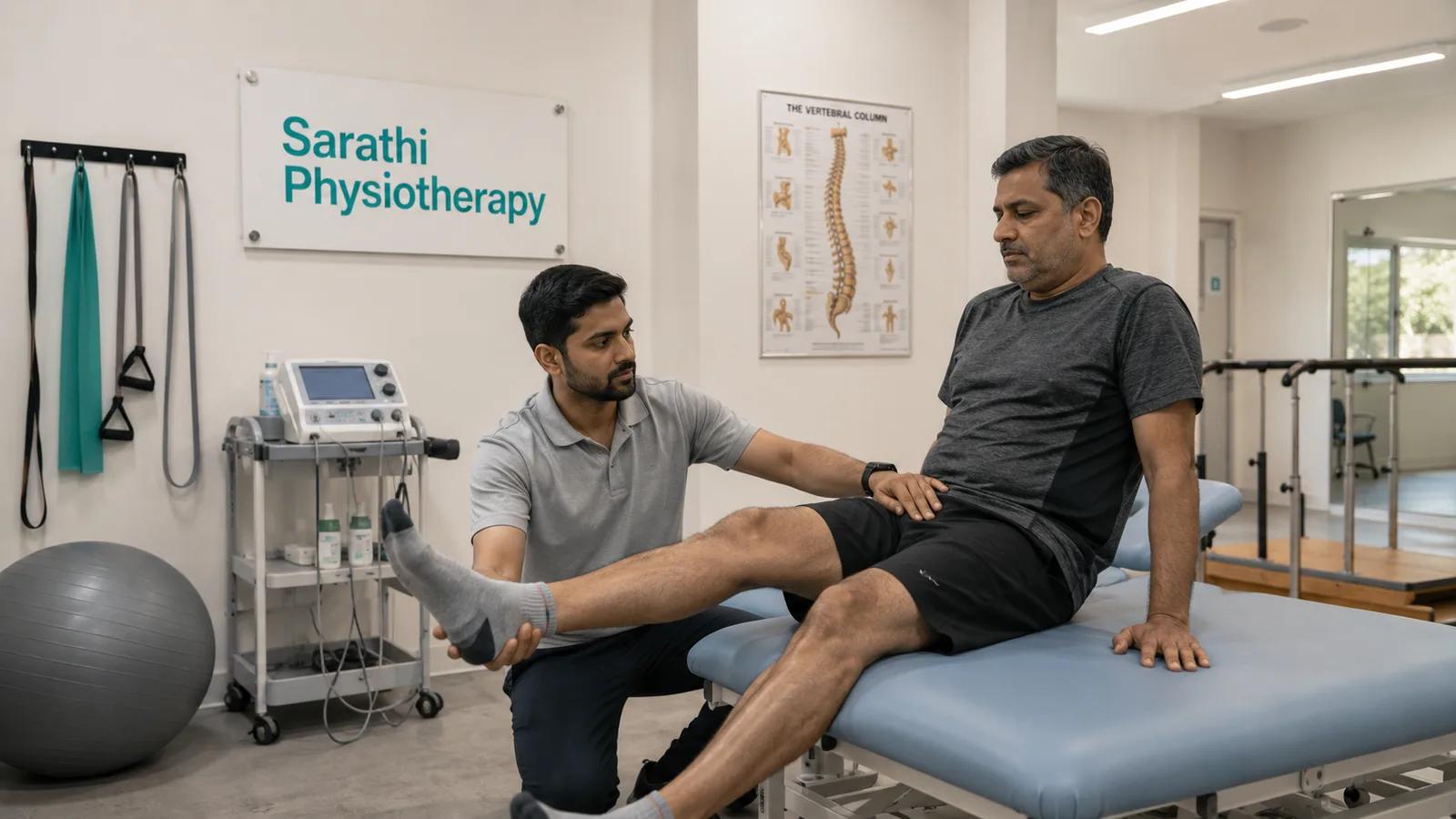
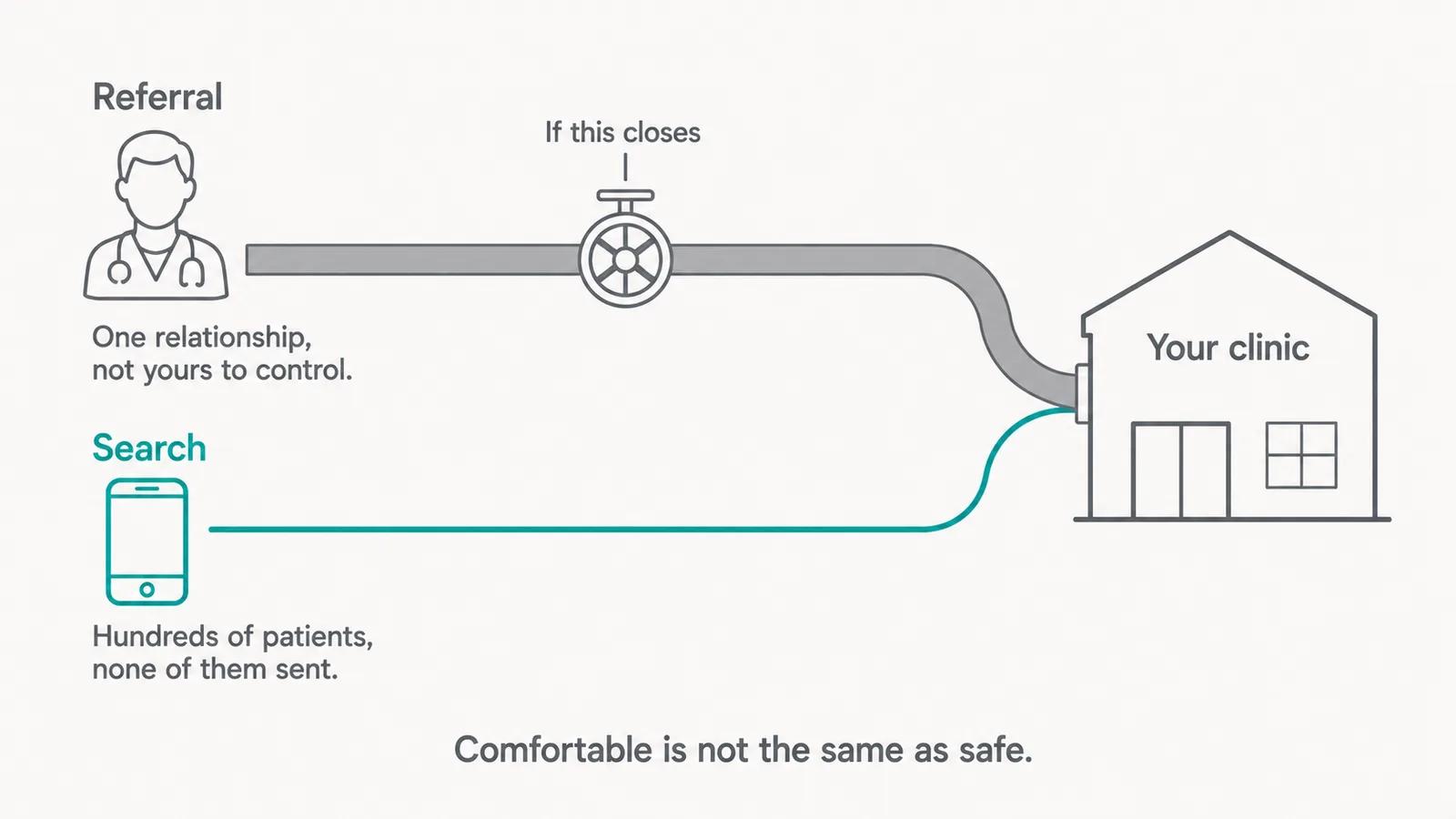
Half your patients never searched for you, and that is the problem
It is worth stating the position plainly before discussing what to do about it. A physiotherapy clinic with strong consultant relationships has a referral pipeline that costs nothing, converts almost perfectly, and delivers patients who arrive already convinced. Nothing in this guide should be read as an argument against that. It is the best channel in the business.
It is also a channel you do not own. A referral relationship is one person’s habit, and habits end. The surgeon retires, moves hospital, hires an in-house physiotherapist, or simply starts sending patients to a newer clinic that opened nearer their consulting room. When that happens the volume does not taper, it stops, and a clinic with no independent demand discovers the problem in the same month it loses the income.
That is the real argument for search visibility here, and it is different from the argument in every other trade in this series. Elsewhere search is the primary channel. Here it is the insurance policy — plus a genuinely additional market, because the people searching their own symptoms are not the people your consultants are sending.
They are a different population in a useful way. A referred patient has a diagnosis, a prescription and often a specified number of sessions. A patient searching back pain treatment near me has none of those. They have had it for weeks, they have not seen anybody, they are not sure whether physiotherapy is even the right answer, and they are as likely to end up at a chiropractor, a massage centre or a gym trainer as at a qualified clinic. That is a larger pool than the referral pipeline in most cities and it is almost entirely unserved by clinics that only market to doctors.
The referral relationship itself is worth managing more deliberately than most clinics do, and part of that is digital. When a consultant recommends you, the patient frequently receives a name and nothing else, and their next action is to search that name. What they find at that moment either confirms the referral or quietly undermines it — a clinic with four reviews from 2022 and no photographs makes a patient wonder whether the doctor was doing somebody a favour.
So the two channels are not separate projects. A profile built for the searching patient also catches the referred patient at the point they check you out, and the second job is easier and pays off faster. It is worth doing for that reason alone even if you never intend to compete for symptom keywords at all.
Patients search their pain, not your profession
The vocabulary gap in this trade is wider than in almost any other. A person with six weeks of lower back pain does not type physiotherapy clinic near me. They type back pain treatment near me, or slip disc treatment, or knee pain doctor near me, or frozen shoulder exercises, or cervical pain treatment. The profession is absent from the query, and frequently the patient does not yet know that a physiotherapist is who they need.
That produces a specific failure mode. A clinic optimises its profile beautifully for physiotherapy, physiotherapist near me and physio clinic — terms with modest volume, searched mostly by people who already know what they want, many of whom were referred and are only checking the address. Meanwhile the far larger population searching symptoms never encounters the clinic at all, because nothing on the profile matches what they typed.
The fix begins in the services list, which in this trade should read like a list of complaints rather than a list of techniques. Back pain treatment, neck and cervical pain, slip disc treatment, sciatica, frozen shoulder, knee pain, arthritis management, post-operative rehabilitation, sports injury rehabilitation, stroke rehabilitation, paralysis physiotherapy, posture correction, pelvic floor therapy, vertigo treatment. Each is a distinct query with real demand and each one you omit is a search you cannot appear for.
The description should do the same work in sentences: name the conditions you treat most, name the settings you work in, and say plainly that you also do home visits if you do. Two concrete sentences naming conditions will outperform a paragraph about holistic wellness and personalised care, which matches nothing anybody searches.
The larger opportunity is content, and it is unusually good in this vertical because the informational demand is enormous and genuinely answerable. Exercises for a frozen shoulder, how long sciatica takes to settle, what to do in the first week after a knee replacement, whether back pain needs an MRI. Those searches vastly outnumber the commercial ones, they are made by people who will need somebody within a fortnight, and they are currently answered by international content written for a completely different healthcare system.
One important boundary, since this is health content. Publishing exercises and general guidance is useful and legitimate; diagnosing a reader over the internet is not, and pages that promise a cure for a named condition run into the same problems described in the yoga guide in this series. Write to help somebody understand their situation and decide whether to seek assessment, not to replace it.
| What they search | Where they are | What has to be listed |
|---|---|---|
| Back pain treatment near me | Six weeks in, has seen nobody, unsure who to see at all | Back pain treatment as a named service, not folded into general physiotherapy |
| Physiotherapist near me | Usually already referred, checking the address and the reviews | Reviews, recent photographs, hours — this search is a verification, not a discovery |
| Knee replacement rehabilitation | Surgery is scheduled or done, and the family is organising the next step | Post-operative rehabilitation named, with the course length and what it involves |
| Physiotherapy at home | Cannot travel — post-surgical, elderly, or a stroke patient | Home visits as a named service, with the area covered and the visit charge |
| Sports injury physio | Younger, impatient, comparing on speciality rather than proximity | Sports rehabilitation as its own service, with the injuries you actually handle |
| Frozen shoulder exercises | Researching, not yet buying, and will need somebody within a fortnight | A content page — this is not a listing search and should not be treated as one |
Condition pages, because nobody searches for your profession
Frozen shoulder exercises and how long sciatica takes to settle are searched far more than physiotherapy is, by people who will need somebody within a fortnight — and are currently answered by content written for another healthcare system.
- A page per condition you actually treat, written for an Indian reader
- Speciality and technique pages that escape the proximity trap
- Mirrors the services on your profile, which is a relevance signal
Competing with everybody who calls themselves a physiotherapist
This is the part of the trade that practitioners find most frustrating and discuss least in public. In India the word physiotherapist is used far more loosely than the qualification warrants. Massage centres advertise physiotherapy. Gym trainers offer rehabilitation. Bonesetters and traditional practitioners occupy the same search results. A patient with back pain, searching in good faith, cannot easily tell a clinic run by a qualified practitioner from one that is not — and the unqualified operator is often the better marketer.
You cannot fix that market. You can make yourself legible within it, and most qualified clinics do a surprisingly poor job of exactly that. The BPT or MPT qualification, the university, the years in practice, the state council registration, the hospital experience, the specialist certifications — all of it sits on a certificate on the wall and appears nowhere a searching patient will ever look.
Put it where it is visible. The description is the obvious place and it is usually spent on adjectives. Name the qualifications, name the registration, name the years. Photograph the practitioners rather than only the equipment. If you have hospital or sports-team experience, say which. None of this is boasting; it is the specific information a patient is trying and failing to establish, and it distinguishes you from the operator two doors down in the only way that matters.
Equipment photography does related work and clinics under-use it. A treatment couch, exercise mats and a few resistance bands is what a massage centre also looks like. An electrotherapy unit, a traction table, an ultrasound therapy machine, an exercise area with proper equipment, and a practitioner visibly conducting an assessment rather than a massage all read as a clinical setting. That distinction is being drawn by the patient whether or not you help them draw it.
Reviews are the strongest evidence available and they can be prompted towards the right things. A review saying the treatment felt nice is indistinguishable from a review of a spa. One that names the condition, mentions an assessment, describes a programme of exercises and says the pain resolved over a stated number of weeks is unmistakably a review of clinical care. Ask for that specifically — patients will write it if told what is useful.
One thing to avoid, because it is tempting and it backfires: do not attack the competition in your own copy. Warnings about untrained practitioners read as defensive and slightly desperate, and they raise a doubt in the reader’s mind that they did not arrive with. Demonstrating what a qualified clinic looks like is more persuasive than describing what an unqualified one looks like.
Qualifications that live only on a certificate on the wall
BPT or MPT, the university, the state council registration, the years in practice. Patients are actively trying to establish exactly this and cannot, and the description is usually spent on adjectives instead.
Photographs that could equally be a massage centre
A couch, mats and bands look like anything. Electrotherapy, traction, an ultrasound unit, a proper exercise area and a practitioner conducting an assessment read as clinical.
Reviews that could be about a spa
It felt very relaxing is indistinguishable from a massage review. Ask patients to name the condition, the assessment and how many weeks it took, which is unmistakably clinical.
Warning patients about unqualified competitors
It reads as defensive and plants a doubt the reader did not arrive with. Show what a qualified clinic looks like instead of describing what an unqualified one looks like.
Sports, neuro, post-surgical and pelvic health are not one service
Physiotherapy is not a single service and treating it as one on your profile costs you the highest-value patients you could have. A twenty-four-year-old with a hamstring tear, an eighty-year-old recovering from a hip replacement, a stroke patient beginning neurological rehabilitation and a woman with post-natal pelvic floor problems are four completely different clinical propositions, four different search behaviours, and four different willingness-to-travel profiles.
That last point is the commercially important one. For general musculoskeletal work, proximity dominates — the patient is coming three times a week for six weeks and will not travel far to do it. But for a genuine speciality, patients travel considerably further, because there may be only two or three clinics in the city that do it properly and the patient or their family has researched carefully. A neuro rehabilitation clinic can draw from across a metro. A general clinic cannot draw from the next suburb.
So specialisation is the main lever available for escaping the proximity trap, and it is available to almost every clinic because most already have one. There is usually a practitioner with a particular interest and genuine competence — sports, paediatrics, women’s health, neurological rehabilitation, vestibular work, hand therapy — and the profile makes no mention of it whatsoever.
Making it visible is straightforward. Give the speciality its own service entry, its own page describing what the programme actually involves and how long it takes, and its own photographs. Ask the patients treated under it for reviews that name it. Over a few months that produces the vocabulary and the evidence Google needs to associate the clinic with that speciality rather than with the generic term.
Women’s health deserves a specific mention because it is the most under-served speciality in Indian physiotherapy and the demand is real and largely silent. Post-natal recovery, diastasis recti, pelvic floor rehabilitation and pregnancy-related pain are searched, are rarely offered locally, and are almost never mentioned on a clinic listing. A clinic with a qualified practitioner in this area that simply says so plainly, along with whether a woman practitioner is available, is answering a question a great many patients are asking with no results coming back.
A caution on breadth. Listing eight specialities you do not genuinely have is worse than listing none, because a patient who travels forty minutes for neurological rehabilitation and finds a general clinic is a bad review and a wasted afternoon for both of you. Claim what a practitioner has actually trained in and treats regularly.
A general musculoskeletal clinic
- Proximity dominates — three visits a week for six weeks
- Competes with every clinic and massage centre in the locality
- Cannot draw patients from the next suburb, let alone the city
- Reviews say the pain got better, which everyone claims
A clinic with a real speciality
- Patients and families research and will travel across a metro
- Competes with two or three clinics, not twenty
- The speciality term is winnable in a way the generic one is not
- Reviews name a condition and a programme, which nobody can fake
A clinic and a service-area business at the same time
Home physiotherapy is a large and growing part of this trade in India, and for good clinical reasons. A patient three days after a knee replacement cannot get down two flights of stairs to a car. A stroke patient needs rehabilitation in the environment they actually have to function in. An eighty-year-old with a fractured hip and no lift is not travelling anywhere. For a meaningful share of the patients who most need physiotherapy, the clinic is the one place they cannot get to.
Google Business Profile handles businesses that customers visit, and businesses that travel to customers, but it is awkward with a business that genuinely does both. You have a real premises with a real address, so you should keep the address visible — hiding it would be wrong and would cost you the clinic half entirely. The home-visit half then has to be carried by the fields rather than by the configuration: named as a service, described in the description, with the area you actually cover stated plainly.
Say what the coverage is in terms a patient understands, which means naming localities rather than quoting a radius in kilometres. A family arranging care for a parent wants to know whether you come to their area, not whether they fall within eight kilometres of a point they cannot locate. Name the suburbs. If there is a travel charge beyond a certain distance, say what it is.
Price the two differently and publish both, because a home visit is not a clinic session with travel added. It occupies more of the practitioner’s day, it cannot be run alongside another patient, and it usually involves carrying equipment. Patients understand that perfectly well if it is stated, and resent it entirely if it appears as a surprise on the first invoice.
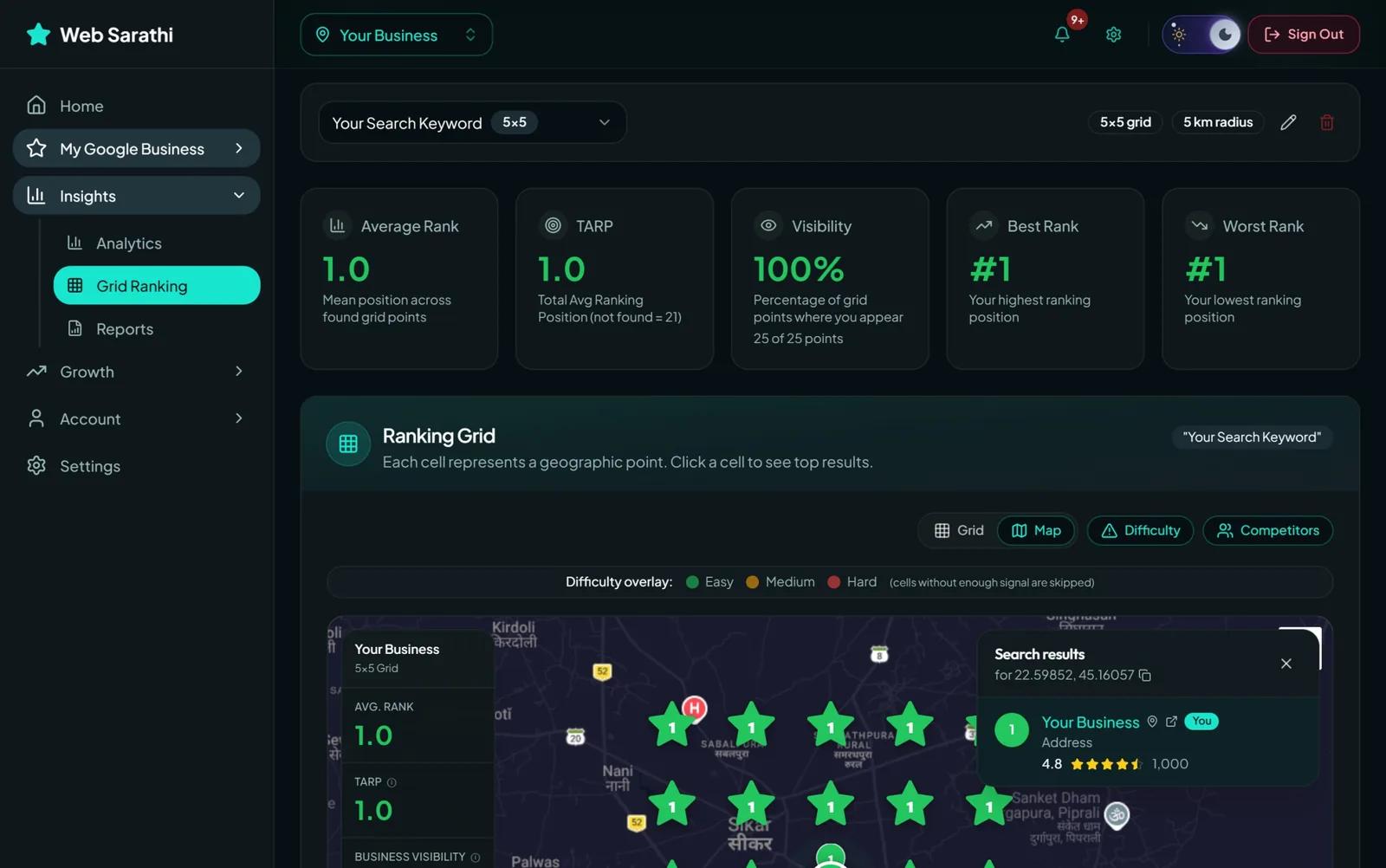
The home-visit business also has an operational property worth planning around: it is bounded by geography in a way the clinic is not. A practitioner can see six patients in a morning at the clinic and perhaps three at home, and the three have to be near each other. Which means home visits are only economic when they cluster — and that makes local visibility in specific residential pockets far more valuable than broad visibility across a city. It is one of the clearest cases in this series for measuring rank at particular points rather than in general.
Finally, the home visit is an unusually good review moment and is almost never used. The practitioner is in the patient’s home, the family is present and watching, and the improvement over a course of visits is visible to everybody in the room. A request at the end of a successful course, made in person by the practitioner the family has seen every week, converts far better than any message from a clinic account.
| At the clinic | At the patient’s home | |
|---|---|---|
| Who it suits | Ambulant patients, sports injuries, ongoing musculoskeletal work | Post-surgical, geriatric, neurological, anyone who cannot travel |
| What decides it | Proximity, equipment, reviews and the practitioner | Whether you cover their locality, and whether you can come this week |
| What the profile must state | Address, hours, equipment photographs, the specialities you offer | Home visits as a named service, the localities covered, the visit charge |
| How it is priced | Per session or per package of sessions | Higher per visit, and it has to be published rather than sprung |
| Where it is won | General local ranking around the clinic | Ranking in specific residential pockets, because visits must cluster |
Home visits only work when they cluster
A practitioner can see six patients at the clinic in a morning and three at home, and the three have to be near each other. That makes visibility in specific residential pockets worth far more than visibility in general.
- Measure rank at particular points rather than across the city
- Find the societies and colonies where you do not appear at all
- Track condition and speciality keywords separately, since they differ
You are selling twelve sessions and the review depends on session twelve
Physiotherapy is not sold in single appointments and pretending otherwise causes most of the disappointment in this trade. A meaningful course is typically ten to twenty sessions across six to ten weeks, sometimes considerably more for neurological work. The clinical benefit arrives cumulatively and largely at the end. So does the patient’s opinion of you.
The problem this creates is dropout, and it is the central operational issue of a physiotherapy clinic. Patients feel better around session four or five, decide the problem is solved, and stop. Some of them are fine. A good number relapse within months, and when they do, their honest assessment is that physiotherapy did not work — a verdict formed about a course they did not complete, and one they may well share publicly.
That makes retention a marketing activity rather than a clinical one, which is an uncomfortable framing and an accurate one. Everything that keeps a patient to session twelve — explaining at the outset how many sessions the course is and why, marking progress visibly so improvement is legible rather than felt, calling after a missed appointment, giving a home programme that keeps them engaged between visits — protects the reputation as much as the outcome.
Be explicit about the number at the beginning. A patient told they need roughly twelve sessions and why has a framework. A patient told to come back on Thursday, indefinitely, has an open-ended commitment they will eventually terminate unilaterally, and will feel slightly managed while they do it. The same information given in advance versus discovered over time produces completely different levels of trust.
On reviews, the timing follows from all of this. The moment is discharge — the end of a completed course, when the pain is gone and the improvement is undeniable. That is a specific, identifiable appointment in a physiotherapy clinic, unlike most trades where the good moment is diffuse, and it should be a fixed part of the discharge routine rather than something anybody has to remember.
It also means the review pool is smaller than the patient list, and deliberately so. You are asking the people who completed, which is honest, and it is worth accepting that the patient who stopped at session four is not going to be asked and would not be a fair reviewer if they were. What you can do is reduce the size of that group, which brings the whole thing back to retention.
State the course length and why
Roughly twelve sessions, and what each phase is for. A patient told to come back on Thursday indefinitely has an open commitment they will end unilaterally.
The danger point
They feel better and decide it is solved. This is where most dropout happens and where a relapse in three months becomes a verdict that physiotherapy does not work.
Call the same day
A missed appointment is the start of dropout far more often than it is a scheduling problem. A call within hours retrieves a course that a week of silence loses.
Make progress legible
Measured range of motion, pain scores, what they could not do in week one and can now. Improvement that is felt is forgettable; improvement that is recorded is persuasive.
Ask here, as routine
A completed course, pain resolved, improvement undeniable. It is a specific identifiable appointment, which most trades do not have — build the request into it rather than leaving it to memory.
Ask at discharge, which is an actual appointment
Most trades have a diffuse good moment. This one has a specific identifiable session — the end of a completed course, pain gone, improvement undeniable. Build the request into it rather than leaving it to memory.
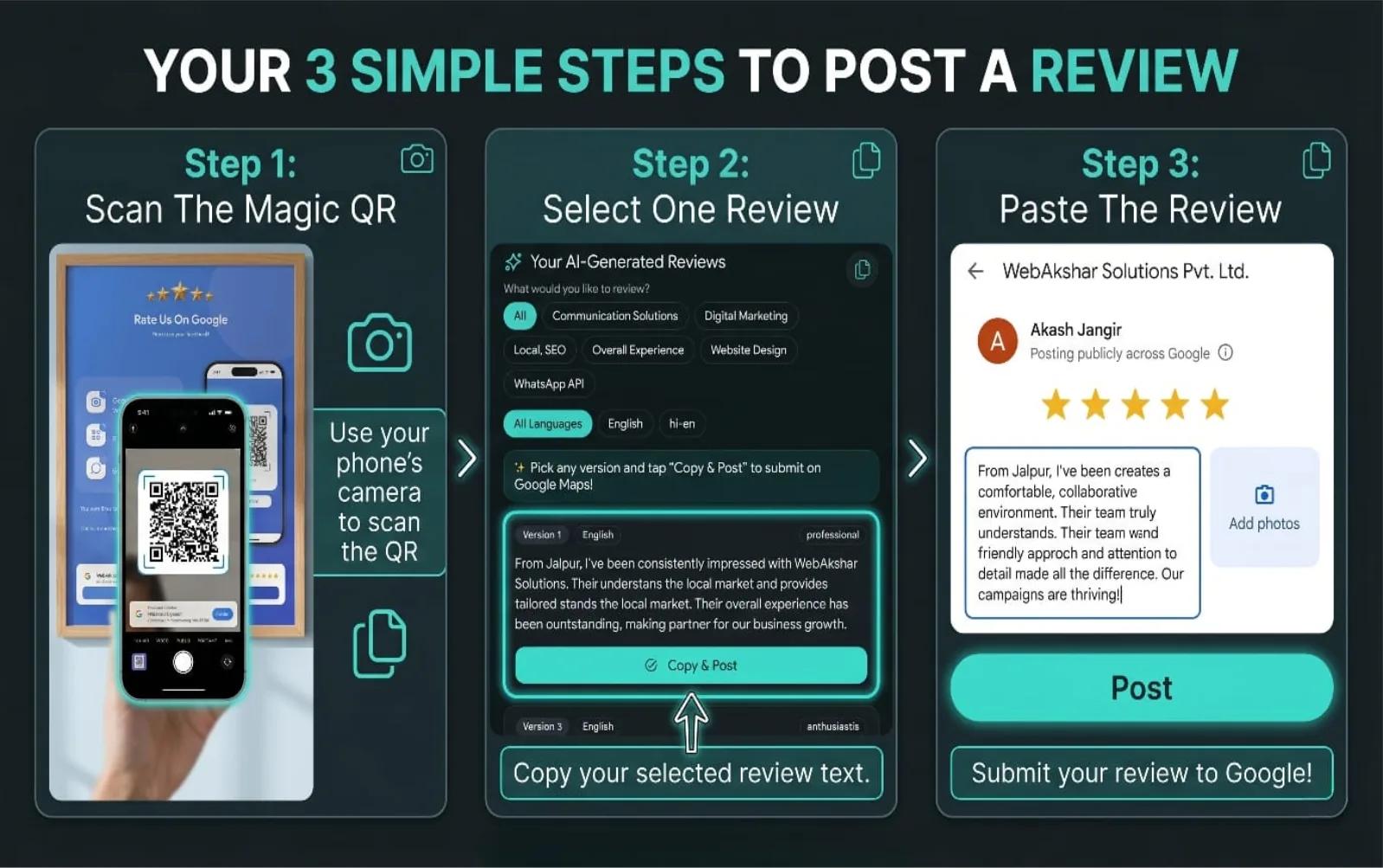
- Scan at the clinic or at the last home visit, in a few taps
- Prompts for the condition, the assessment and how many weeks it took
- Which is unmistakably a clinical review rather than a spa one
Per session, per package or per home visit: three prices, one question
Physiotherapy pricing in India is opaque in a way that costs clinics enquiries every day. A patient wants to know what this is going to cost, and the honest answer involves a per-session fee, a probable number of sessions, a possible package discount, and a different rate entirely if visits are at home. Most clinics respond to the question by declining to answer it, which the patient reads as expensive.
The reason it is worth answering carefully is that the patient is not really asking the per-session price. They are asking what the whole thing costs, because they have worked out that this is not one appointment. A clinic that quotes six hundred rupees a session and stops has answered a fraction of the question, and the patient is left to multiply by an unknown number, which they will do pessimistically.
So publish the structure rather than a number. The per-session fee. What a typical course looks like for common conditions, stated as a range of sessions. What a package of ten costs and what it saves. The home-visit rate and whether travel is charged beyond a certain area. Whether the initial assessment is charged separately, which is the most common surprise on a first invoice.
Insurance is worth addressing directly because patients are confused about it and the confusion works against you. Outpatient physiotherapy is frequently not covered, coverage that does exist is often tied to a hospitalisation or a specific policy, and reimbursement usually requires documentation the patient has no idea to ask for at the time. A clinic that states its position clearly — what it can provide by way of invoices, prescriptions and treatment records, and what it cannot promise — is more useful than one that says insurance accepted and leaves the patient to discover the details later.
The package question deserves a moment of care because it sits close to a clinical boundary. Selling ten sessions in advance is entirely reasonable and it genuinely improves completion rates, which serves the patient. Selling forty in advance to somebody who may need twelve is a different thing, and it is the single fastest way to acquire the kind of review that describes a clinic as a business first. Package sizes should reflect a course somebody actually needs, and there should be a stated position on unused sessions.
The connection back to the previous section is direct: a patient who understands at the outset that this is a twelve-session commitment costing a stated amount is far more likely to complete it than one who is paying visit by visit and re-deciding every Thursday. Publishing the structure is a retention mechanism as much as a marketing one.
Quoting a per-session fee and stopping
The patient has worked out this is not one appointment. Given a session rate and no course length, they multiply by an unknown number and always do it pessimistically.
Charging for the initial assessment without saying so
It is the most common surprise on a first invoice in this trade, and surprises on invoices are where negative reviews come from in every trade in this series.
Insurance accepted, with no detail behind it
Outpatient physiotherapy is frequently not covered and reimbursement needs documentation patients do not know to ask for. State what you can provide and what you cannot promise.
Selling a forty-session package to a twelve-session patient
Packages that match a course somebody actually needs improve completion, which serves the patient. Packages sized for cash flow produce the review that calls a clinic a business first.
Dry needling, traction and the treatments patients search by name
Alongside the symptom searches sits a second, smaller and unusually valuable set of queries: patients looking for a specific technique by name. Dry needling, cupping therapy, manual therapy, chiropractic adjustment, traction, ultrasound therapy, IFT, TENS, kinesiology taping, hydrotherapy. These are searched deliberately, often by people who have had physiotherapy before, and they convert well because the patient has already decided what they want.
Most clinic listings mention none of them. The services list says physiotherapy and the description mentions modern equipment, which matches nothing. Meanwhile the clinic owns a traction table, offers dry needling, and has a practitioner certified in manual therapy — three distinct, searchable, differentiating capabilities that are entirely invisible.
Add them as named services, and add a short page for the ones you genuinely lead with. What dry needling actually is, how it differs from acupuncture, what it feels like, which conditions it suits. That kind of page catches a patient mid-research and answers the question honestly, and it is far too specific for a general health site to have covered well for an Indian reader.
A word of care on the vocabulary, because two of these terms are contested. Chiropractic is a separate profession with its own training, and describing physiotherapy as chiropractic treatment to catch the search term is inaccurate and invites complaint. Dry needling and acupuncture are related in appearance and different in framework and training, and conflating them to widen your keyword coverage is the same error. Use the terms that describe what you actually do and are qualified to do; the ones you are not qualified for are not worth the traffic.
Equipment is worth photographing rather than merely listing, for the reason described earlier: it is the visual difference between a clinic and a massage room. A traction table, an electrotherapy unit, a proper gym area with parallel bars and a treadmill, and a practitioner using them are the images that make the clinical claim without a word of copy.
The broader principle is the one running through this whole guide. This trade has an unusual amount of genuine, specific, searchable detail available to it — conditions, specialities, techniques, equipment, home coverage, qualifications — and the average physiotherapy profile publishes almost none of it, describing itself instead in general wellness language that could apply to any business on the street. The competitive gap is not in effort. It is in specificity.
| The search | Who is making it | What to be careful of |
|---|---|---|
| Dry needling near me | Usually a repeat physiotherapy patient who knows what they want | Do not describe it as acupuncture to widen coverage — different framework and training |
| Chiropractor near me | Somebody who may actually want a different profession | Do not claim the term. It is a separate qualification and claiming it invites complaint |
| Traction for slip disc | A patient who has been told what they need, looking for who has it | Only list it if the equipment is genuinely there and in use |
| Cupping therapy | Often younger, sports-adjacent, and comparing clinics on offering | Fine to list where you provide it, alongside the condition it is used for |
| Manual therapy | A more informed patient, frequently looking for a certified practitioner | Name the certification, since that is what the search is really after |
Physiotherapy Clinic SEO questions, answered
The questions Indian physiotherapy clinic businesses ask us most often.