Restaurant SEO · Pune

Restaurant SEO in Pune: from the peth afternoon break to the Koregaon Park night

Pune keeps unusual hours. Many traditional eateries in the peths close for an afternoon break, misal counters start before eight, and the bars of Koregaon Park and Kalyani Nagar do not fill until late. Google enforces whatever timings the profile shows, so a thali house with one continuous window sends half-past-three diners to a closed kitchen, and a misal place shown opening at eleven loses its whole morning.

Written by
Web Sarathi Local SEO Team
Last updated
Updated
Reading time
6 min read
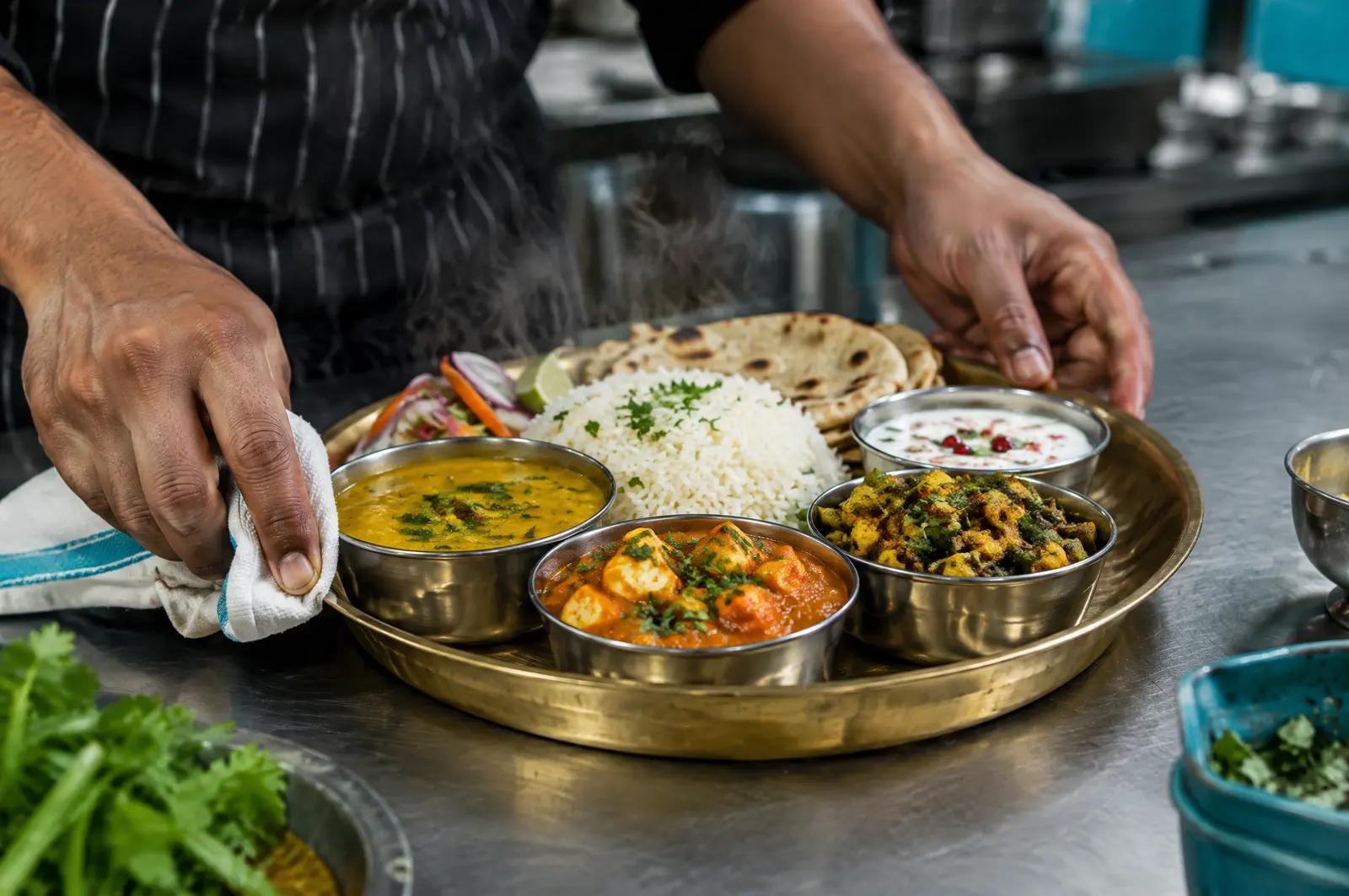
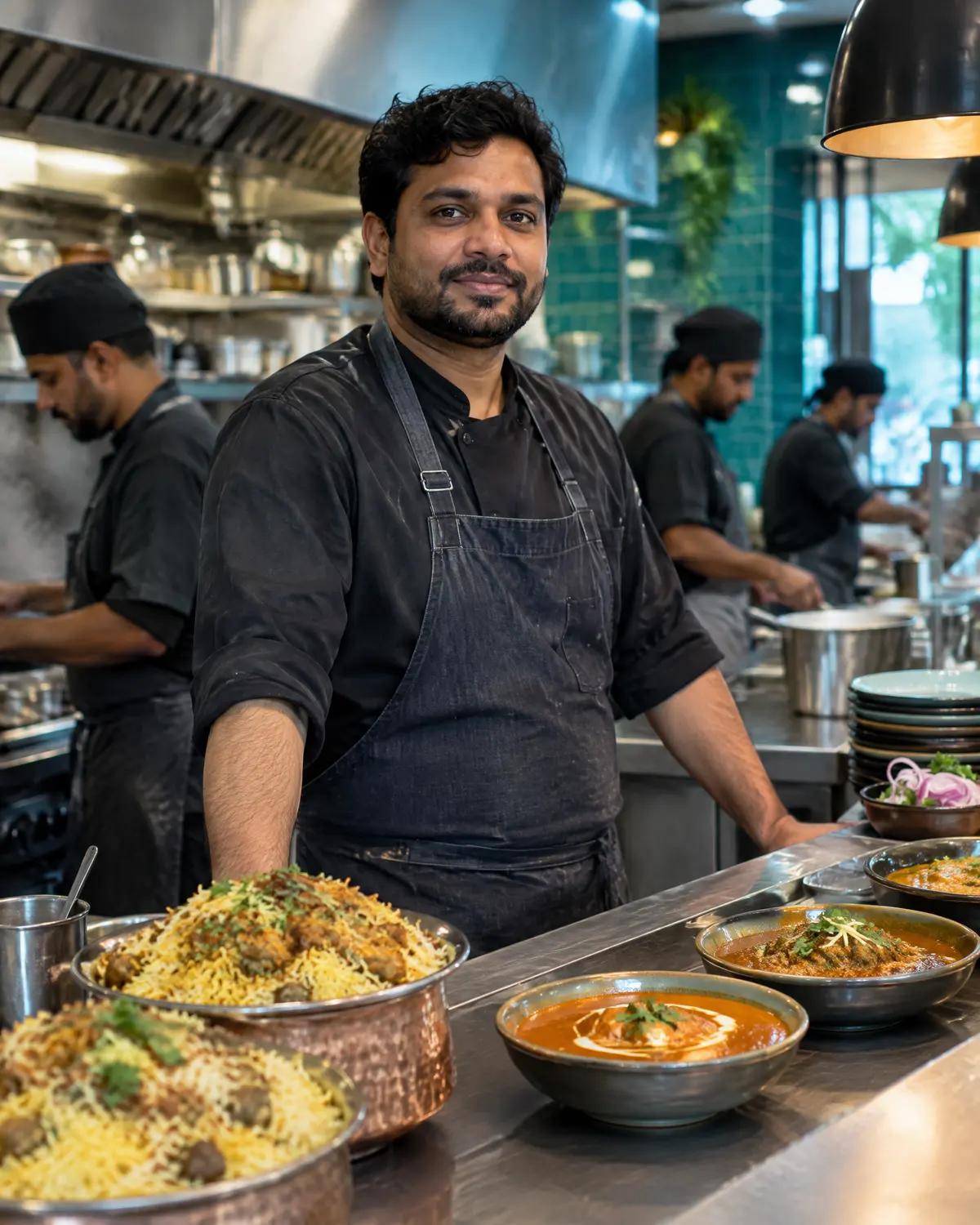
A chef-owner in a dark apron at the pass of a busy open restaurant kitchen
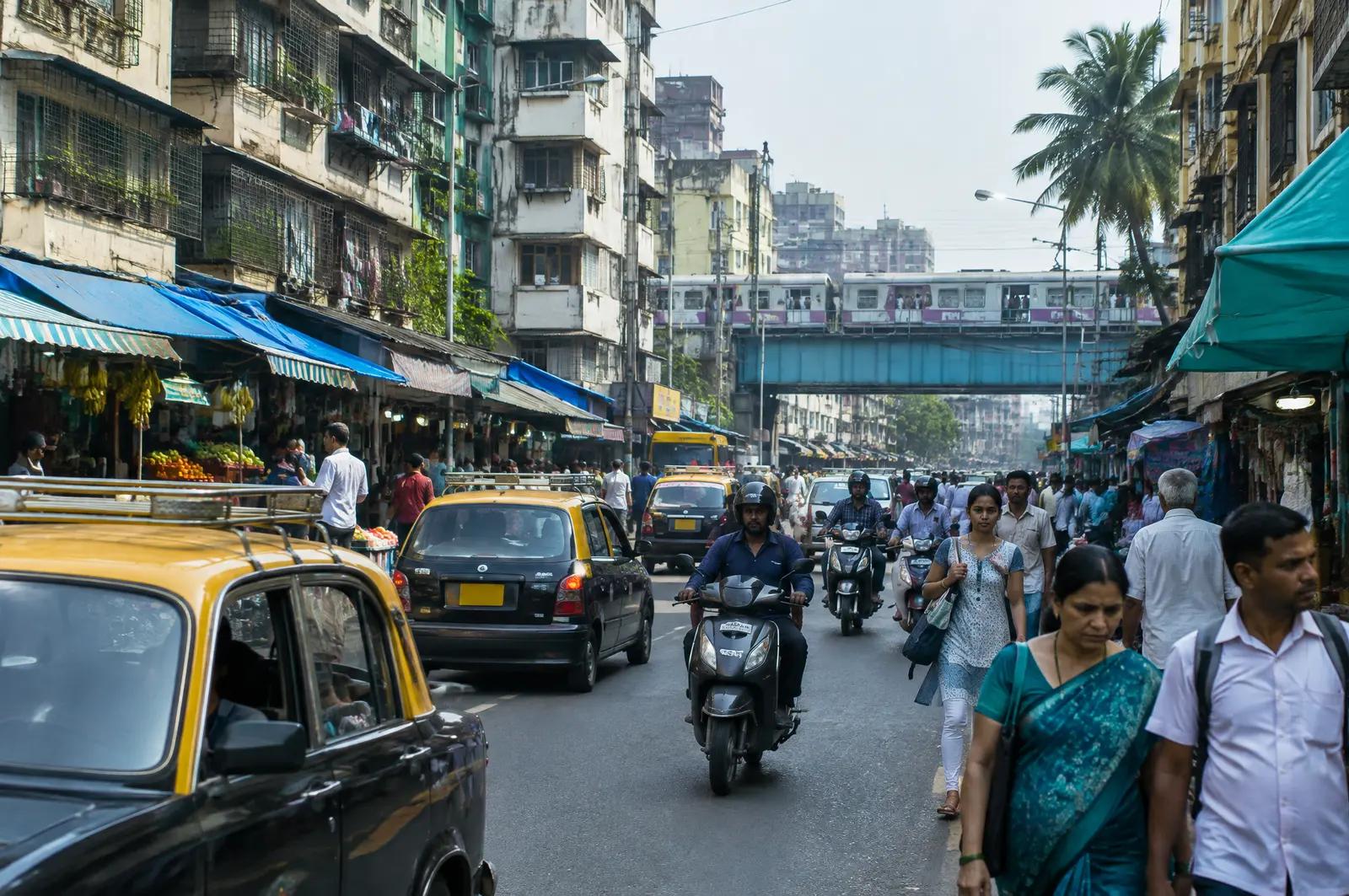
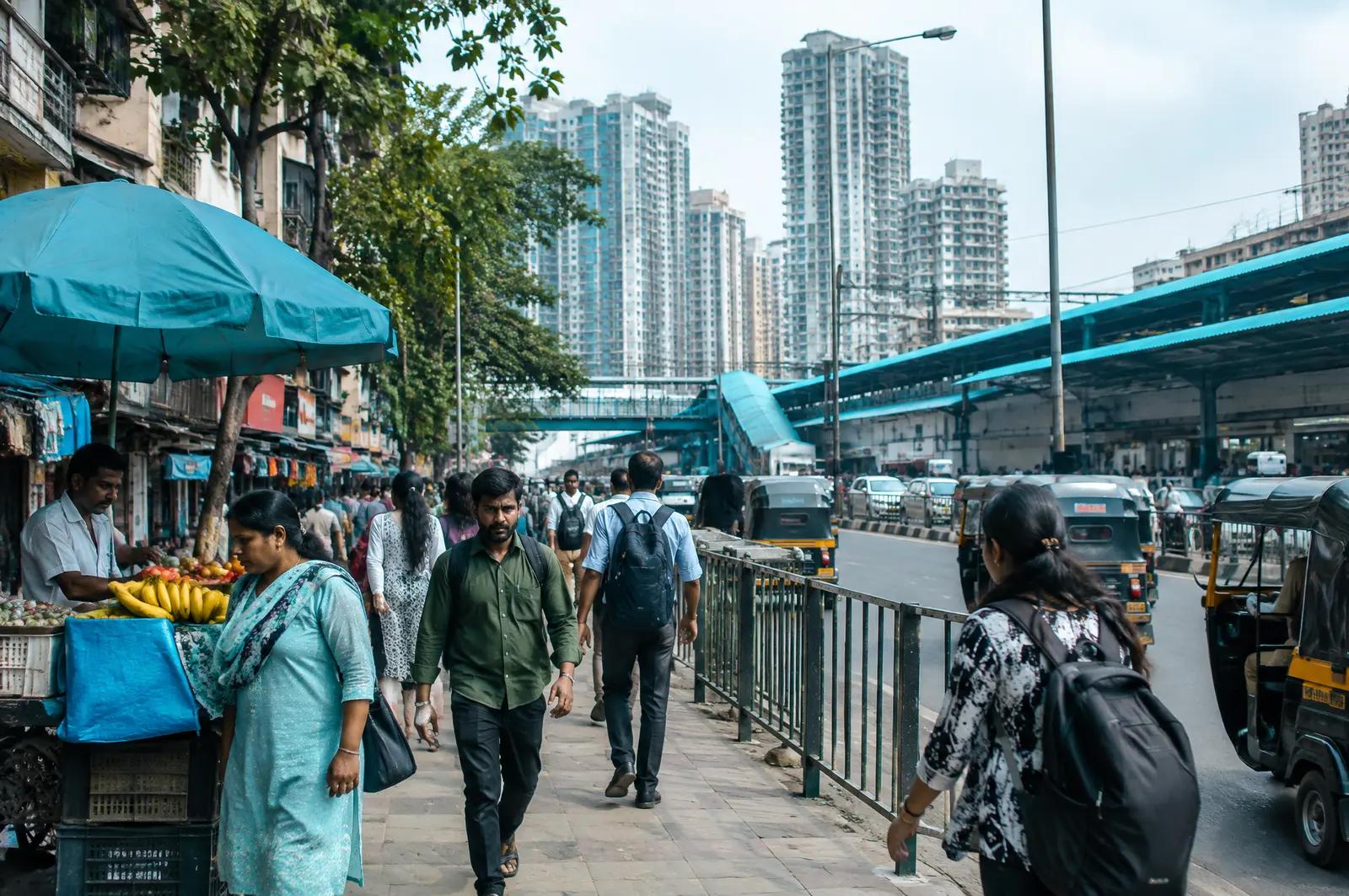
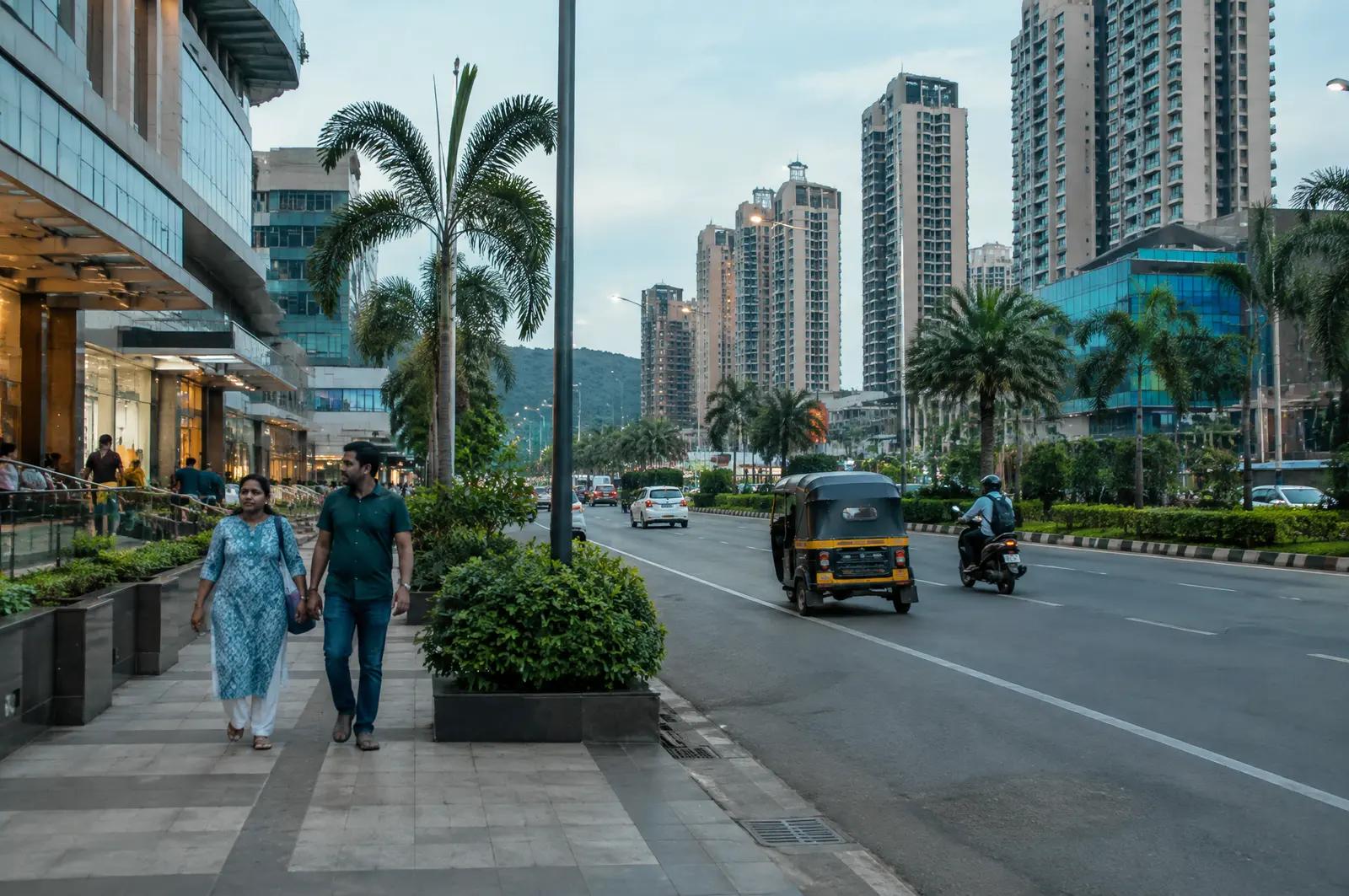
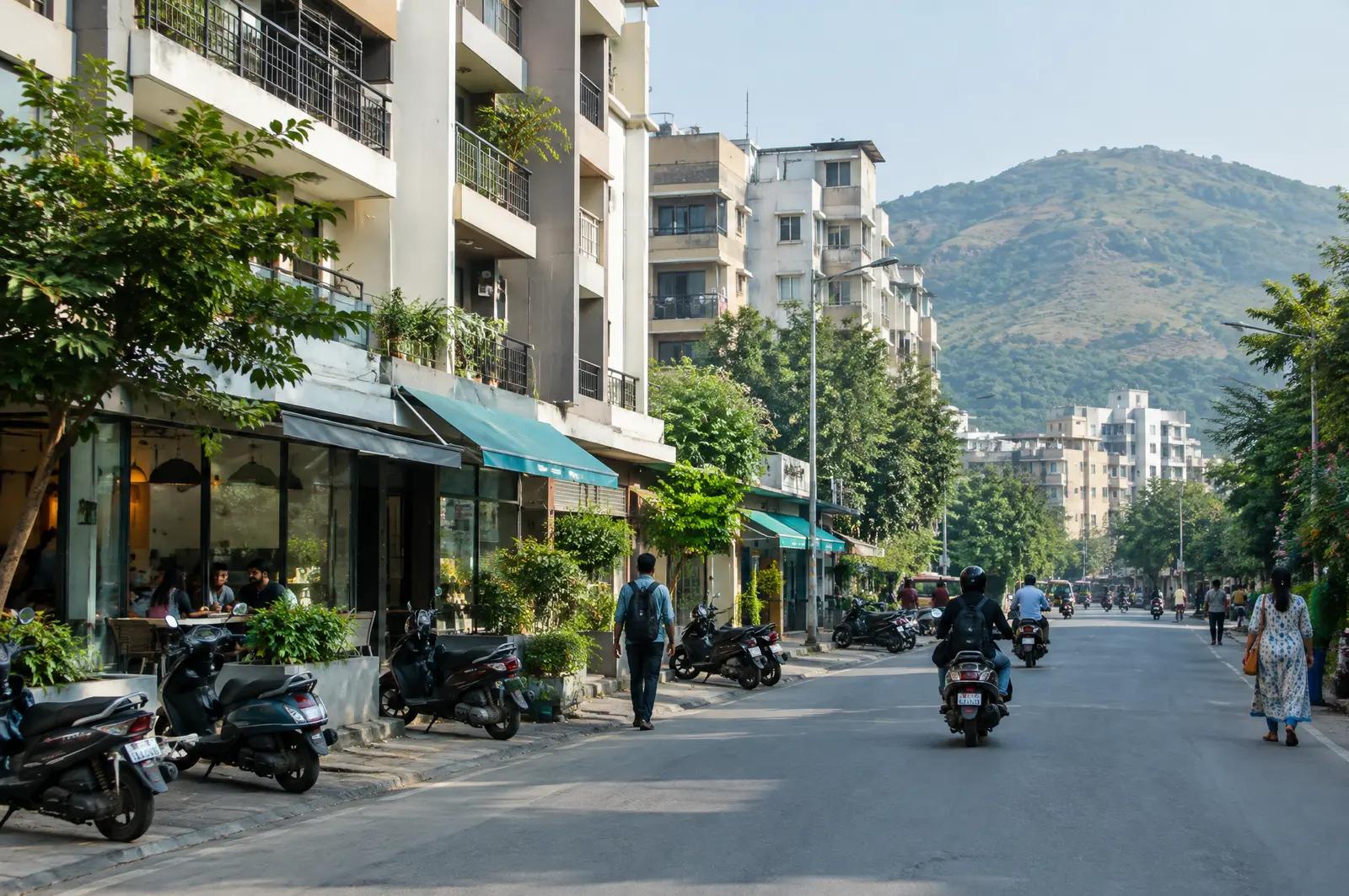
A commercial street in Pune, Maharashtra, with local shops and traffic

Restaurant SEO · local report

Pune

Maharashtra · also searched as Poona

The city also searches by dish and in Marathi. Misal, vada pav, sabudana khichdi, Puneri thali, mastani and bun maska at a Camp Irani café each pull a distinct crowd, and students around FC Road and IT workers in Hinjewadi choose almost entirely from reviews and prices. Name what you cook and what it costs, and the profile can answer those searches.

Search languages
Marathi · Hindi · English
Areas covered below
8 hotspots · 6 zones
Recommended scan
9×9 · 4 km
Key local dates
Gudi Padwa · Palkhi · Monsoon

Restaurant SEO in Pune: the short version

  1. If your kitchen breaks in the afternoon, enter split hours; Pune diners arriving at three to a shut door are the ones who write the review.

  2. Name misal, thali and other signature dishes with prices; Marathi dish searches are specific and few profiles answer them.

  3. Enter special hours for Palkhi and Ganeshotsav road closures as soon as routes are announced, not on the morning.

  4. Around FC Road, JM Road and Hinjewadi, published prices and recent reviews do more than décor, because students and newcomers choose from the profile alone.

Where restaurant demand concentrates in Pune

In short: In Pune, the areas that matter most for restaurant businesses are Sadashiv Peth and Narayan Peth, FC Road and JM Road, Camp and MG Road and 5 more below. Rank in each one separately; a single search from your own counter tells you nothing about them.

Pune · 8 areas to check one by one

  1. Sadashiv Peth and Narayan Peth

    Traditional vegetarian thali houses and misal counters with loyal, older Marathi-speaking regulars; split hours, Marathi replies and a vegetarian attribute win more than photography.

  2. FC Road and JM Road

    Students from the colleges around Deccan look for cheap breakfasts, snacks and cafés; prices against every dish and accurate late opening decide their pick, and exam weeks thin the crowd.

  3. Camp and MG Road

    Irani cafés, bakeries and old restaurants serve bun maska and chai to a mixed crowd; early opening hours and a frontage photograph help visitors find the right door on a crowded street.

  4. Koregaon Park and Kalyani Nagar

    Bars, breweries and late dining for groups; alcohol, outdoor seating and live music attributes, plus correct weekend closing times, decide where a table of eight ends up.

  5. Baner and Balewadi

    Newer high streets with cafés and family restaurants for IT residents; parking, family-friendly attributes and recent photographs of the room carry the decision.

  6. Hinjewadi and Wakad

    Weekday lunches for the IT parks and dinners for the apartments nearby; lunch windows, team seating and accurate delivery status matter, and the area behaves as its own market.

  7. Viman Nagar and Kharadi

    Office workers and young residents near the airport and the Kharadi IT parks search late for dinner and at weekends for brunch; Sunday hours and photographs of brunch as served win.

  8. Kothrud

    West Pune’s family neighbourhood, where weekend thali lunches and misal breakfasts dominate; Marathi reviews, parking details and Sunday hours carry the decision.

How people in Pune search for a restaurant

In short: People in Pune search in Marathi, Hindi, English, and they name the area, not just the service. Your profile has to match the words they actually type.
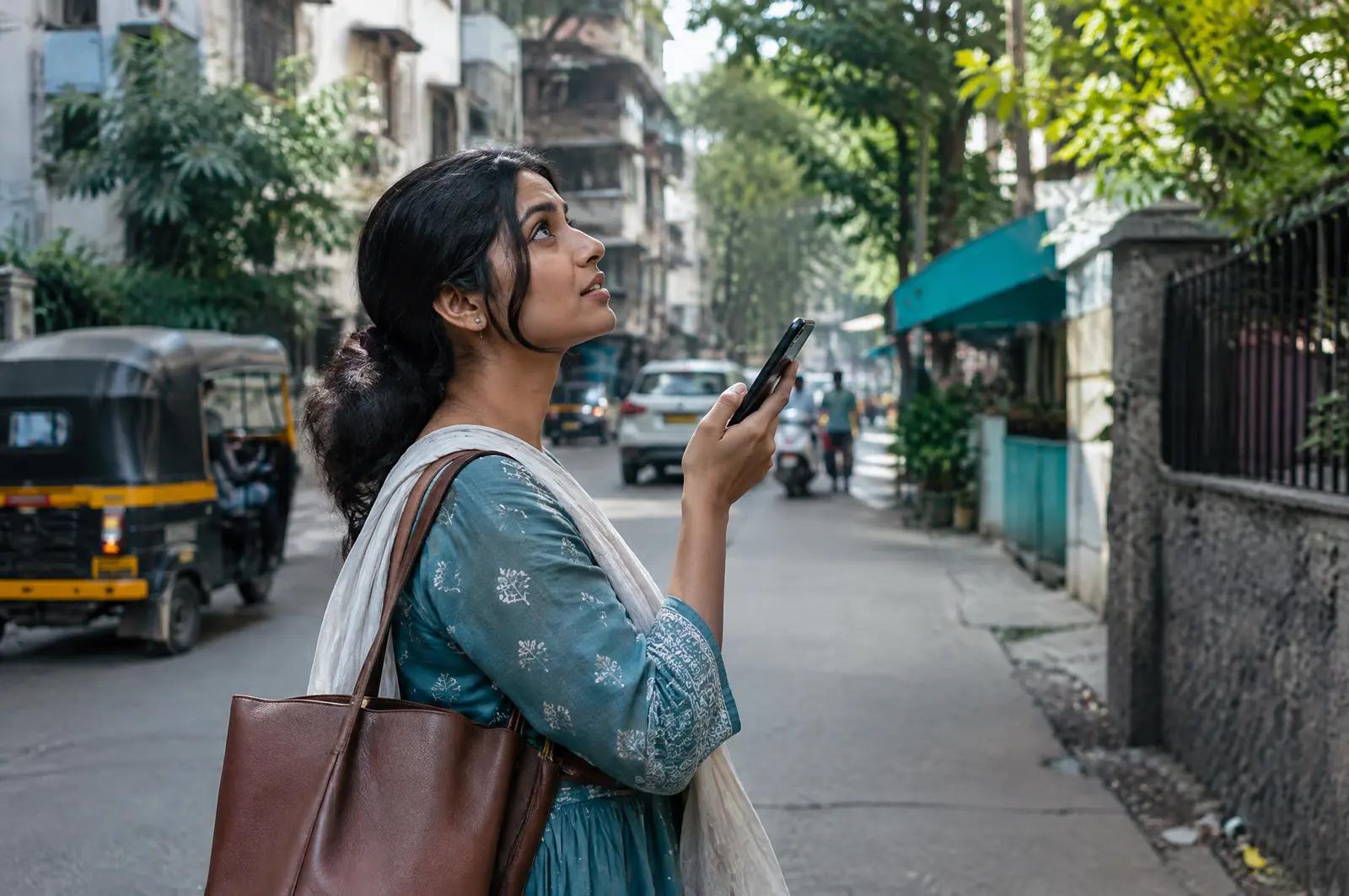
A customer in Pune looking up a nearby business on a phone
  • kothrud javal misal
    What they mean
    Marathi: “misal near Kothrud”
    What your profile must show
    Misal named with its price and the early opening time
  • sadashiv peth madhe thali
    What they mean
    Marathi: “thali in Sadashiv Peth”
    What your profile must show
    The thali named with its price, lunch and dinner windows, the vegetarian attribute
  • khanaval near hinjewadi
    What they mean
    Marathi for a home-style mess, often paid by the plate or by the month
    What your profile must show
    A lunch window, the per-plate price, Marathi replies
  • bun maska irani cafe camp
    What they mean
    A morning or teatime stop in Camp
    What your profile must show
    The opening time and the items named
  • brewery koregaon park open now
    What they mean
    A group already out for the evening
    What your profile must show
    The alcohol attribute and the correct closing time
  • cheap cafe near fc road for students
    What they mean
    A student comparing prices before walking in
    What your profile must show
    Prices against every dish
  • family restaurant baner with parking
    What they mean
    A weekend dinner by car
    What your profile must show
    Parking and family-friendly attributes, photographs of larger tables

What makes Pune different

In short: What changes in Pune: The afternoon break · Palkhi and Ganeshotsav close roads · Students and the exam calendar.
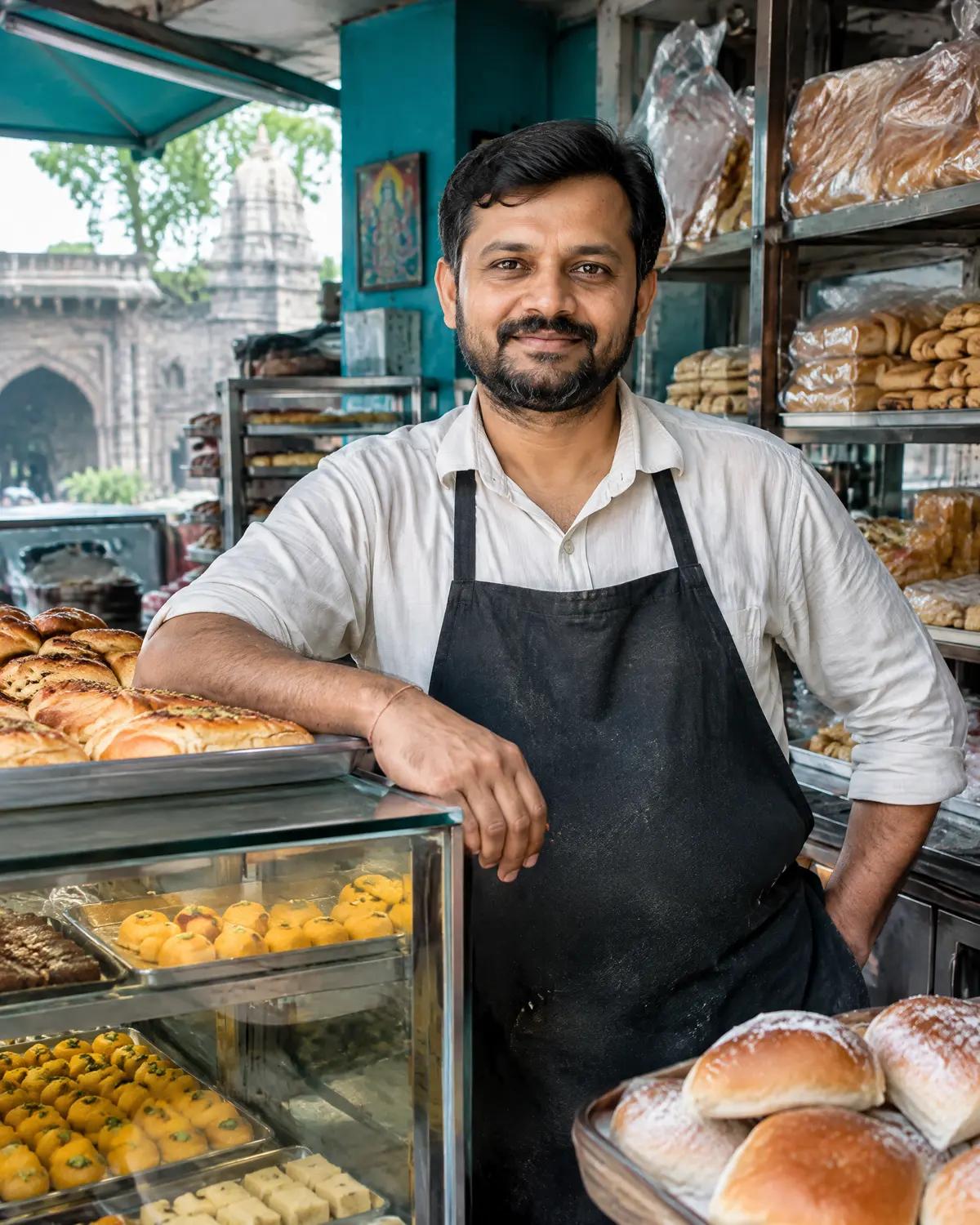
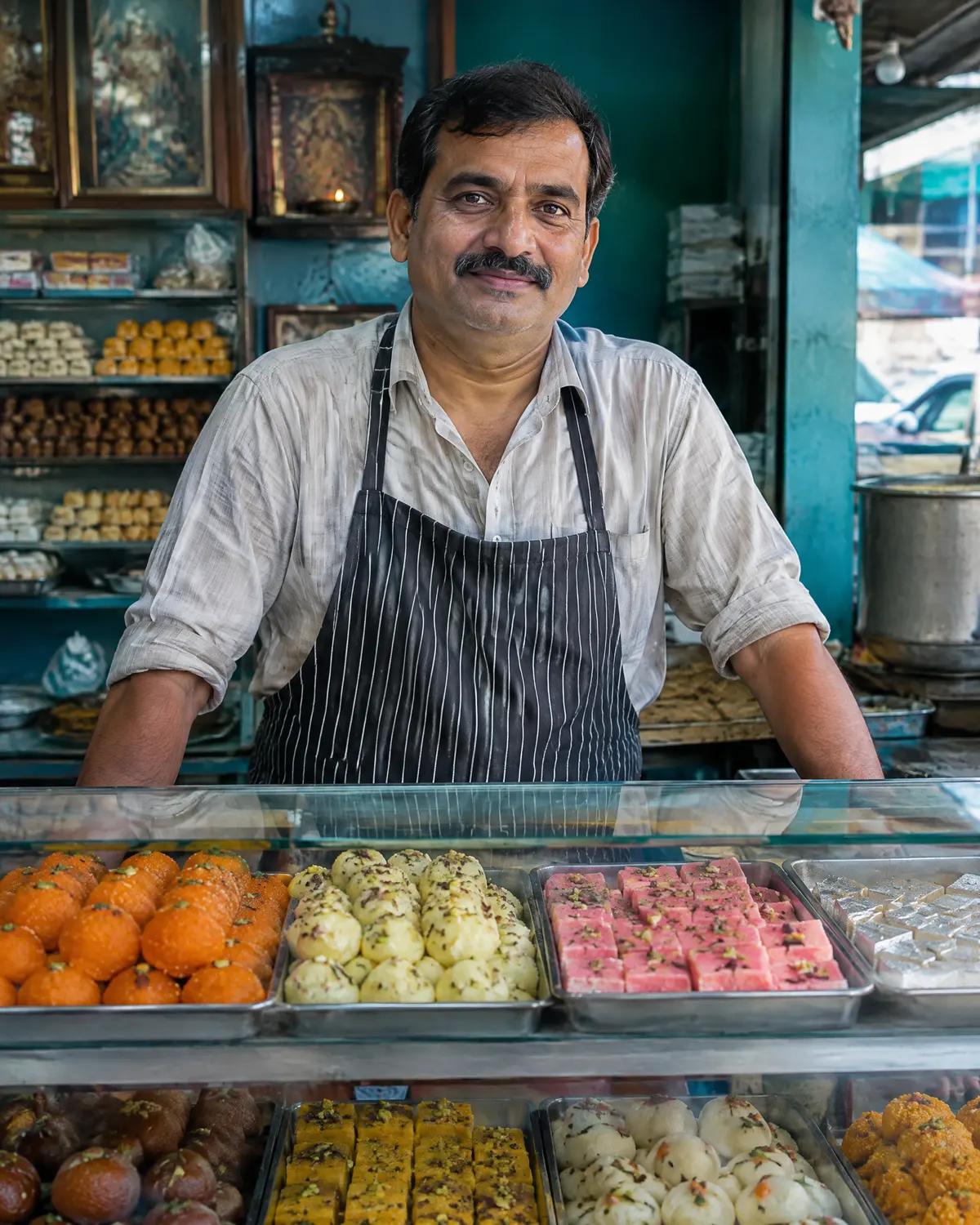
A local business owner in their shop in Pune

The afternoon break

Many Pune eateries, particularly in the peths, close between lunch and evening service, a habit regulars accept and visitors know nothing about. Enter split windows on the profile for each day that has them. Google then shows you closed at three, which costs nothing, instead of sending people to a shutter, which costs a review.

Palkhi and Ganeshotsav close roads

When the Palkhi processions halt in the city in June or July, and during Ganeshotsav’s final procession, roads in the peths and along the route close for hours. Restaurants on those roads should enter special hours as soon as routes are known, post which entrance stays open, and expect diners to arrive on foot rather than by car.

Students and the exam calendar

Around FC Road, JM Road, Deccan and the university, cafés live on students who eat on a budget and choose from reviews. Exam weeks empty the tables; admission months refill them. Post student-friendly prices when terms start, and use the quiet exam weeks to refresh photographs and answer old reviews.

The Pune restaurant calendar

In short: Demand in Pune moves with Gudi Padwa (Mar–Apr), Palkhi (Jun–Jul), Monsoon (Jun–Sep). Prepare your profile two to three weeks before each one.
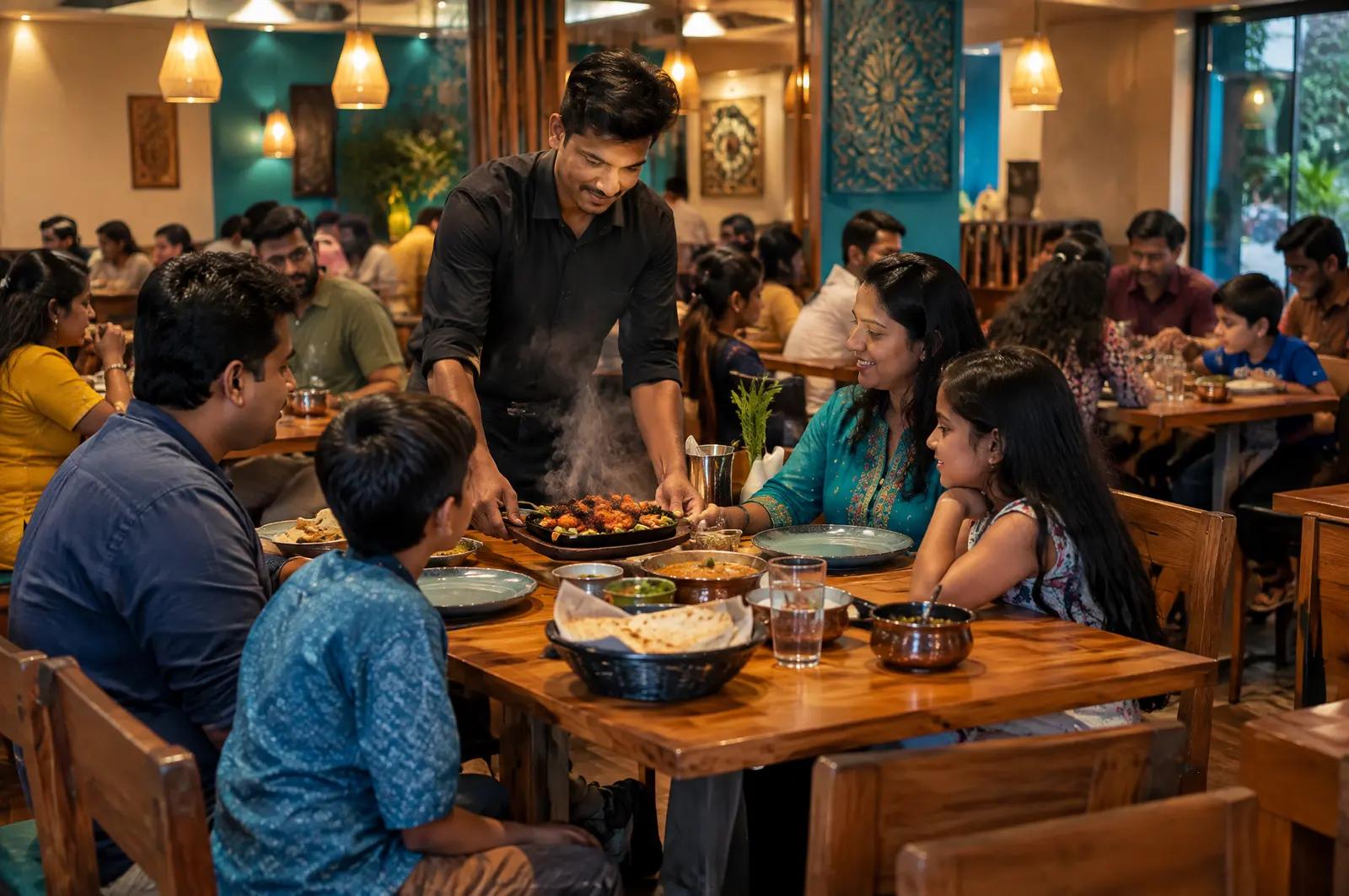
A busy family restaurant dining room in the evening, a waiter serving sizzling platters
  1. Gudi PadwaMar–Apr

    Families eat shrikhand-puri and festive thalis. Publish the Padwa thali with a price a week ahead, enter special hours if lunch runs long, and photograph the plate on the day.

  2. PalkhiJun–Jul

    The Palkhi halts close roads in the peths. Enter special hours for the halt days, post access advice, and if you serve fasting food for Ashadhi Ekadashi, name it on the menu.

  3. MonsoonJun–Sep

    Weekend drives to the ghats empty some city tables while delivery rises on wet evenings. Keep service options current, post on rainy weekends, and use quiet weeks for photographs.

  4. GaneshotsavAug–Sep

    The city’s biggest ten days. Post modak pre-orders a week ahead, enter late hours for pandal evenings, and add special hours for the immersion procession.

  5. DiwaliOct–Nov

    Faral season: many families buy chakli and ladoo rather than eat out, then celebrate with group dinners. Post Diwali hours and closure dates two weeks ahead.

Measuring your reach across Pune

In short: Scan a 9×9 grid over 4 km around your location to see where you appear in the local pack and where a competitor beats you.

Example scan, Pune

Example

9×9 grid, 4 km radius, points about 1 km apart

Cross-city trips in Pune are slow, so a neighbourhood restaurant rarely reaches past the rivers or the bypass. 4 km at 9×9, with points about a kilometre apart, shows where the Mula, the Mutha or the highway stops you. Centre it on the restaurant and scan misal or thali as well as the cuisine.

In the top three at 19 of 80 points

  • Top 3, the local pack19 points
  • Ranks 4 to 1027 points
  • Ranks 11 to 3012 points
  • Ranks 31 to 10012 points
  • Not in the results10 points
  • Your business, at the centre of the scan

Illustration. A real Web Sarathi scan plots your actual Google Maps position at every point, with the businesses ranking above you.

Grid ranking

Find out which streets you are actually invisible on

Searching from behind your own counter tells you nothing. Grid ranking measures your Maps position from dozens of points around the restaurant and returns a heat map of your real catchment.

  • See how far your visibility actually reaches, street by street
  • Track a dish or cuisine keyword over weeks instead of guessing
  • Compare honestly against the neighbour you assume is beating you
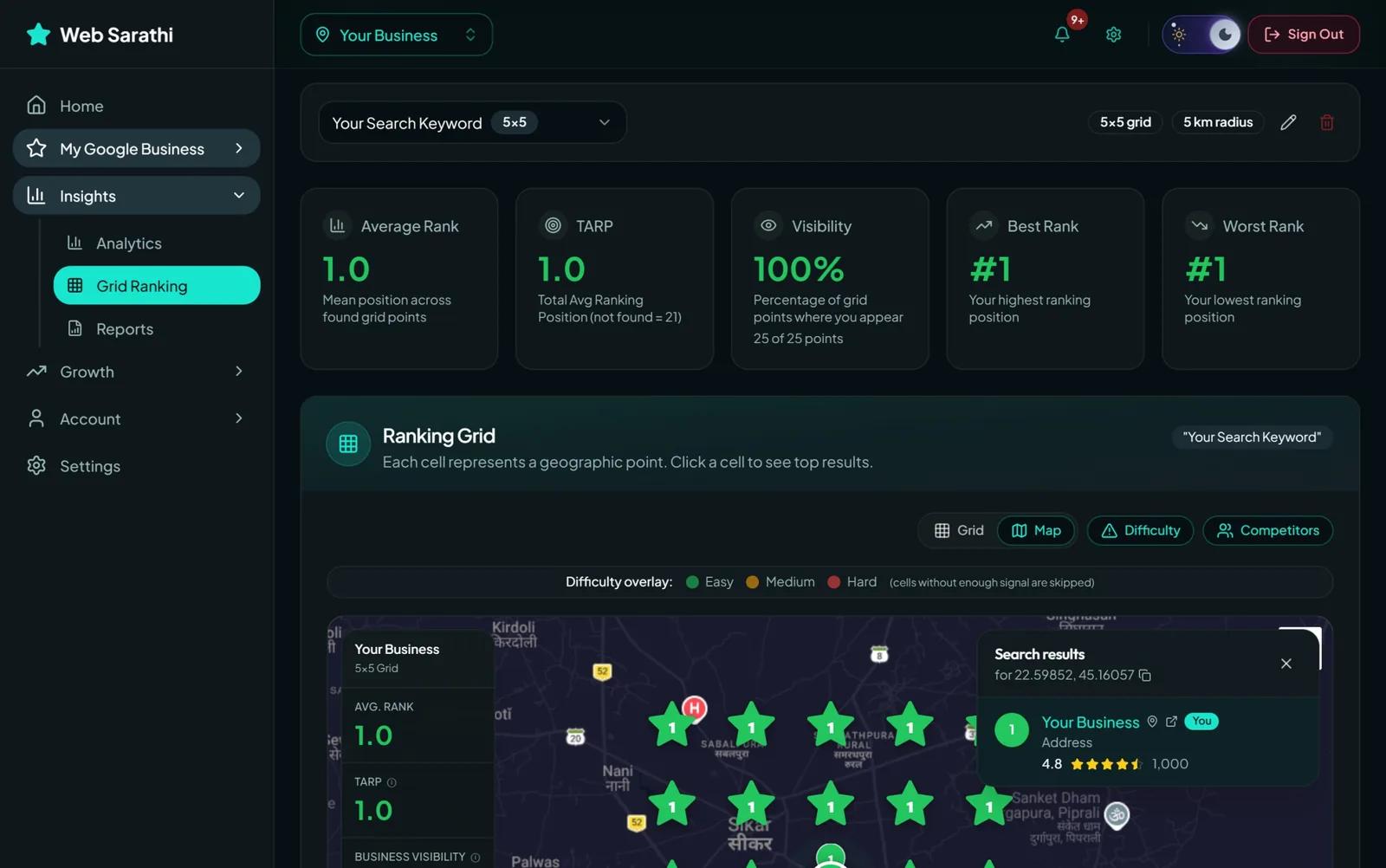
Grid ranking heat map showing Google Maps position across a neighbourhood

The restaurant playbook behind this page

In short: Everything on this page applies the national Restaurant SEO guide to Pune. These are its core rules.
A restaurant business owner at work, looking at the camera
  1. An Indian restaurant’s real competitor is the aggregator app; a diner who walks in from Google Maps pays no commission, while an aggregator order commonly loses a quarter to a third of its value.

  2. Hours work as a filter, not a ranking factor: a restaurant shown as closed is removed from open-now results, so split lunch and dinner windows and enter festival closures as soon as they are decided.

  3. Put dishes, prices and diet attributes on the profile; a search for a specific dish such as thali, kothu parotta or filter coffee cannot match a restaurant that has never named it.

  4. Restaurants have a review-handling problem, not a collection problem: answer every review within hours, in the language it was written in, for the next fifty readers rather than the reviewer.

  5. A delivery-only brand can hold its own Google profile only with distinct branded packaging and its own website, and it must hide the kitchen address and set service areas instead.

Pune at a glance

Pune’s local market has an old core and a much larger newer ring. The old peths, such as Shaniwar Peth, Sadashiv Peth and Budhwar Peth, along with Deccan and Camp, are dense with long-standing shops, eateries, clinics and wholesale trade. Around them, education, IT and manufacturing have produced large newer residential areas such as Kothrud, Baner, Aundh, Kharadi, Viman Nagar and Hadapsar, where apartment complexes create steady local demand for salons, gyms, cafés, clinics, coaching classes and home services.

Cross-city trips are slow enough that most residents look for everyday services close to home, so a clinic in Kharadi and one in Kothrud are rarely competing for the same patient. Pimpri-Chinchwad and the Hinjewadi IT belt form a separate market with their own search habits. Students and people who have moved to Pune for work tend to rely on reviews to choose unfamiliar businesses, while long-time residents in the older areas often search by peth, road or landmark, sometimes in Marathi.

The Mula and Mutha rivers, the Mumbai–Bengaluru highway bypass and congested roads such as Karve Road, University Road and Nagar Road make cross-city trips slow, so most customers stay within their own part of Pune.

Pune · 6 zones · 31 localities

Central Pune and the Peths

  • Sadashiv Peth
  • Shaniwar Peth
  • Narayan Peth
  • Budhwar Peth
  • Deccan
  • Shivajinagar
  • Camp

West Pune

  • Kothrud
  • Karve Nagar
  • Warje
  • Bavdhan
  • Pashan

North-West Pune

  • Aundh
  • Baner
  • Balewadi
  • Bopodi

East Pune

  • Koregaon Park
  • Kalyani Nagar
  • Viman Nagar
  • Kharadi
  • Wadgaon Sheri
  • Yerawada

South Pune

  • Katraj
  • Bibwewadi
  • Kondhwa
  • Dhankawadi
  • Market Yard

South-East Pune

  • Hadapsar
  • Magarpatta
  • Wanowrie
  • Mundhwa

Searched alongside the city

  • Pimpri-Chinchwad
  • Hinjewadi
  • Talegaon Dabhade
  • Chakan

Restaurant SEO in Pune: questions owners ask

We close from 3 to 7 every day. Will showing that on Google hurt us?

No, it protects you. A diner who sees you closed at four simply comes later or chooses elsewhere, which costs nothing; a diner who arrives at a shut kitchen because the profile said open writes the review. Enter both windows for every day, and say in the description when evening service starts.

Should we list misal as one dish or each variety separately?

List the varieties you actually serve, each with a price. Misal searchers often know whether they want it extra spicy, with dahi, or Kolhapuri-style, and naming each lets the search match exactly. Keep the names simple and the same as on your board, and photograph the one you are known for as it reaches the table.

Students near FC Road review us on the apps but rarely on Google. How do we change that?

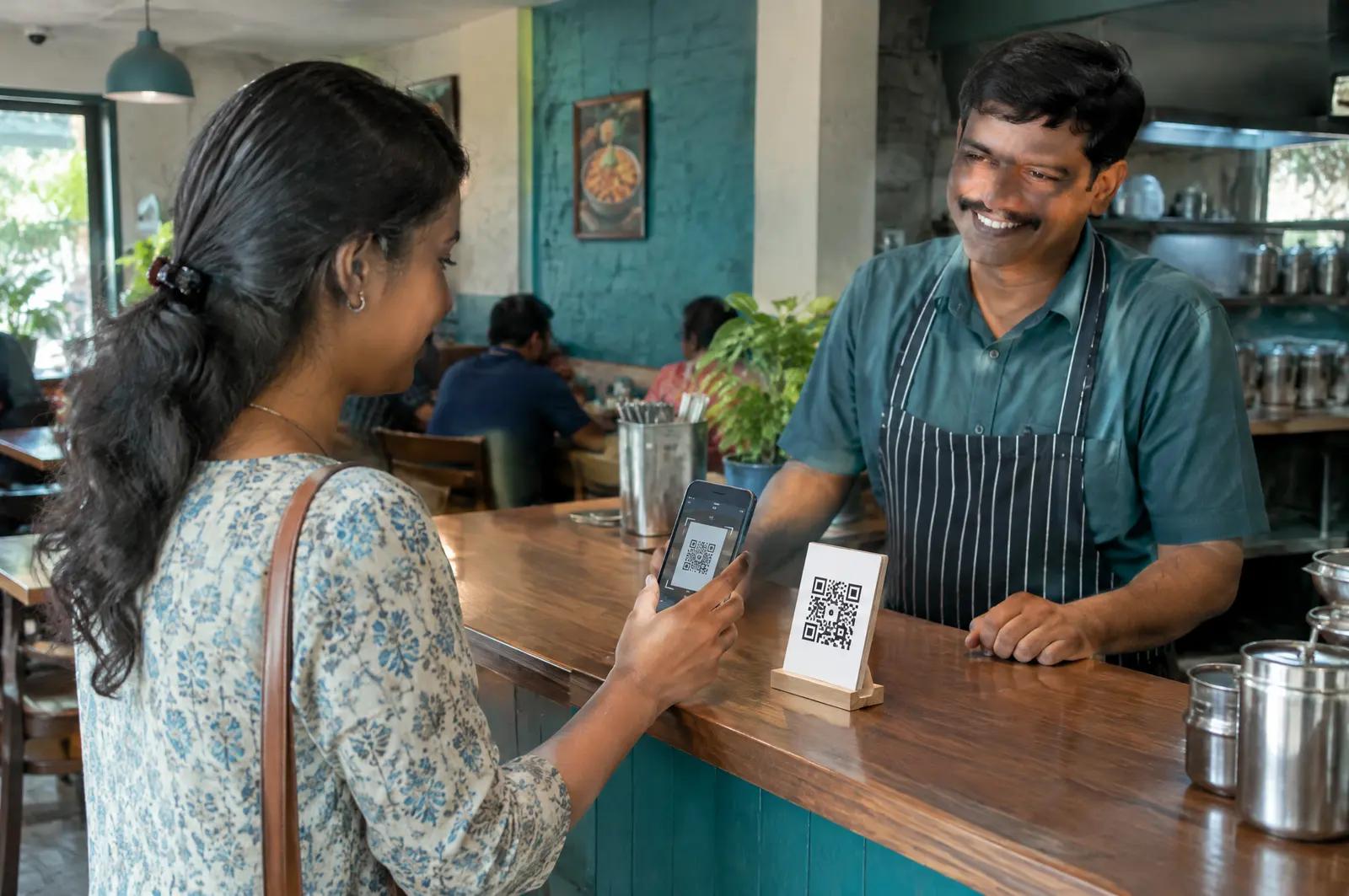
Ask at the counter, every time. Students are happy to review when asked and given an easy route: a QR code at the billing counter that opens your Google review page takes seconds. Do not offer discounts for reviews, which breaches Google’s rules. A steady trickle from regulars outweighs a burst from a single promotion.

We are in Hinjewadi. Should we try to rank for Pune city searches?

No. Hinjewadi and Wakad behave as their own market, with IT lunches on weekdays and residents’ dinners in the evenings. Win those: weekday lunch hours, team seating, delivery status, prices. Diners in the city rarely drive out for an ordinary meal, and chasing them spends effort that would pay off closer to home.

Which areas of Pune matter most for a restaurant business?

Start with Sadashiv Peth and Narayan Peth, FC Road and JM Road and Camp and MG Road. In Sadashiv Peth and Narayan Peth: Traditional vegetarian thali houses and misal counters with loyal, older Marathi-speaking regulars; split hours, Marathi replies and a vegetarian attribute win more than photography. Check your Google Maps position in each area separately, because ranking in one does not carry over to the next.

How do people in Pune search for a restaurant on Google?

They name the area as well as the service, in Marathi, Hindi and English. Typical searches include “kothrud javal misal” and “sadashiv peth madhe thali”. To win “kothrud javal misal”, your profile has to show misal named with its price and the early opening time.

When is the busiest season for restaurant businesses in Pune?

Demand in Pune moves with Gudi Padwa (Mar–Apr), Palkhi (Jun–Jul) and Monsoon (Jun–Sep). Families eat shrikhand-puri and festive thalis. Publish the Padwa thali with a price a week ahead, enter special hours if lunch runs long, and photograph the plate on the day.

How should a restaurant business in Pune measure its Google Maps ranking?

Scan a 9×9 grid over 4 km around your location rather than searching from your own premises. Cross-city trips in Pune are slow, so a neighbourhood restaurant rarely reaches past the rivers or the bypass. 4 km at 9×9, with points about a kilometre apart, shows where the Mula, the Mutha or the highway stops you. Centre it on the restaurant and scan misal or thali as well as the cuisine.

How does Web Sarathi help a restaurant business in Pune?

Web Sarathi audits your Google Business Profile on day one, gives you a short daily task list of about ten minutes, collects reviews through a QR code, drafts replies in the reviewer’s own language — including Marathi and Hindi — and maps your ranking across Pune so you can see which areas you are winning. You can start with a free audit.
How Web Sarathi helps

Everything above, done in about ten minutes a day

Ranking across Pune comes down to a few things done steadily. Web Sarathi tells you which ones to do today, does the slow parts for you, and maps your position across Pune so you can see it working.

  • A customer scanning the review QR code at a restaurant counterReviews in seconds
  • A restaurant business owner replying to reviews on a phoneReplies, steadily
  • A restaurant business owner photographing their work for a postReal photos, posted
  1. Audit and score

    Day one: more than 50 checks on your profile and a score out of 100, so you know exactly what is missing.

  2. Ten minutes a day

    A short daily task list — complete the profile first, then photos, posts, reviews and replies, in the right amounts.

  3. Reviews in seconds

    A QR code at the counter. Customers pick a suggested highlight, make it their own and post it from their Google account.

  4. Replies Google rewards

    One-click or automatic replies in the reviewer’s language, paced so the profile never looks automated.

  5. Posts and a live website

    Keyword-aware captions for your real photos, published to Google and to a website that updates itself every night.

  6. Rank map and protection

    Your Google Maps position street by street, the competitors beating you, and an alert when someone edits your profile.

Other businesses in Pune

Local SEO guides for other industries in Pune.

Be one of the three businesses Google shows first.

Start with a free audit of your Google profile: where you rank on a map around your business, the competitors Google shows above you, and what your profile is missing, so you know exactly what to fix first. Then sign up, pick an onboarding slot, and our experts set your profile up with you on Google Meet. After that, about ten minutes a day.

No credit card Expert setup on Google Meet, then your 7-day free trial

Read the Restaurant SEO guide