Restaurant SEO · Lucknow

Restaurant SEO in Lucknow: Awadhi dishes, late Ramzan nights and replies with tehzeeb

Lucknow’s diners know the food better than most menus describe it. They search for galouti kebab, kakori kebab, nihari-kulcha, sheermal and Awadhi biryani by name, and they know which lanes of Chowk and Aminabad are worth the crowd. A restaurant that lists only Mughlai or North Indian gives those searches nothing to match, however good its kebabs are.

Written by
Web Sarathi Local SEO Team
Last updated
Updated
Reading time
6 min read
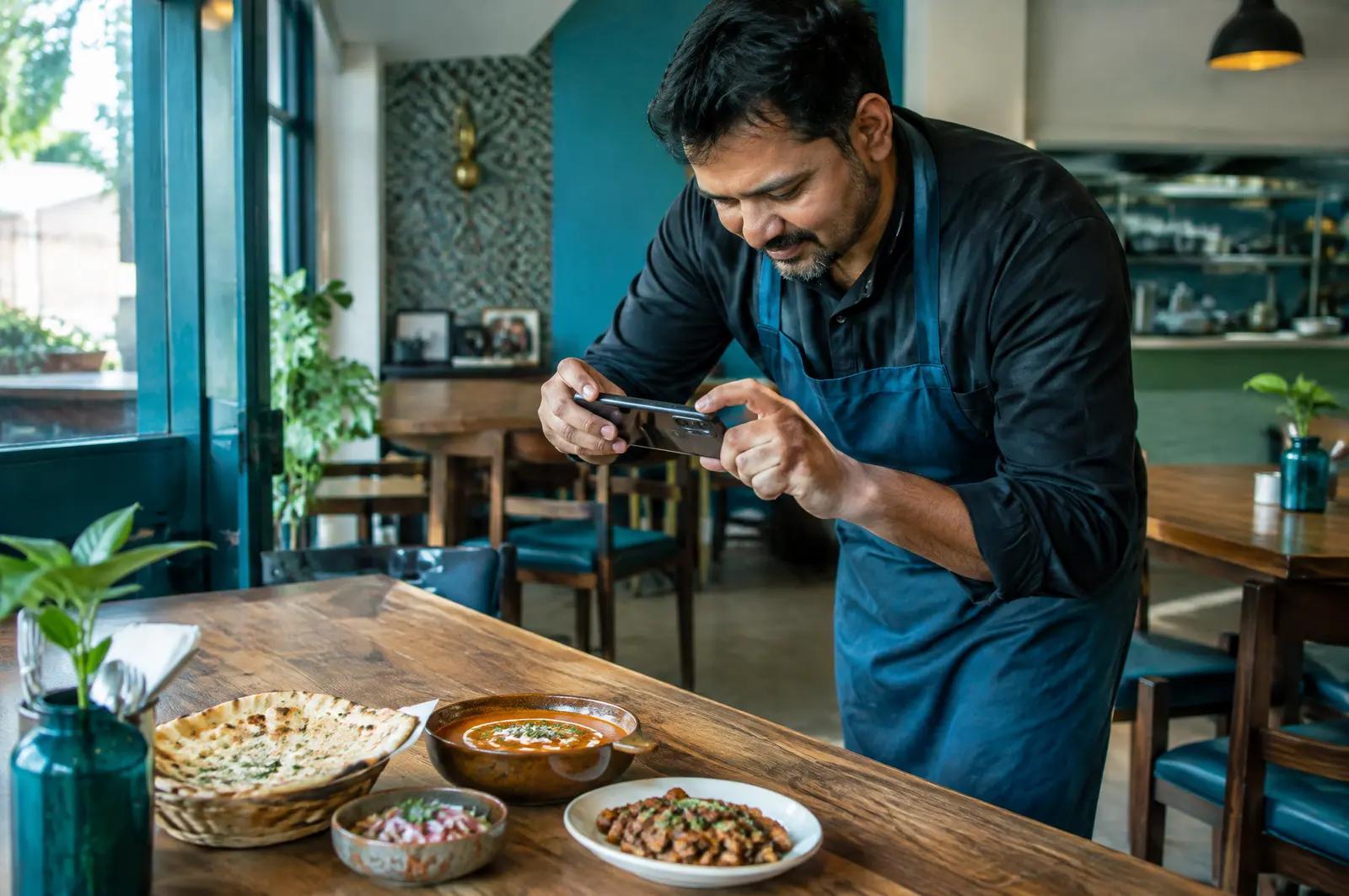
A restaurant business owner at work, looking at the camera
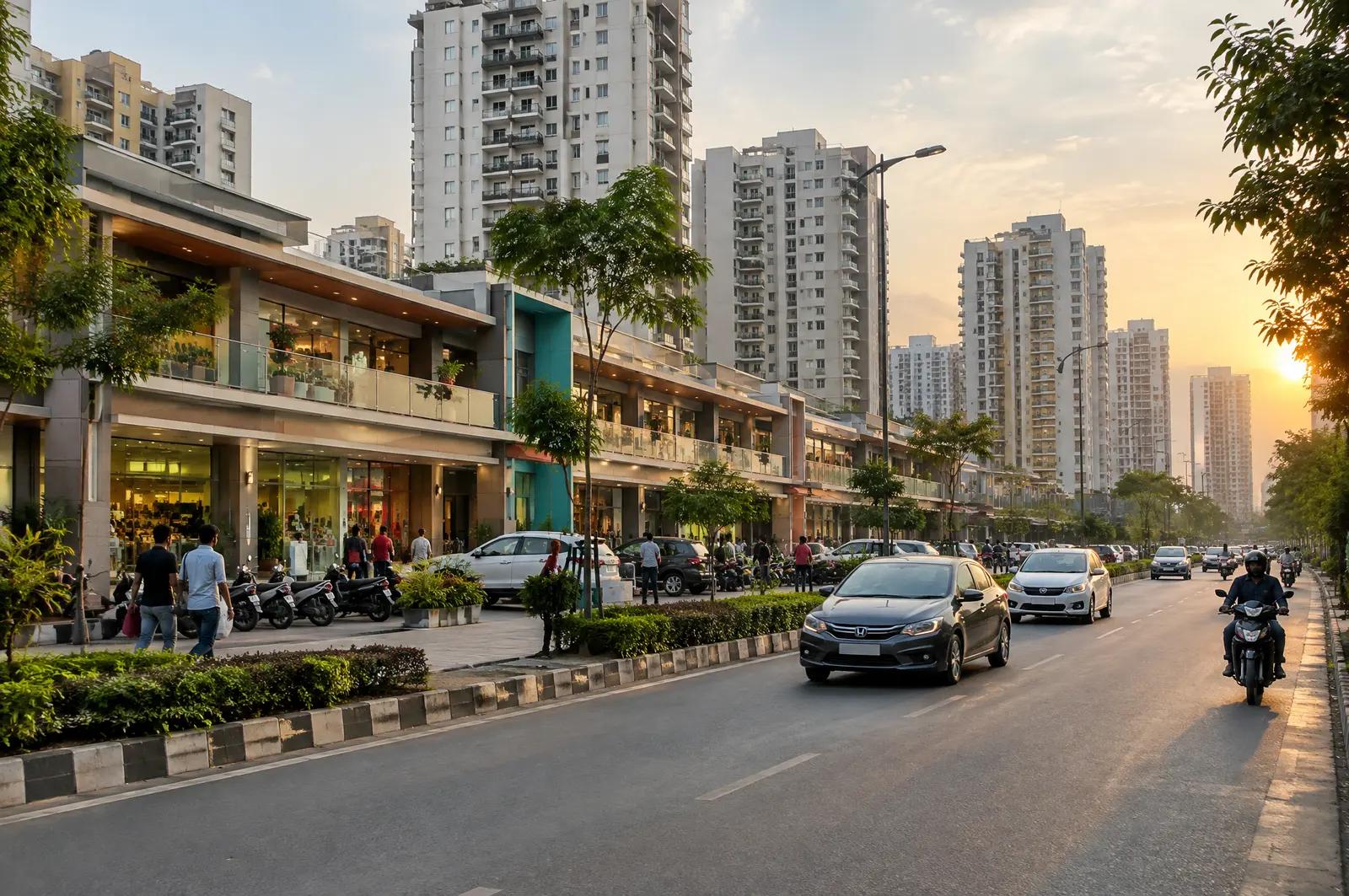
A commercial street in Lucknow, Uttar Pradesh, with local shops and traffic

Restaurant SEO · local report

Lucknow

Uttar Pradesh

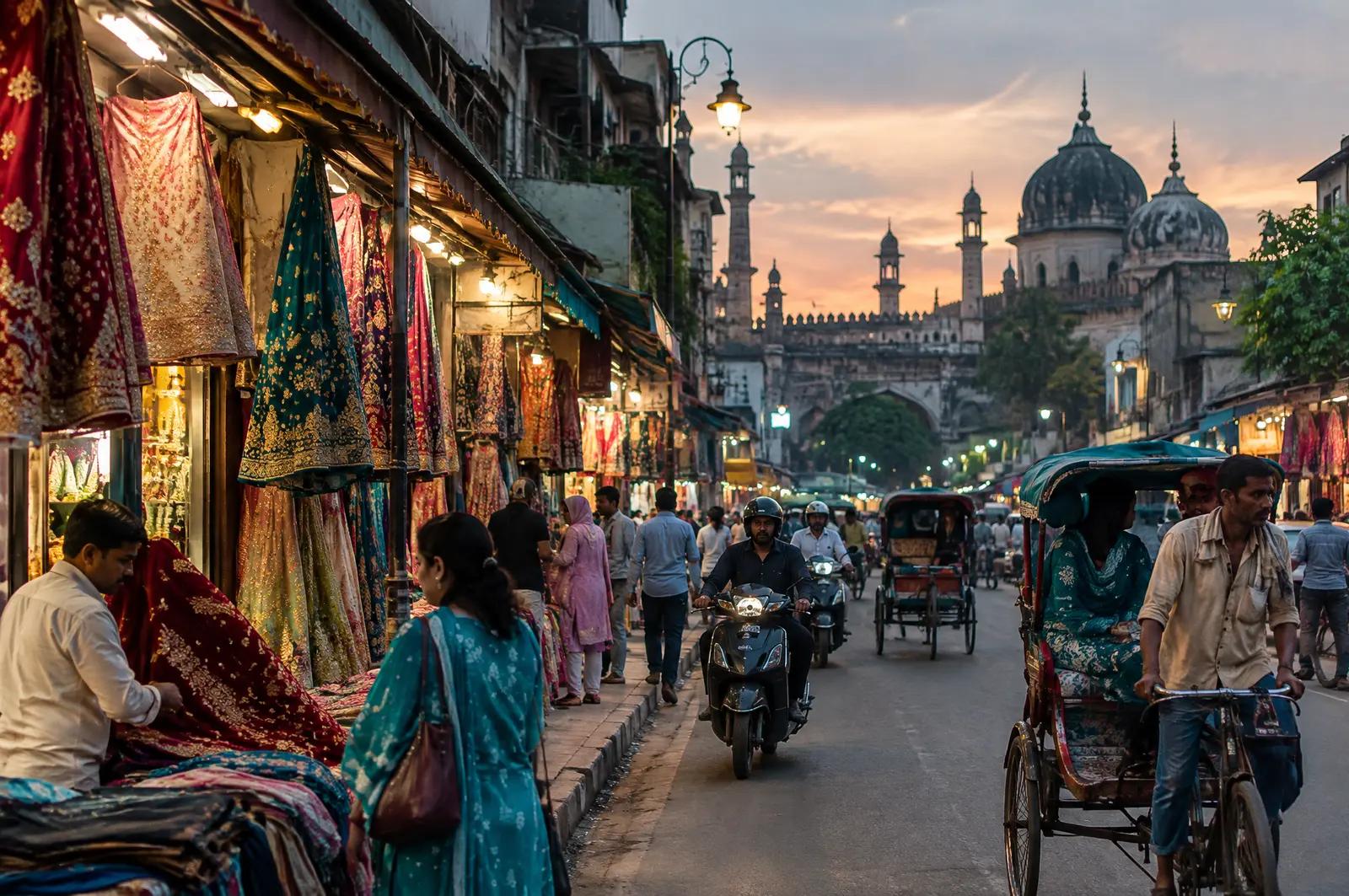
The city is split by the Gomti and by habit. The old city eats late, especially in Ramzan, when Chowk and Nakhas stay open for sehri, while Gomti Nagar and Indira Nagar eat out as families at weekends and choose from reviews. And Lucknow notices manners: a curt reply to a complaint reads badly in a city that prizes courtesy, and it is read by everyone deciding where to take their guests.

Search languages
Hindi · Urdu · English
Areas covered below
8 hotspots · 5 zones
Recommended scan
9×9 · 4 km
Key local dates
Ramzan and Eid · Holi · Navratri and Dussehra

Restaurant SEO in Lucknow: the short version

  1. Name each kebab and bread you serve — galouti, kakori, shami, sheermal — because Lucknow diners search the dish, not the cuisine.

  2. Enter Ramzan special hours covering sehri as well as iftar; late-night searches in the old city run well past normal closing.

  3. Write review replies with courtesy and specifics; in Lucknow the tone of the owner’s answer is part of the restaurant’s reputation.

  4. Treat the Gomti as a boundary for everyday dining; Gomti Nagar diners rarely cross the river for a routine meal.

Where restaurant demand concentrates in Lucknow

In short: In Lucknow, the areas that matter most for restaurant businesses are Chowk and Akbari Gate, Aminabad, Nakhas and 5 more below. Rank in each one separately; a single search from your own counter tells you nothing about them.

Lucknow · 8 areas to check one by one

  1. Chowk and Akbari Gate

    The old city’s kebab and nihari lanes draw diners from across Lucknow and visitors from outside; the halal attribute, early and late hours, and a frontage photograph decide who finds you in the crowd.

  2. Aminabad

    Crowded shopping lanes with long-running eateries for kebabs, kulfi and chaat; dish names, prices and accurate hours matter because shoppers decide on foot between errands.

  3. Nakhas

    Old-city lanes that come alive on Ramzan evenings and sehri nights; special hours and photographs of the counter after dark answer the visitor searching for where to go.

  4. Hazratganj

    Central Lucknow’s evening stroll brings families and young couples to cafés, chaat and restaurants; correct evening hours, photographs of the room and prices carry the decision.

  5. Gomti Nagar and Patrakarpuram

    Trans-Gomti families and young professionals eat out at weekends and pick from reviews and photographs; parking, family-friendly attributes and weekend closing times matter.

  6. Kapoorthala and Aliganj

    North Lucknow’s markets serve students and families with chaat, momos and casual dining; published prices and Hindi replies win over polish.

  7. Indira Nagar

    Bhootnath market and the lanes around it are busy with evening snacking; dish names and evening hours answer the search made from the street.

  8. Alambagh and Charbagh

    Travellers near the station and residents of the south search for quick meals; correct hours, takeaway status and a findable entrance matter more than ambience.

How people in Lucknow search for a restaurant

In short: People in Lucknow search in Hindi, Urdu, English, and they name the area, not just the service. Your profile has to match the words they actually type.
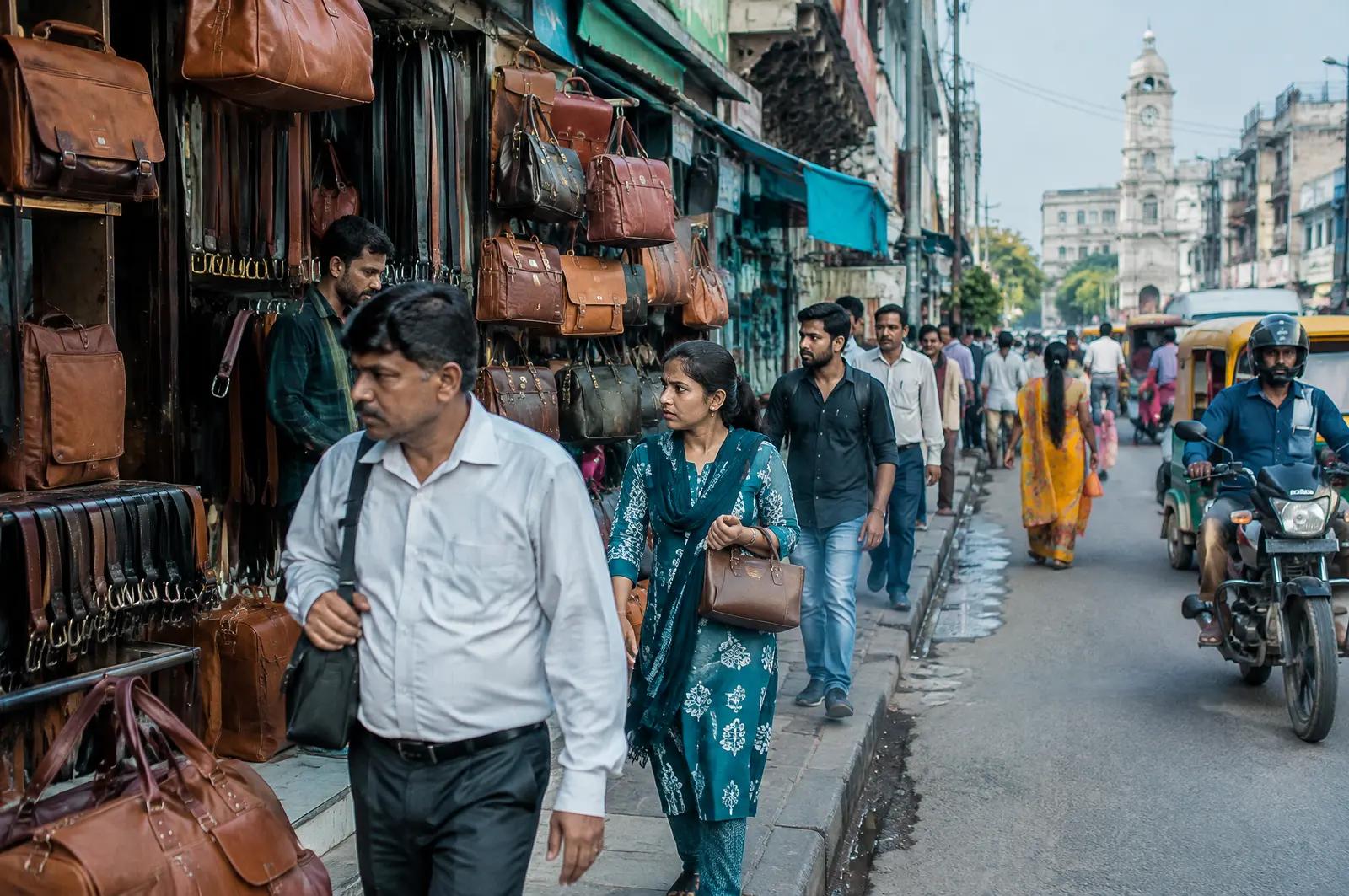
A customer in Lucknow looking up a nearby business on a phone
  • chowk mein nihari subah
    What they mean
    Hindi: “nihari in Chowk in the morning”
    What your profile must show
    The early opening time, and nihari named with its price
  • sehri ke liye khana aminabad
    What they mean
    Hindi/Urdu: “food for sehri in Aminabad”
    What your profile must show
    Ramzan special hours that cover the pre-dawn meal
  • galouti kebab near hazratganj
    What they mean
    A diner who has picked the kebab and wants the place
    What your profile must show
    Galouti named with its price and evening hours
  • makhan malai kahan milega
    What they mean
    Hindi: “where can I get makhan malai?”, a winter dessert
    What your profile must show
    The dish named in season, morning hours, a post when it starts
  • gomti nagar family restaurant with parking
    What they mean
    A weekend dinner by car
    What your profile must show
    Parking and family-friendly attributes
  • basket chaat hazratganj
    What they mean
    An evening snack during the stroll
    What your profile must show
    Chaat named, evening hours, prices
  • awadhi biryani kapoorthala
    What they mean
    A diner choosing biryani style before restaurant
    What your profile must show
    The biryani style named, with portions and prices

What makes Lucknow different

In short: What changes in Lucknow: Ramzan runs until sehri · Tehzeeb in the reply · Winter dishes, short seasons.
A local business owner in their shop in Lucknow

Ramzan runs until sehri

In Ramzan the old city’s lanes stay busy from iftar through to sehri before dawn, and visitors search for somewhere to eat at hours the profile normally shows as closed. Enter special hours that cover both meals, name the Ramzan dishes on the menu, and photograph the counter at night. Restaurants that leave regular hours in place disappear exactly when the lanes are fullest.

Tehzeeb in the reply

Lucknow judges manners. A defensive or curt reply to a complaint is read by every family choosing where to take guests, and it costs more here than elsewhere. Thank the diner, acknowledge the specific failure, say what changed, and keep it short. Reply in Hindi or Urdu when the review is written in it.

Winter dishes, short seasons

Makhan malai, nihari on cold mornings, gajar ka halwa: Lucknow’s winter menu draws searches only while the weather lasts. Add seasonal dishes as they appear, post when the season starts, and take them off when it ends. Early winter mornings are also open-now searches, so check your opening times if you start earlier in the cold months.

The Lucknow restaurant calendar

In short: Demand in Lucknow moves with Ramzan and Eid (Feb–Mar), Holi (Mar), Navratri and Dussehra (Sep–Oct). Prepare your profile two to three weeks before each one.
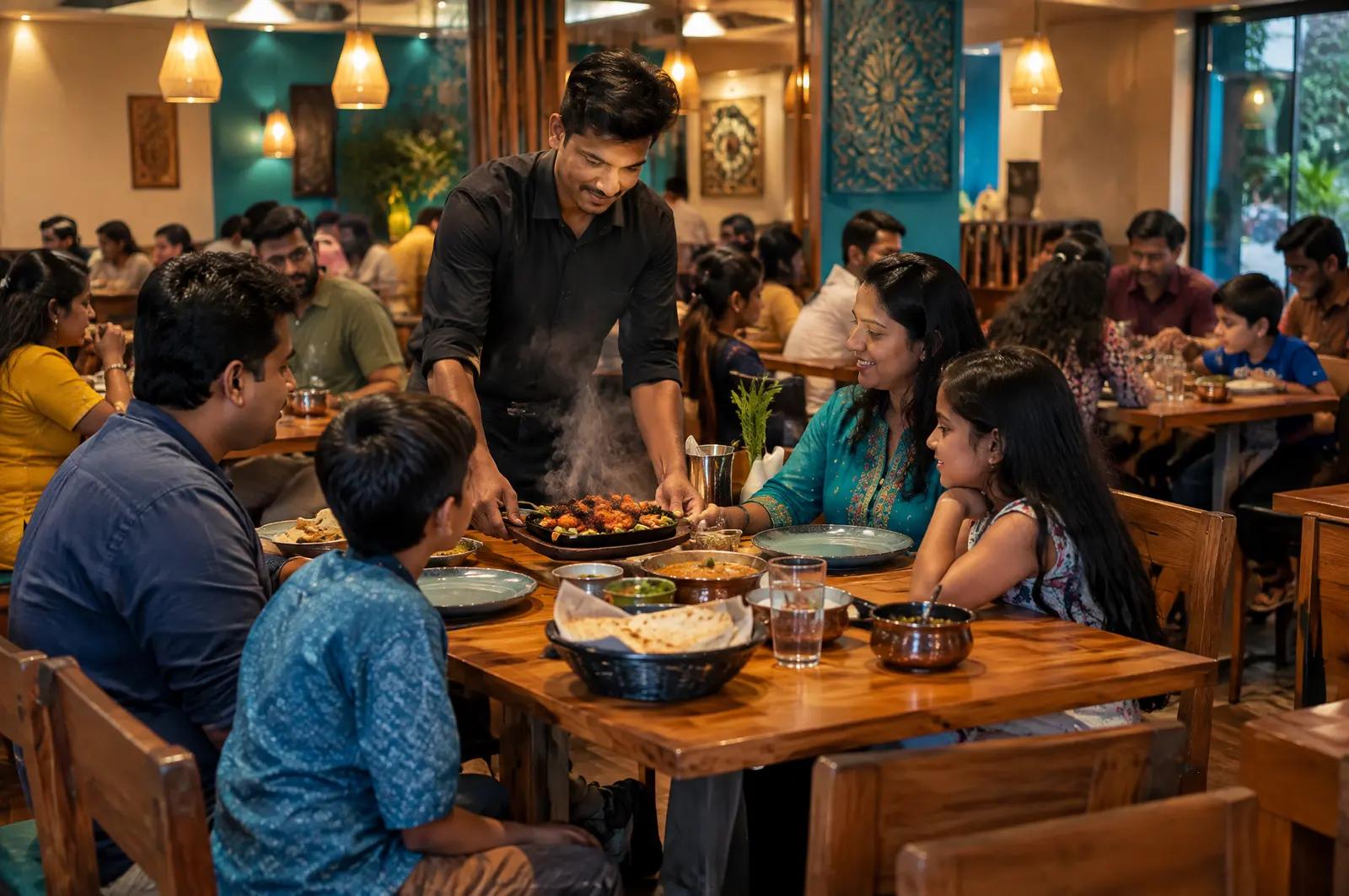
A busy family restaurant dining room in the evening, a waiter serving sizzling platters
  1. Ramzan and EidFeb–Mar

    Enter special hours covering iftar and sehri two weeks ahead, list Ramzan dishes with prices, and post Eid holiday timings the week before so families can plan the Eid meal.

  2. HoliMar

    Many kitchens close for the morning and reopen for the evening. Enter special hours a week ahead and post your reopening time, since families search for dinner once the colours are washed off.

  3. Navratri and DussehraSep–Oct

    Many families avoid meat for nine days. Publish a vegetarian or vrat menu two weeks ahead, expect non-vegetarian covers to dip, and use the quieter evenings for photographs.

  4. DiwaliOct–Nov

    Office parties and family dinners fill the week before. Put set menus and booking routes live two weeks out, and enter Diwali-day closures in advance.

  5. Winter and Lucknow MahotsavNov–Jan

    The annual festival and the first cold mornings bring visitors and winter dishes. Post makhan malai and nihari as they start, and check that early opening hours are right.

Measuring your reach across Lucknow

In short: Scan a 9×9 grid over 4 km around your location to see where you appear in the local pack and where a competitor beats you.

Example scan, Lucknow

Example

9×9 grid, 4 km radius, points about 1 km apart

Lucknow diners cross town for a kebab they trust but not for an ordinary dinner, so 4 km at 9×9, with points a kilometre apart, separates the two. Centre it on the restaurant, scan a dish such as galouti kebab alongside the cuisine, and see whether either crosses the Gomti.

In the top three at 19 of 80 points

  • Top 3, the local pack19 points
  • Ranks 4 to 1027 points
  • Ranks 11 to 3012 points
  • Ranks 31 to 10012 points
  • Not in the results10 points
  • Your business, at the centre of the scan

Illustration. A real Web Sarathi scan plots your actual Google Maps position at every point, with the businesses ranking above you.

Grid ranking

Find out which streets you are actually invisible on

Searching from behind your own counter tells you nothing. Grid ranking measures your Maps position from dozens of points around the restaurant and returns a heat map of your real catchment.

  • See how far your visibility actually reaches, street by street
  • Track a dish or cuisine keyword over weeks instead of guessing
  • Compare honestly against the neighbour you assume is beating you
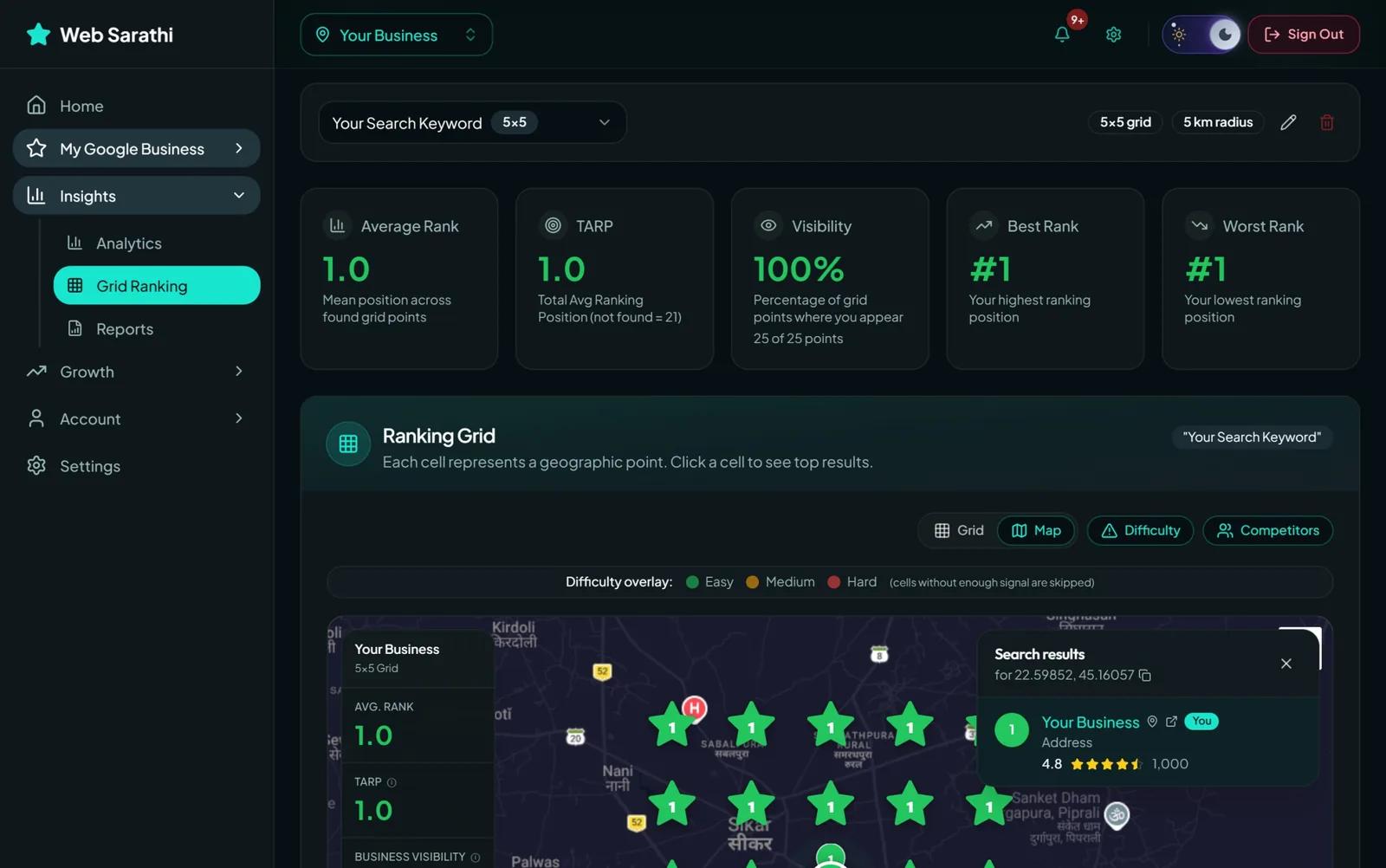
Grid ranking heat map showing Google Maps position across a neighbourhood

The restaurant playbook behind this page

In short: Everything on this page applies the national Restaurant SEO guide to Lucknow. These are its core rules.
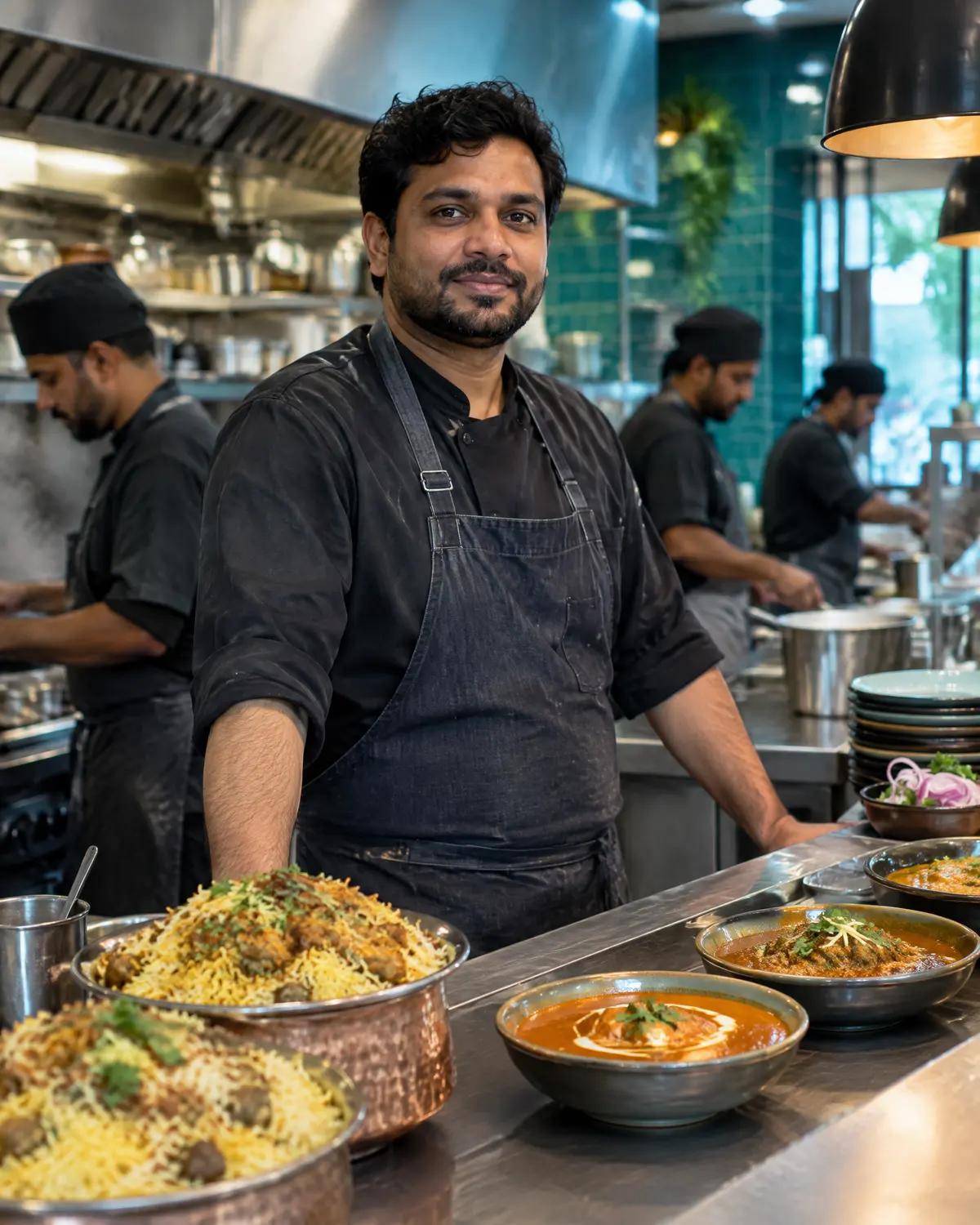
A chef-owner in a dark apron at the pass of a busy open restaurant kitchen
  1. An Indian restaurant’s real competitor is the aggregator app; a diner who walks in from Google Maps pays no commission, while an aggregator order commonly loses a quarter to a third of its value.

  2. Hours work as a filter, not a ranking factor: a restaurant shown as closed is removed from open-now results, so split lunch and dinner windows and enter festival closures as soon as they are decided.

  3. Put dishes, prices and diet attributes on the profile; a search for a specific dish such as thali, kothu parotta or filter coffee cannot match a restaurant that has never named it.

  4. Restaurants have a review-handling problem, not a collection problem: answer every review within hours, in the language it was written in, for the next fifty readers rather than the reviewer.

  5. A delivery-only brand can hold its own Google profile only with distinct branded packaging and its own website, and it must hide the kitchen address and set service areas instead.

Lucknow at a glance

Lucknow’s local market runs on government, education, healthcare and a strong food and retail culture. The older city around Aminabad, Chowk and Nakhas is known for chikankari, wholesale trade and food, with family businesses that have served the same neighbourhoods for generations. Hazratganj remains the best-known central shopping area, while Gomti Nagar, Aliganj, Indira Nagar and Alambagh have grown into the city’s main residential markets for clinics, coaching institutes, salons, gyms and restaurants.

The Gomti river divides the city. Gomti Nagar, Indira Nagar and Aliganj lie on the trans-Gomti side, while the old city, Hazratganj, Charbagh and Alambagh are on the other, and residents tend to choose businesses on their own side. The newer areas lean on Google search and reviews when choosing a business, while the older city still relies heavily on word of mouth and long-standing reputations. Searches and reviews are mostly in Hindi and English, with Urdu common in the old city.

The Gomti splits the old city and Hazratganj from the trans-Gomti areas, and traffic at its bridges and around Charbagh and Aminabad keeps most customers on their own side of the river.

Lucknow · 5 zones · 26 localities

Old Lucknow

  • Chowk
  • Aminabad
  • Nakhas
  • Yahiyaganj
  • Thakurganj
  • Saadatganj

Central Lucknow

  • Hazratganj
  • Lalbagh
  • Qaiserbagh
  • Narhi
  • Charbagh

North Lucknow (Trans-Gomti)

  • Aliganj
  • Kapoorthala
  • Jankipuram
  • Vikas Nagar
  • Mahanagar
  • Nirala Nagar

East Lucknow

  • Gomti Nagar
  • Gomti Nagar Extension
  • Indira Nagar
  • Chinhat

South Lucknow

  • Alambagh
  • Ashiyana
  • LDA Colony
  • Sarojini Nagar
  • Telibagh

Searched alongside the city

  • Bakshi Ka Talab
  • Barabanki
  • Unnao

Restaurant SEO in Lucknow: questions owners ask

We are in Chowk. Should we list every kebab separately?

Yes, each one you make regularly, with a price. Galouti, kakori, shami and seekh are different searches, and diners who know the old city search them by name. A single entry for kebabs matches none of them precisely. Add sheermal, kulcha and nihari as separate dishes too, and keep prices current through Ramzan.

How should we reply to a harsh review about a slow order during Ramzan?

Promptly and with courtesy. Acknowledge the wait, explain briefly if the night was unusually busy, and say what you are changing, such as an extra counter at sehri. Do not argue about the minutes. Everybody reading knows Ramzan nights are crowded; they are judging whether you take responsibility.

Our restaurant is in Gomti Nagar. Should we try to rank for Chowk searches?

No. Diners searching around Chowk want the old city, and the river and the distance put you outside their choice set. Win Gomti Nagar, Indira Nagar and the trans-Gomti colonies, where families choose from reviews and photographs. If you serve a dish people cross the city for, name it; that is the only reach worth chasing.

Is makhan malai worth a post if we only sell it for a few months?

Yes, at the start of the season and again on cold weekends. It is searched by name, often by visitors, and only in winter. Add it to the menu with a price, note the hours you sell it, since it is usually a morning dish, and remove it when the season ends.

Which areas of Lucknow matter most for a restaurant business?

Start with Chowk and Akbari Gate, Aminabad and Nakhas. In Chowk and Akbari Gate: The old city’s kebab and nihari lanes draw diners from across Lucknow and visitors from outside; the halal attribute, early and late hours, and a frontage photograph decide who finds you in the crowd. Check your Google Maps position in each area separately, because ranking in one does not carry over to the next.

How do people in Lucknow search for a restaurant on Google?

They name the area as well as the service, in Hindi, Urdu and English. Typical searches include “chowk mein nihari subah” and “sehri ke liye khana aminabad”. To win “chowk mein nihari subah”, your profile has to show the early opening time, and nihari named with its price.

When is the busiest season for restaurant businesses in Lucknow?

Demand in Lucknow moves with Ramzan and Eid (Feb–Mar), Holi (Mar) and Navratri and Dussehra (Sep–Oct). Enter special hours covering iftar and sehri two weeks ahead, list Ramzan dishes with prices, and post Eid holiday timings the week before so families can plan the Eid meal.

How should a restaurant business in Lucknow measure its Google Maps ranking?

Scan a 9×9 grid over 4 km around your location rather than searching from your own premises. Lucknow diners cross town for a kebab they trust but not for an ordinary dinner, so 4 km at 9×9, with points a kilometre apart, separates the two. Centre it on the restaurant, scan a dish such as galouti kebab alongside the cuisine, and see whether either crosses the Gomti.

How does Web Sarathi help a restaurant business in Lucknow?

Web Sarathi audits your Google Business Profile on day one, gives you a short daily task list of about ten minutes, collects reviews through a QR code, drafts replies in the reviewer’s own language — including Hindi and Urdu — and maps your ranking across Lucknow so you can see which areas you are winning. You can start with a free audit.
How Web Sarathi helps

Everything above, done in about ten minutes a day

Ranking across Lucknow comes down to a few things done steadily. Web Sarathi tells you which ones to do today, does the slow parts for you, and maps your position across Lucknow so you can see it working.

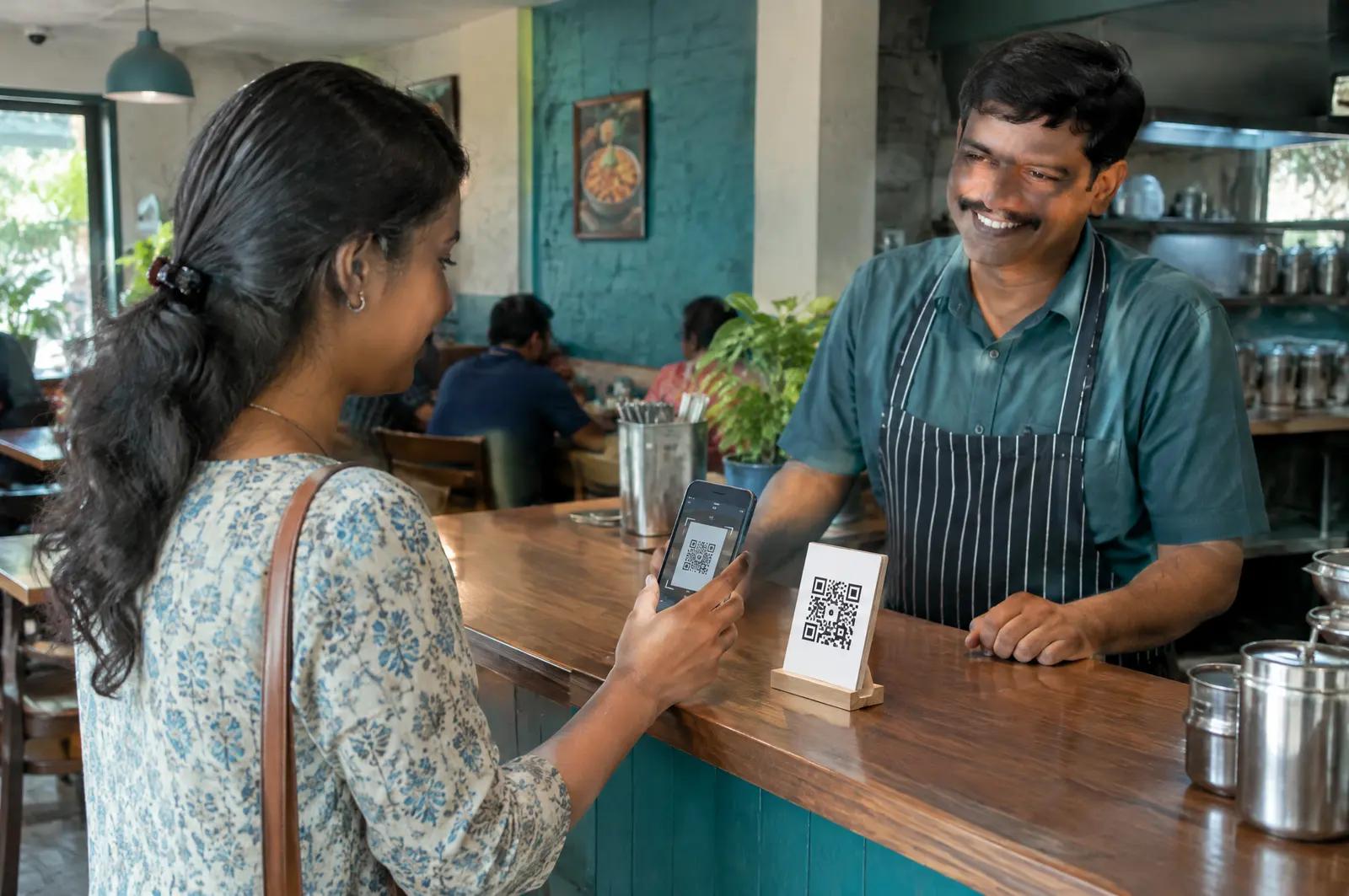
  • A customer scanning the review QR code at a restaurant counterReviews in seconds
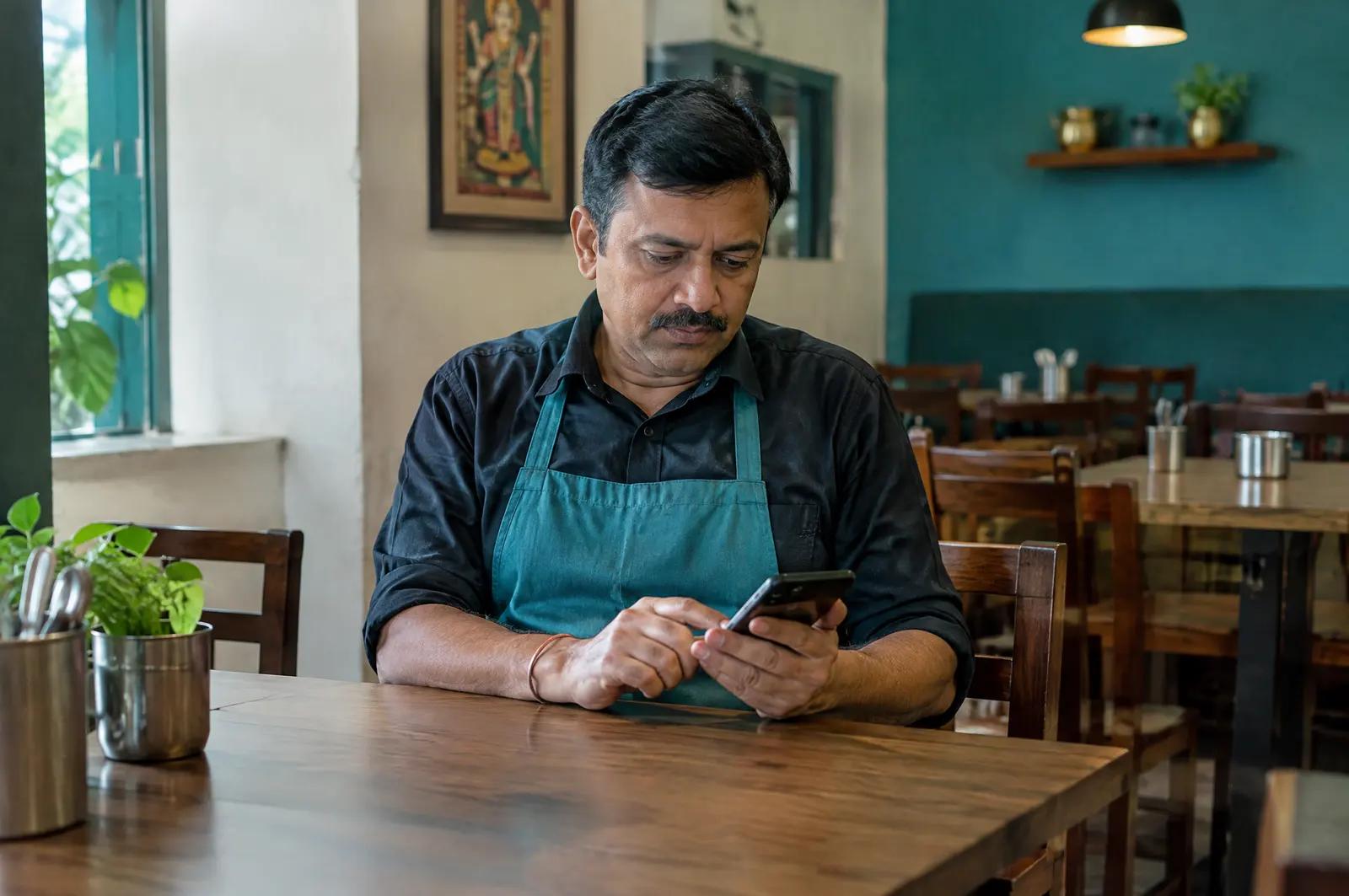
  • A restaurant business owner replying to reviews on a phoneReplies, steadily
  • A restaurant business owner photographing their work for a postReal photos, posted
  1. Audit and score

    Day one: more than 50 checks on your profile and a score out of 100, so you know exactly what is missing.

  2. Ten minutes a day

    A short daily task list — complete the profile first, then photos, posts, reviews and replies, in the right amounts.

  3. Reviews in seconds

    A QR code at the counter. Customers pick a suggested highlight, make it their own and post it from their Google account.

  4. Replies Google rewards

    One-click or automatic replies in the reviewer’s language, paced so the profile never looks automated.

  5. Posts and a live website

    Keyword-aware captions for your real photos, published to Google and to a website that updates itself every night.

  6. Rank map and protection

    Your Google Maps position street by street, the competitors beating you, and an alert when someone edits your profile.

Other businesses in Lucknow

Local SEO guides for other industries in Lucknow.

Be one of the three businesses Google shows first.

Start with a free audit of your Google profile: where you rank on a map around your business, the competitors Google shows above you, and what your profile is missing, so you know exactly what to fix first. Then sign up, pick an onboarding slot, and our experts set your profile up with you on Google Meet. After that, about ten minutes a day.

No credit card Expert setup on Google Meet, then your 7-day free trial

Read the Restaurant SEO guide