Restaurant SEO in Chennai: the short version
Where restaurant demand concentrates in Chennai
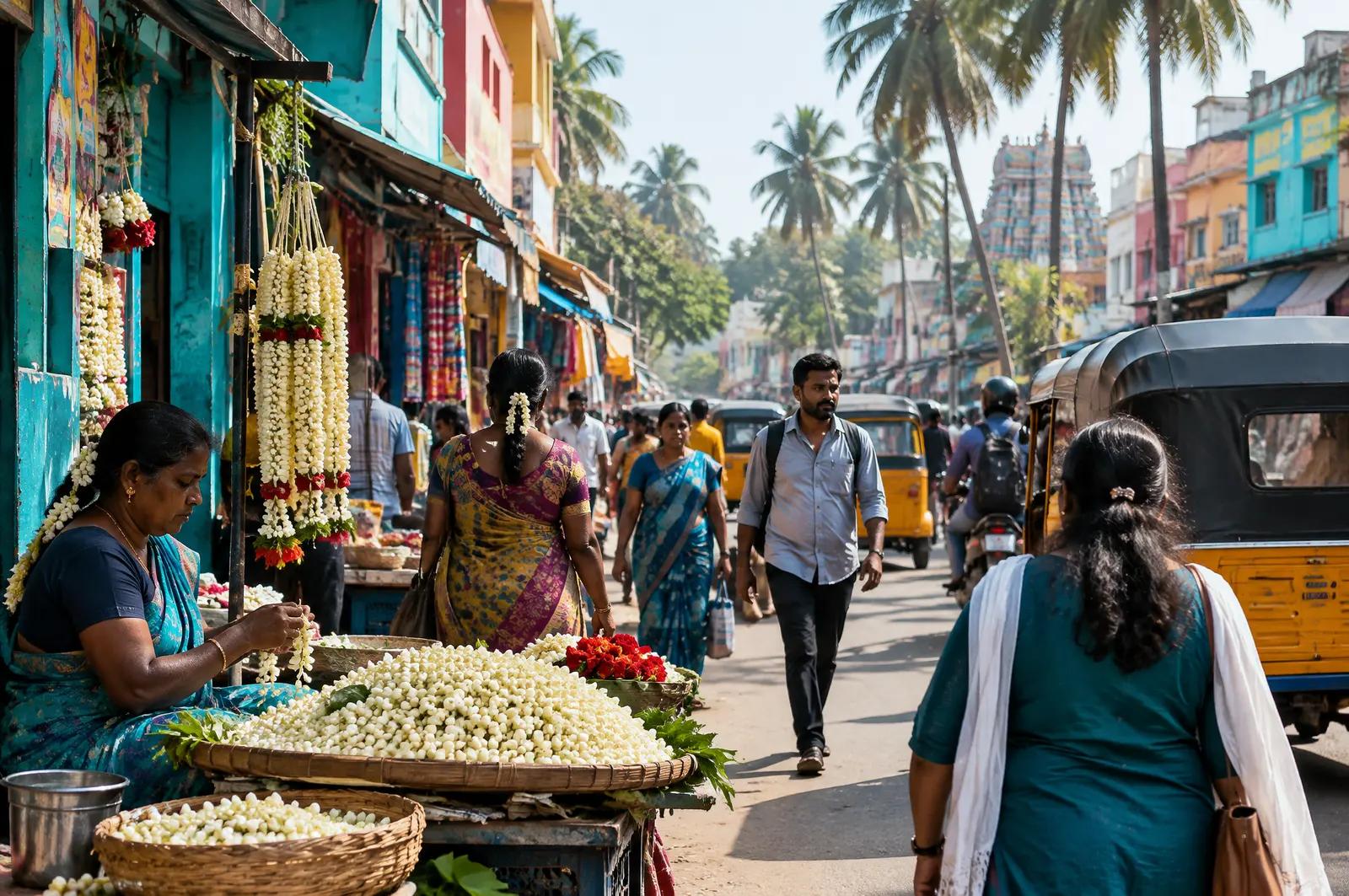
In short: In Chennai, the areas that matter most for restaurant businesses are Mylapore, T. Nagar and Pondy Bazaar, Triplicane and 5 more below. Rank in each one separately; a single search from your own counter tells you nothing about them.
Chennai · 8 areas to check one by one
How people in Chennai search for a restaurant
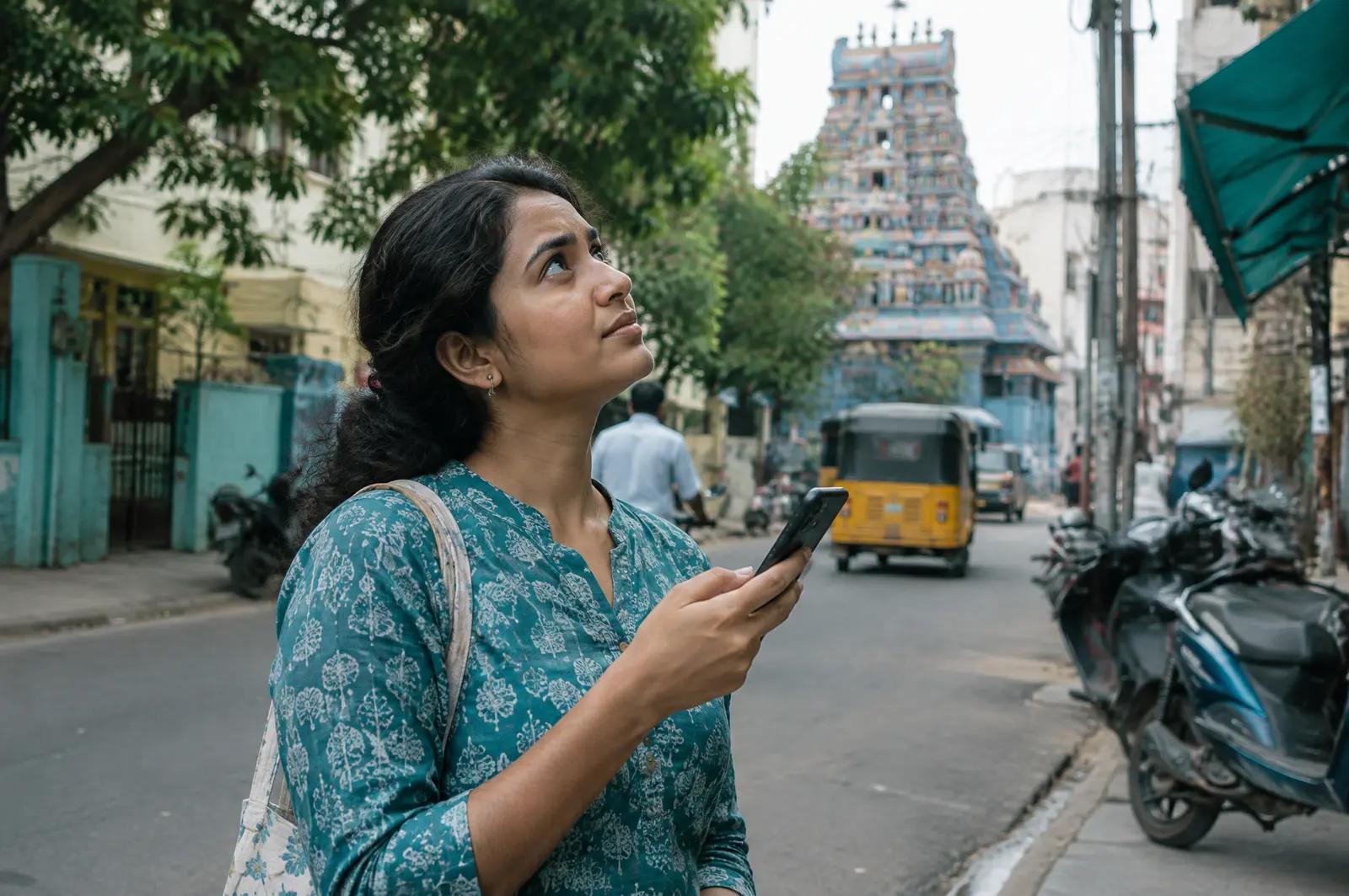
In short: People in Chennai search in Tamil, English, Telugu, and they name the area, not just the service. Your profile has to match the words they actually type.
What makes Chennai different
In short: What changes in Chennai: Tiffin and meals are separate services · The northeast monsoon · Margazhi and the sabha canteens.
The Chennai restaurant calendar
In short: Demand in Chennai moves with Pongal (Jan), Ramzan (Feb–Mar), Deepavali (Oct–Nov). Prepare your profile two to three weeks before each one.
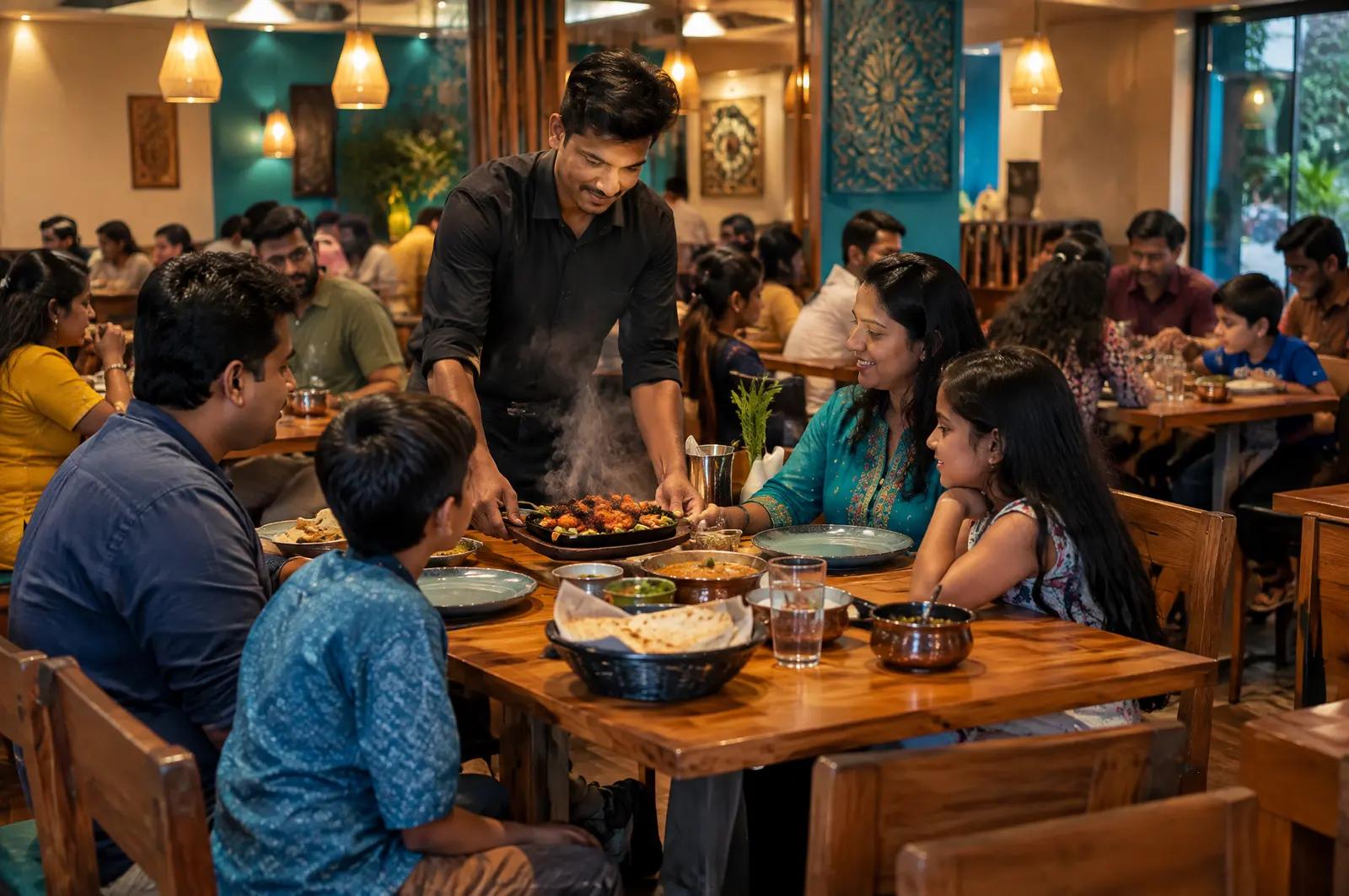
PongalJan
Families cook sakkarai pongal at home, then head out on Kaanum Pongal to beaches and parks. Enter closures for Bhogi or Mattu Pongal a week ahead and post your reopening day.
RamzanFeb–Mar
Triplicane and the Mount Road lanes fill for iftar. List Ramzan specials with prices, enter late hours two weeks ahead, and post iftar timings a week out.
DeepavaliOct–Nov
T. Nagar shopping crowds peak in the weeks before, and families eat out after shopping. Post evening tiffin and festival sweets early, and enter Deepavali-day closures in advance.
Northeast monsoonOct–Dec
Enter special hours for any day you close, keep delivery and takeaway status accurate, post each heavy-rain morning whether you are open, and answer reviews about closures calmly and the same day.
Margazhi seasonDec–Jan
Concert-goers fill Mylapore and T. Nagar from early morning. Post early opening and the tiffin menu by late November, and keep hours accurate for the whole season.
Measuring your reach across Chennai
In short: Scan a 7×7 grid over 3 km around your location to see where you appear in the local pack and where a competitor beats you.
Example scan, Chennai
Example7×7 grid, 3 km radius, points about 1 km apart
Chennai diners stay within their own stretch, and the Adyar, the Cooum and the rail lines bend catchments. 3 km at 7×7, with points a kilometre apart, shows where yours stops. Centre it on the restaurant, scan tiffin or meals as well as the cuisine, and look for a hard edge at a bridge or rail crossing.
In the top three at 14 of 48 points
- Top 3, the local pack14 points
- Ranks 4 to 1014 points
- Ranks 11 to 308 points
- Ranks 31 to 1004 points
- Not in the results8 points
- Your business, at the centre of the scan
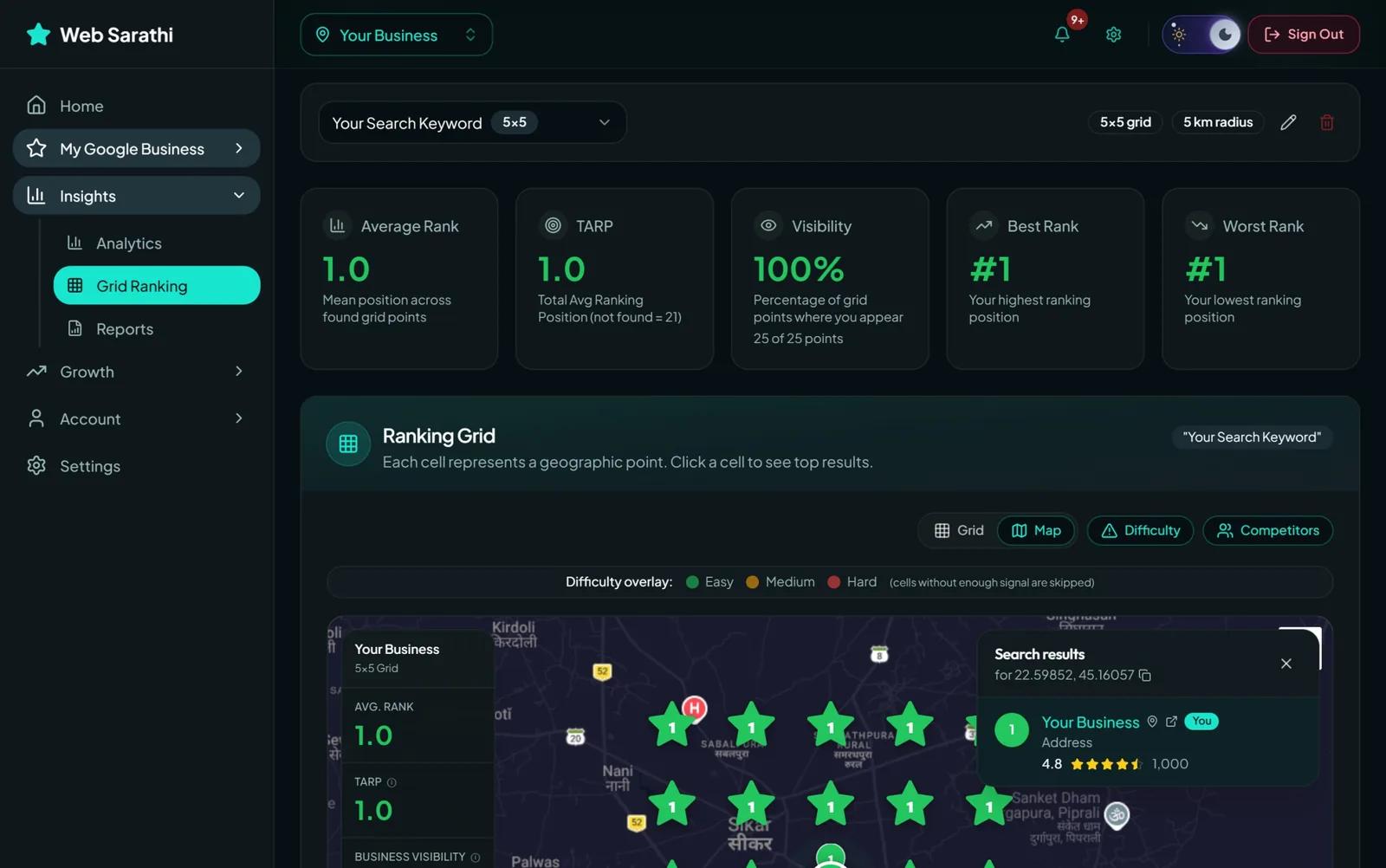
Illustration. A real Web Sarathi scan plots your actual Google Maps position at every point, with the businesses ranking above you.
Find out which streets you are actually invisible on
Searching from behind your own counter tells you nothing. Grid ranking measures your Maps position from dozens of points around the restaurant and returns a heat map of your real catchment.
- See how far your visibility actually reaches, street by street
- Track a dish or cuisine keyword over weeks instead of guessing
- Compare honestly against the neighbour you assume is beating you
The restaurant playbook behind this page
In short: Everything on this page applies the national Restaurant SEO guide to Chennai. These are its core rules.
Chennai at a glance
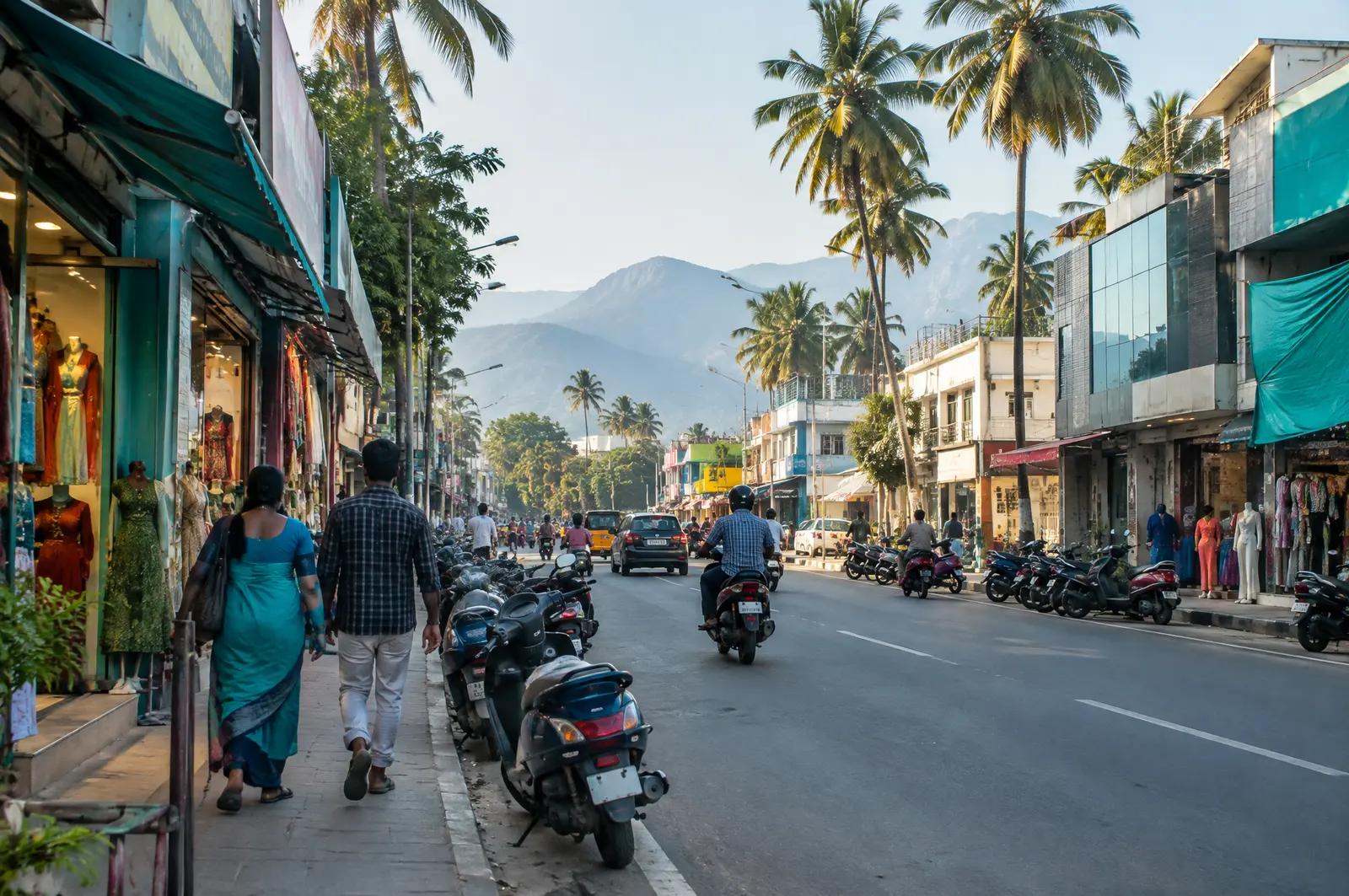
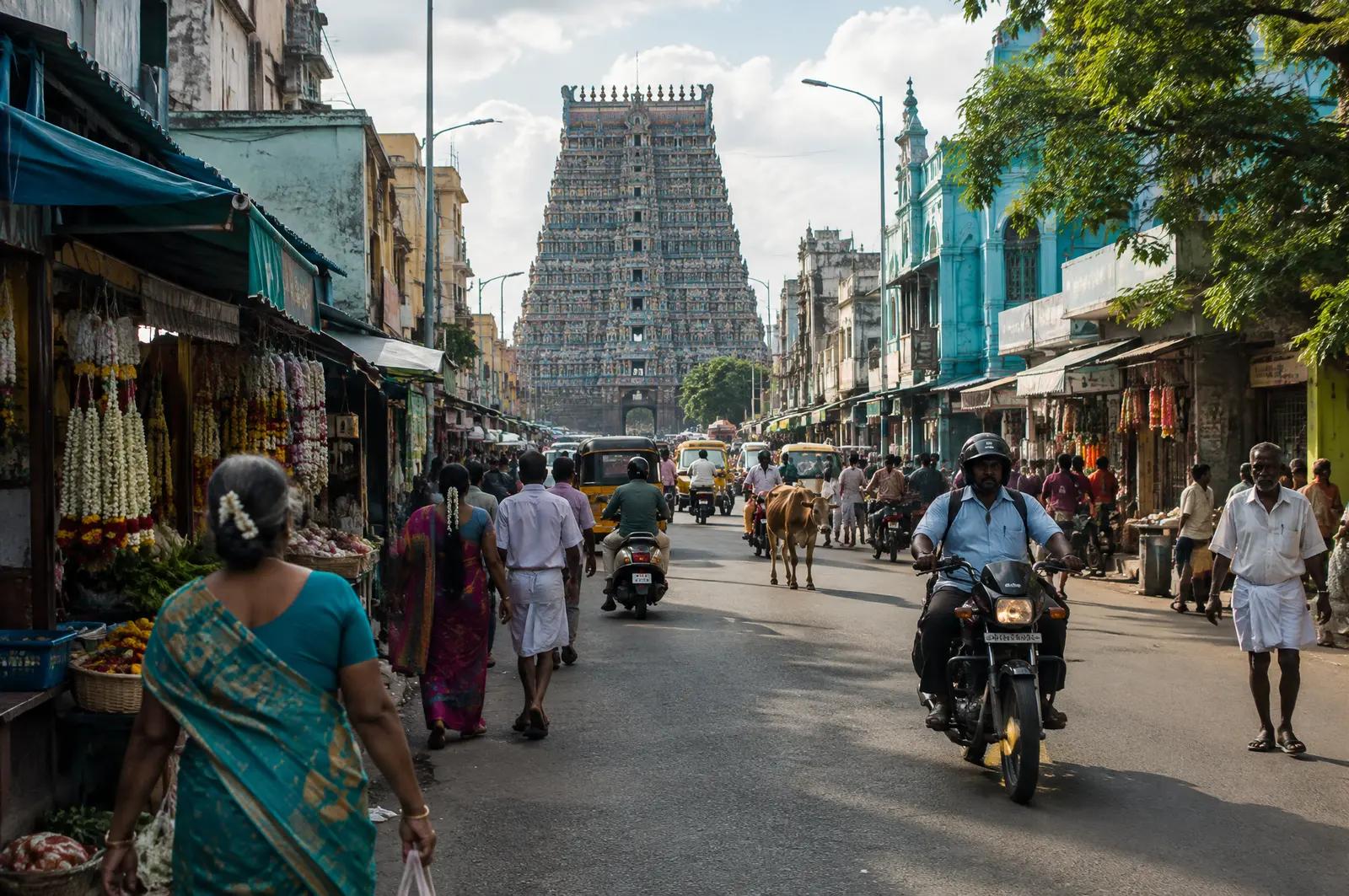
Chennai’s commercial life is organised around long-established neighbourhood markets and a fast-growing southern IT corridor. T. Nagar is the city’s main destination for textiles, jewellery and wedding shopping, while Mylapore, Purasawalkam and George Town carry generations of family-run trade. Anna Nagar, Adyar and Velachery have become full-service residential hubs, and Old Mahabalipuram Road (OMR) and East Coast Road (ECR) have filled with apartments, schools, clinics and restaurants catering to people who work in the IT parks along the corridor.
Residents of the southern suburbs, from Tambaram to Sholinganallur, mostly look for services in their own stretch rather than travelling into the centre, and North Chennai has a distinct, older market of its own. Searches and reviews mix Tamil and English, and customers commonly identify a business by its road, signal or landmark, so naming the area and a familiar landmark in a profile helps it appear in the right local searches. Demand around Pongal, Deepavali and the main wedding months runs high for textiles, jewellery, caterers, salons and photographers.
The Adyar and Cooum rivers, the suburban and MRTS rail lines, and congested arteries like Anna Salai, OMR and GST Road mean most customers choose businesses in their own stretch of the city rather than crossing it.
Chennai · 6 zones · 34 localities
North Chennai
- George Town
- Royapuram
- Washermanpet
- Tondiarpet
- Perambur
- Kolathur
Central Chennai
- T. Nagar
- Nungambakkam
- Egmore
- Mylapore
- Teynampet
- Kilpauk
West Chennai
- Anna Nagar
- Mogappair
- Koyambedu
- Vadapalani
- KK Nagar
- Ashok Nagar
South Chennai
- Adyar
- Besant Nagar
- Thiruvanmiyur
- Velachery
- Guindy
- Saidapet
OMR and ECR
- Perungudi
- Thoraipakkam
- Sholinganallur
- Navalur
- Neelankarai
Southern Suburbs
- Tambaram
- Chromepet
- Pallavaram
- Medavakkam
- Pallikaranai
Searched alongside the city
- Avadi
- Sriperumbudur
- Guduvanchery
- Chengalpattu
Restaurant SEO in Chennai: questions owners ask
Our hotel serves tiffin and meals but closes from 3 to 5. What hours should Google show?
Exactly those. Enter two windows for each day, morning to afternoon and evening onwards, so nobody arrives at four. Google supports split hours and treats them as the truth. Then mention the time evening tiffin starts in the description, and set Sunday separately if it differs.
Our Mylapore tiffin room’s gallery is full of customers’ blurry photographs. What can we do?
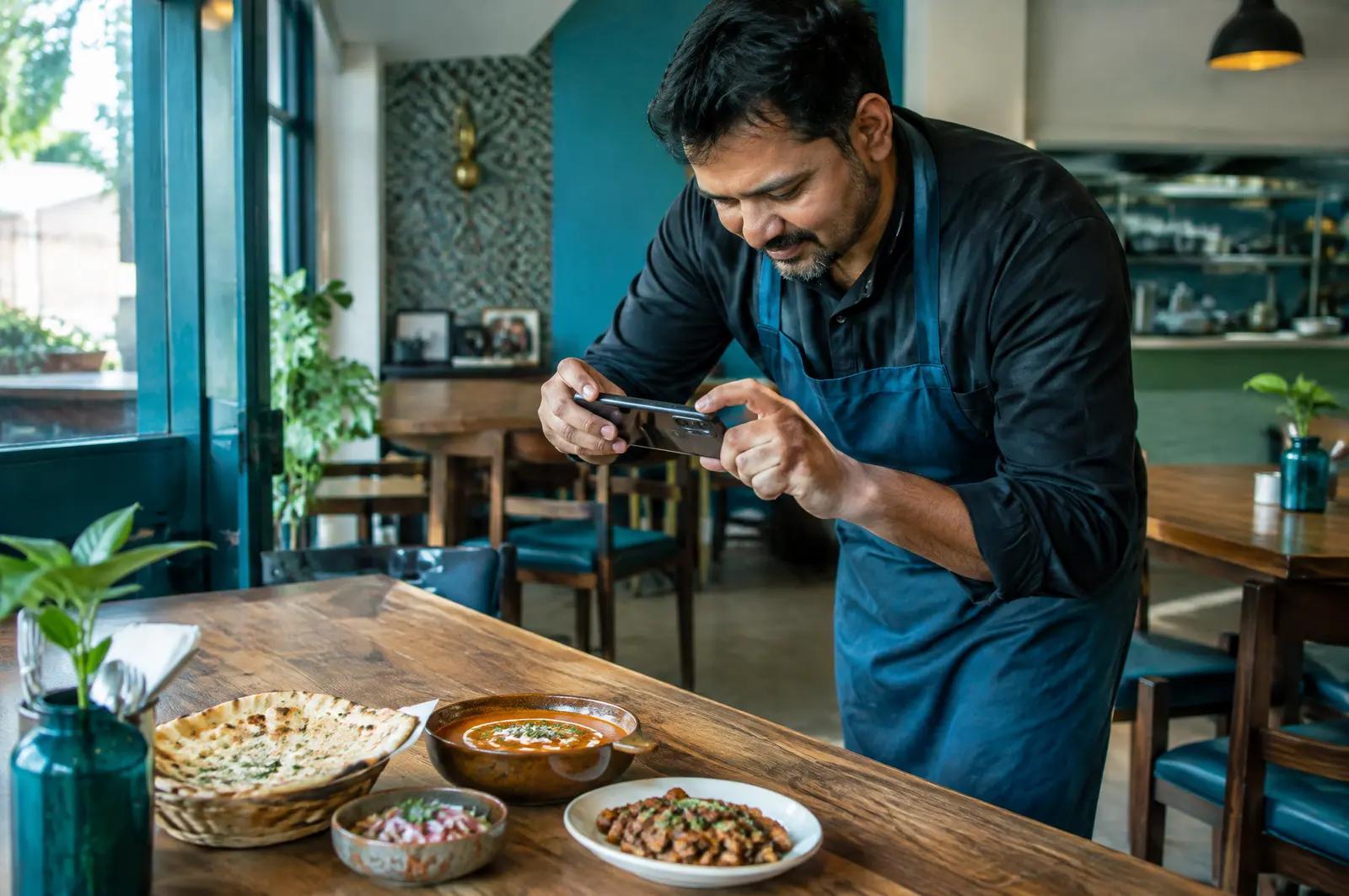
You cannot delete them, but you can outnumber them. Add a few photographs every week: the counter in the morning, a plate of pongal and vada as served, the coffee being poured, the frontage with the signboard readable. Within a few months your own images lead the gallery, and newcomers see the place you run today.
Floods shut our road last December. How should we handle the profile in the monsoon?
Treat each heavy-rain day as a special-hours day. If you close, enter it before customers set out; if takeaway or delivery is running, say so in a short post each morning. When the water recedes, post that you are open with a current photograph, and reply to any review about the closure calmly and the same day.
We are near a Margazhi sabha. Is it worth changing our profile for the season?
Yes, briefly. For a month, concert-goers walk between venues and search for breakfast and lunch nearby. Enter early opening as special hours if you change it, post your tiffin menu with prices, and photograph the counter at its busiest. Change everything back when the season ends so January’s hours stay accurate.
Which areas of Chennai matter most for a restaurant business?
Start with Mylapore, T. Nagar and Pondy Bazaar and Triplicane. In Mylapore: Tiffin rooms and old vegetarian restaurants around the temple and the Mada streets serve early breakfasts and Margazhi crowds; dawn opening times and a vegetarian attribute decide the morning search. Check your Google Maps position in each area separately, because ranking in one does not carry over to the next.
How do people in Chennai search for a restaurant on Google?
They name the area as well as the service, in Tamil, English and Telugu. Typical searches include “mylapore pakkathula tiffin” and “velachery la nalla saapadu”. To win “mylapore pakkathula tiffin”, your profile has to show tiffin items named with prices and the real opening time.
When is the busiest season for restaurant businesses in Chennai?
Demand in Chennai moves with Pongal (Jan), Ramzan (Feb–Mar) and Deepavali (Oct–Nov). Families cook sakkarai pongal at home, then head out on Kaanum Pongal to beaches and parks. Enter closures for Bhogi or Mattu Pongal a week ahead and post your reopening day.
How should a restaurant business in Chennai measure its Google Maps ranking?
Scan a 7×7 grid over 3 km around your location rather than searching from your own premises. Chennai diners stay within their own stretch, and the Adyar, the Cooum and the rail lines bend catchments. 3 km at 7×7, with points a kilometre apart, shows where yours stops. Centre it on the restaurant, scan tiffin or meals as well as the cuisine, and look for a hard edge at a bridge or rail crossing.
How does Web Sarathi help a restaurant business in Chennai?
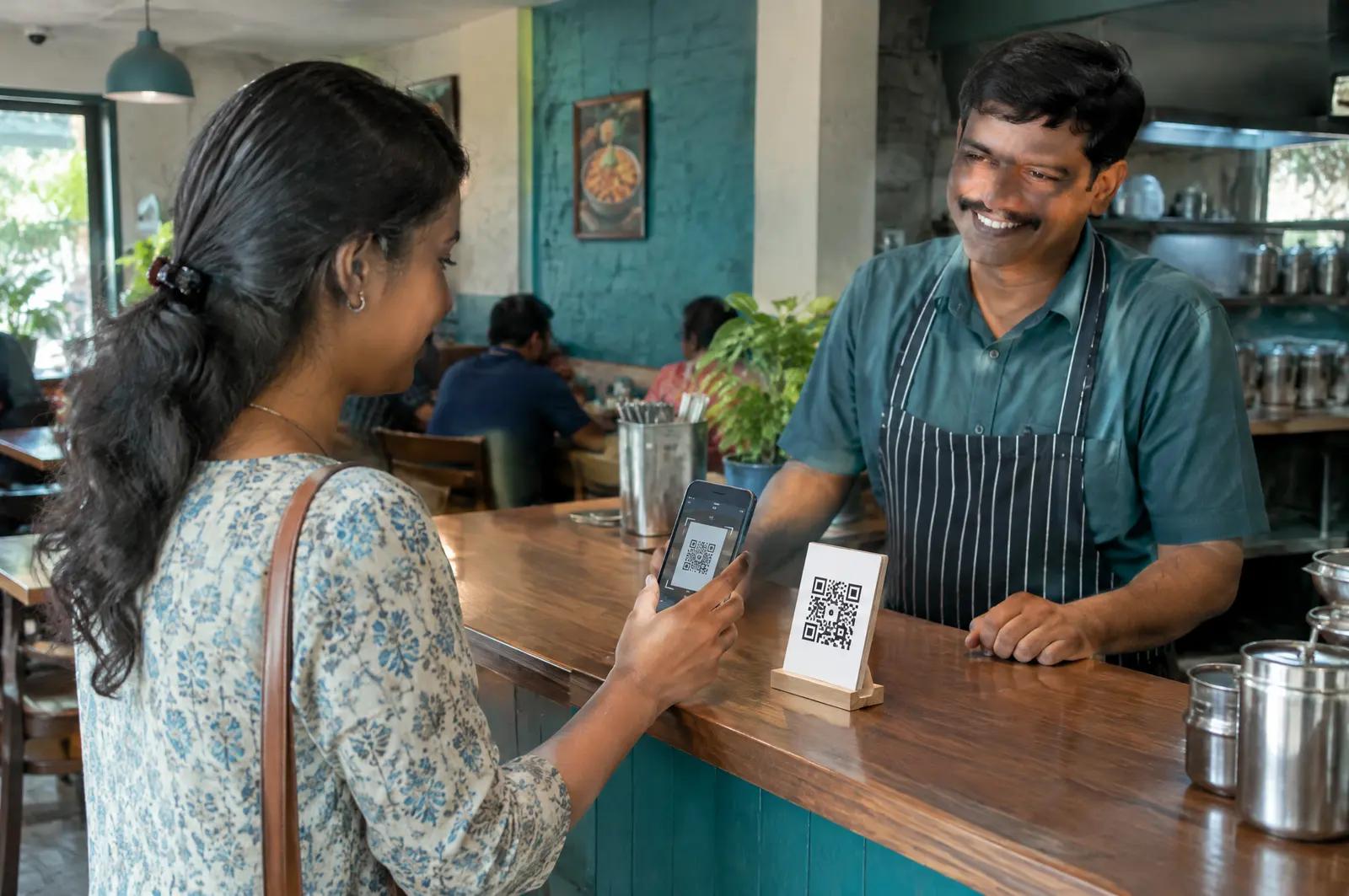
Web Sarathi audits your Google Business Profile on day one, gives you a short daily task list of about ten minutes, collects reviews through a QR code, drafts replies in the reviewer’s own language — including Tamil and English — and maps your ranking across Chennai so you can see which areas you are winning. You can start with a free audit.