Restaurant SEO · Guwahati

Restaurant SEO in Guwahati: winning your corridor in a city of hills and floods

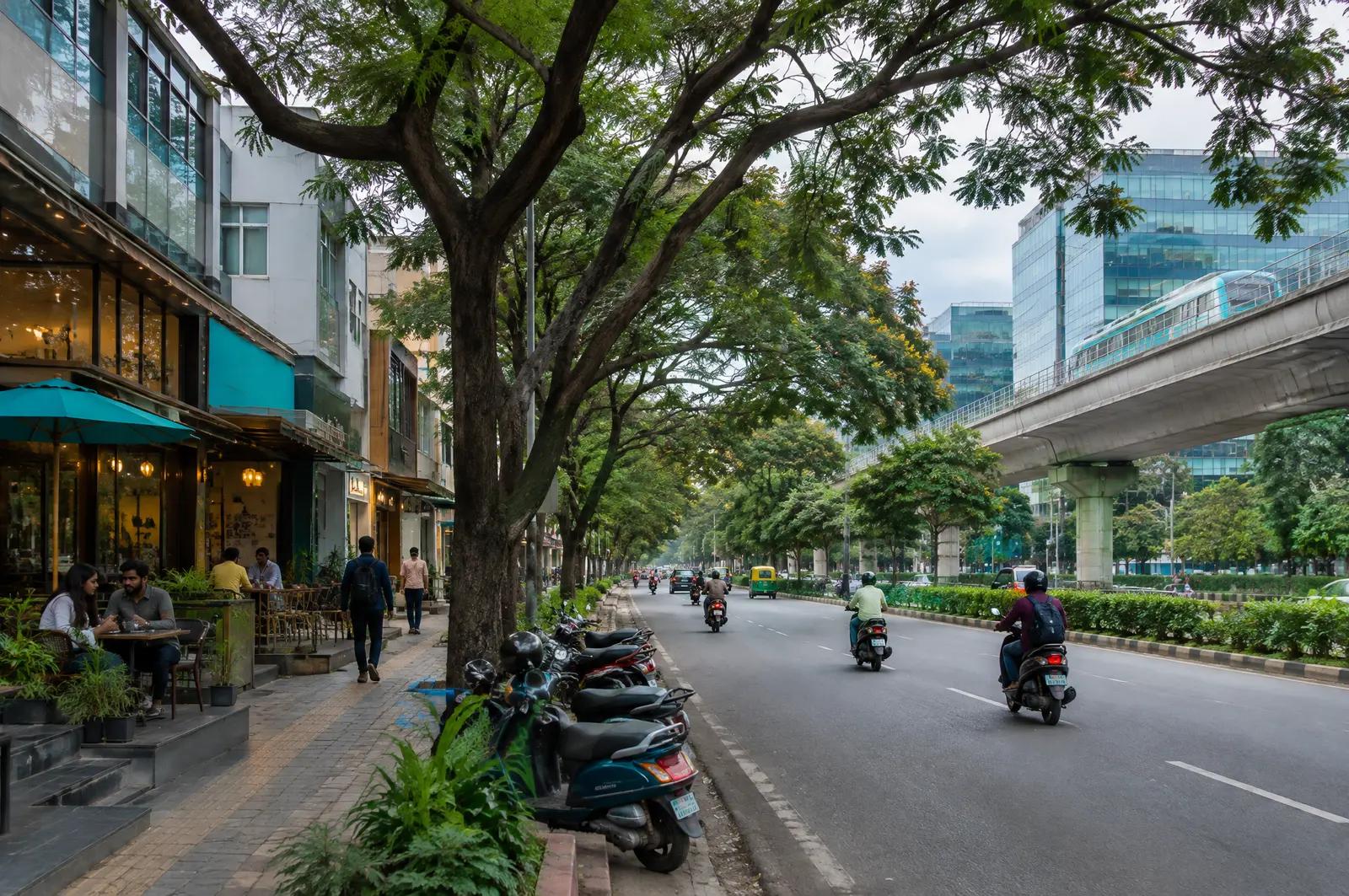
Guwahati’s hills sit inside the city, and its traffic squeezes through a handful of corridors: GS Road, the roads around Fancy Bazar and Paltan Bazar, and the routes west towards Maligaon and Jalukbari. Diners stay within their own corridor for ordinary meals, so a restaurant on GS Road competes with GS Road, and one in Beltola with its own neighbourhood.

Written by
Web Sarathi Local SEO Team
Last updated
Updated
Reading time
7 min read
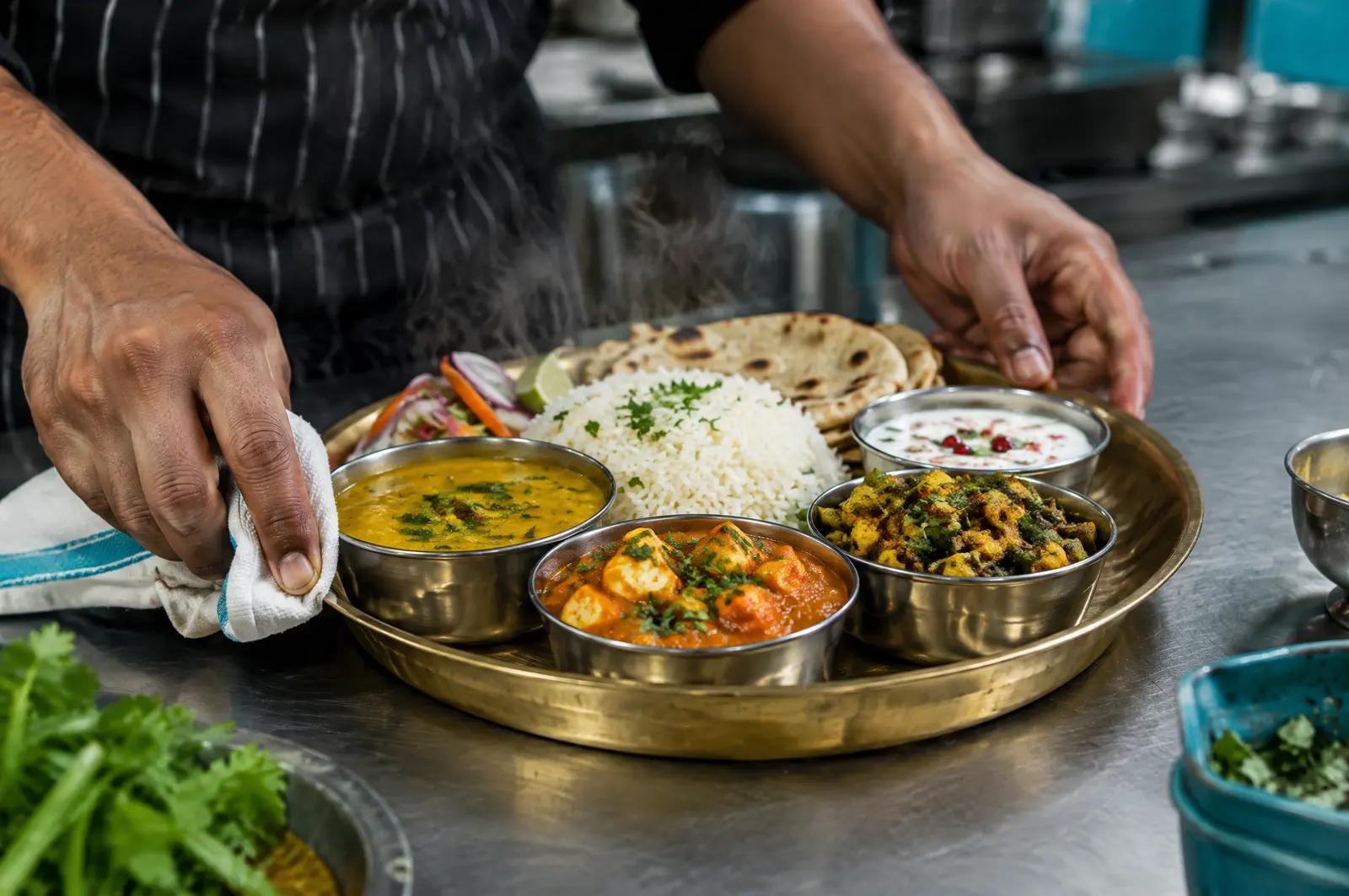
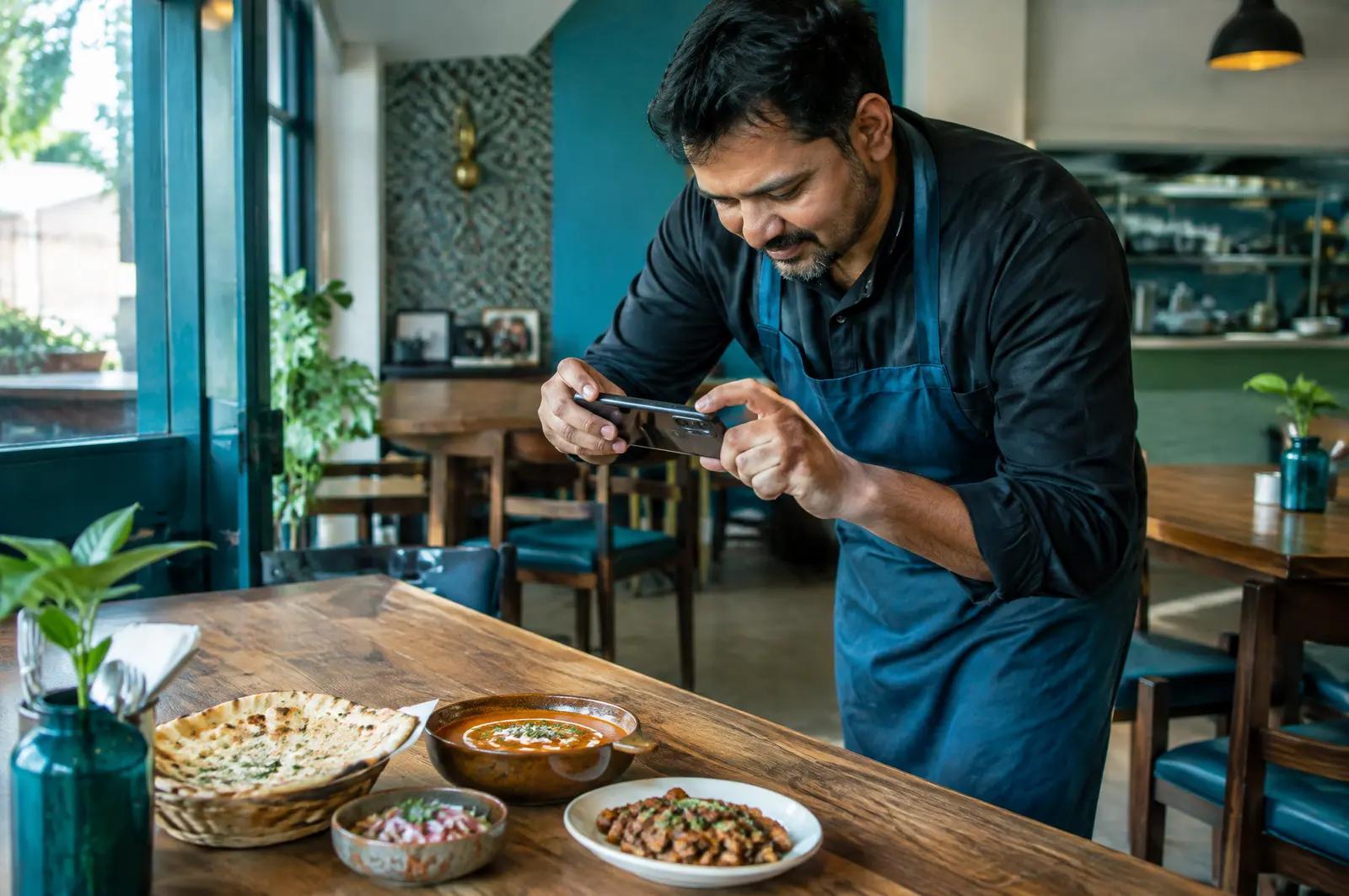
A restaurant business owner at work, looking at the camera
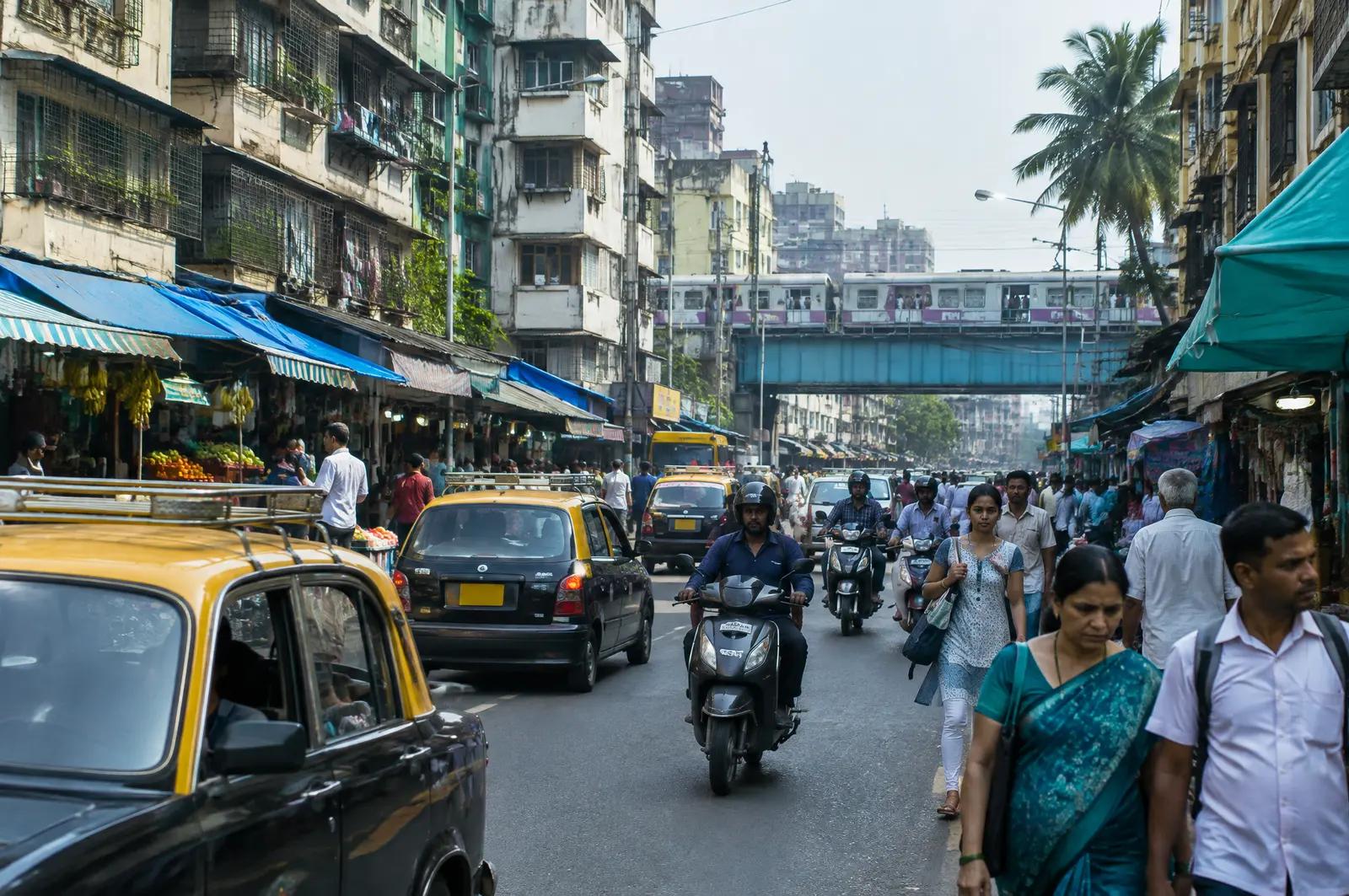
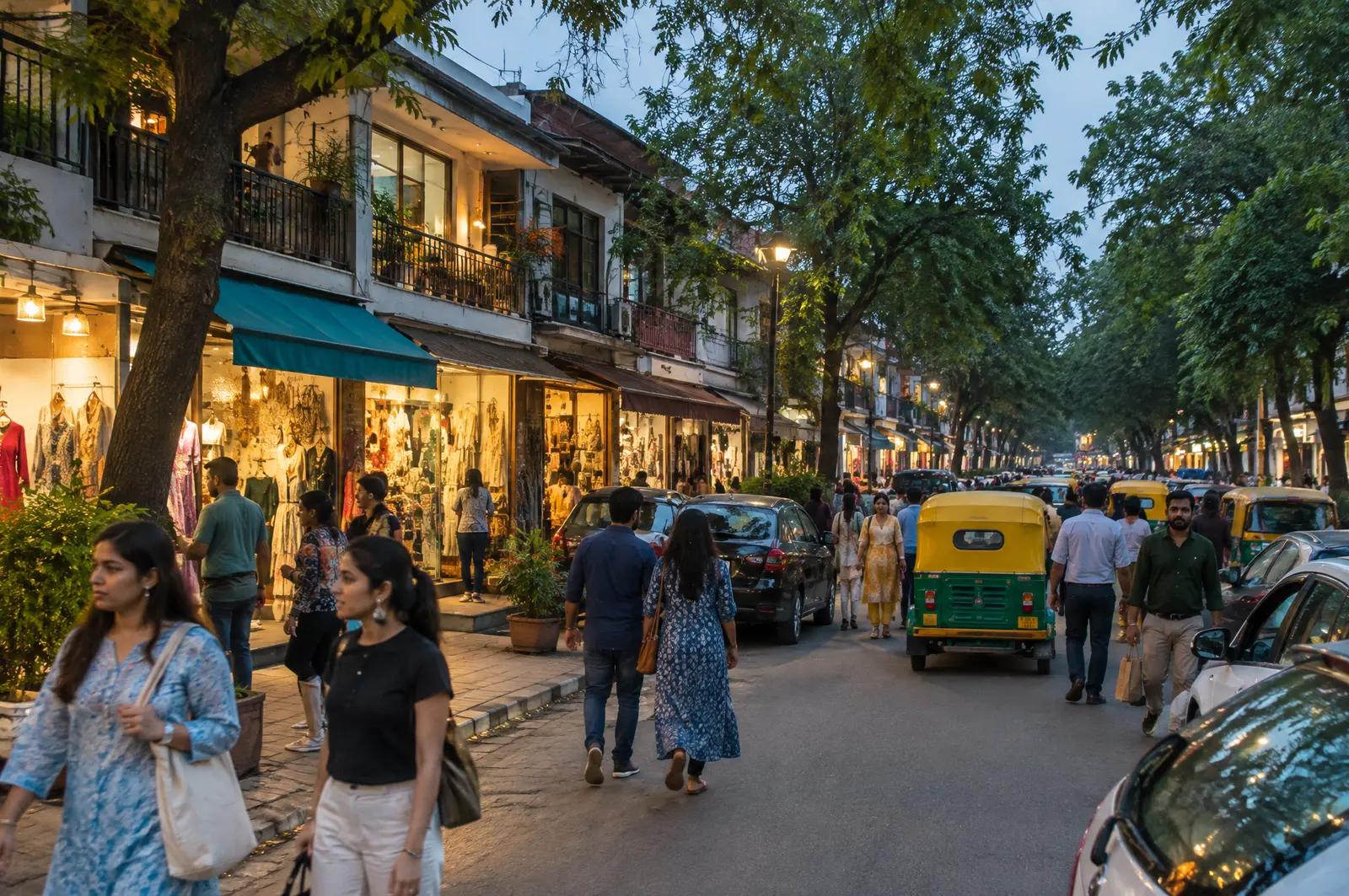
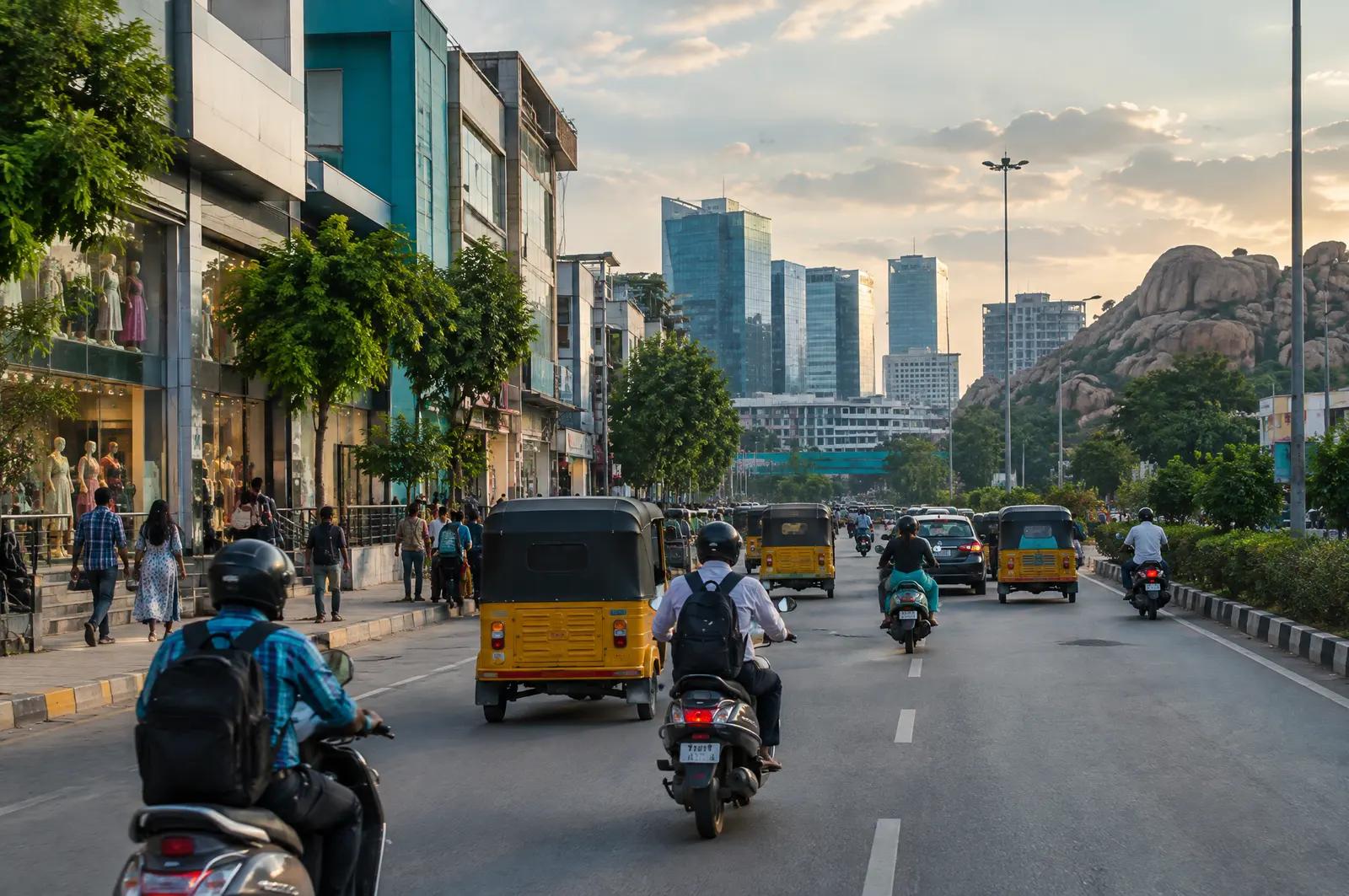
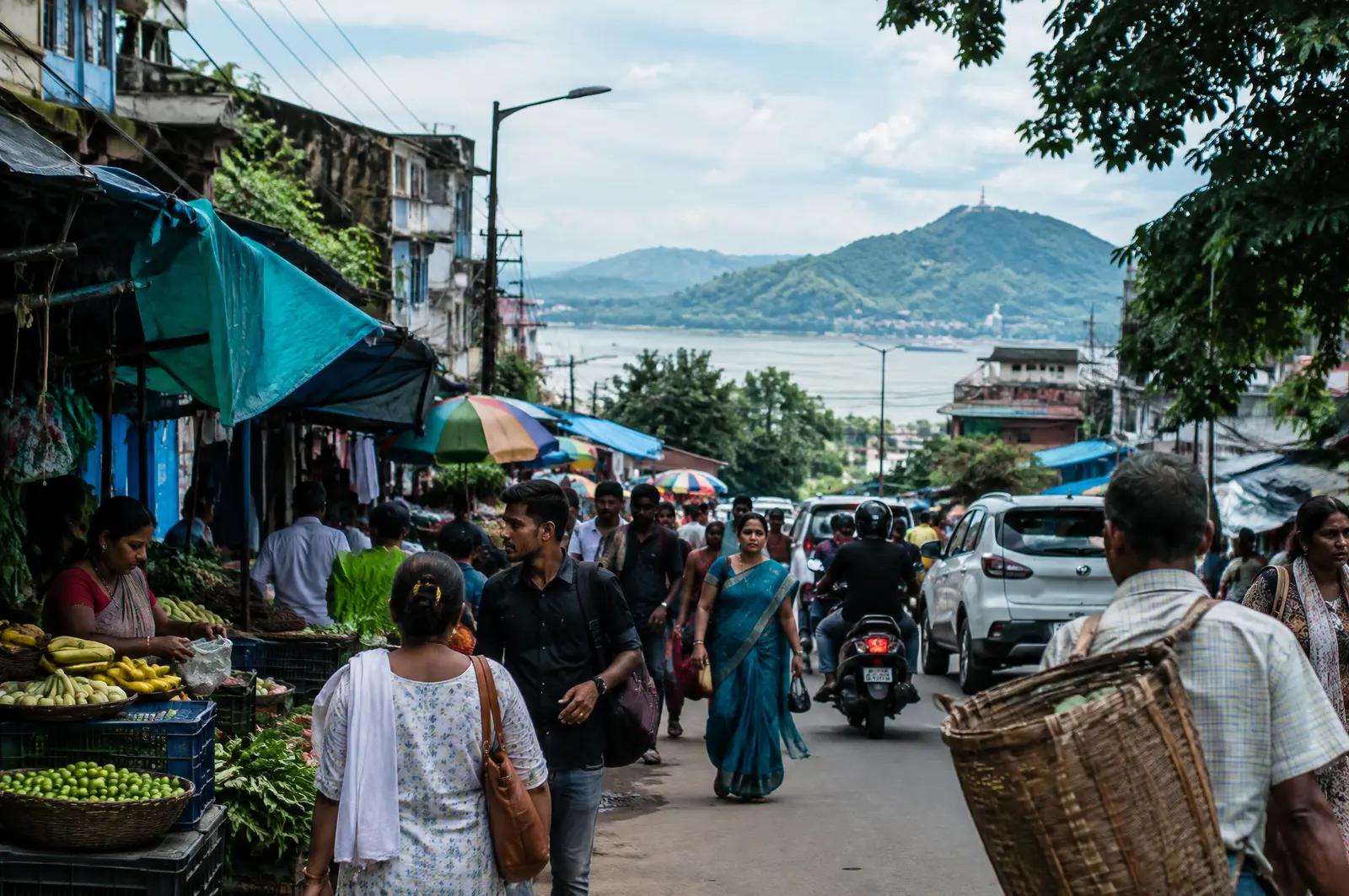
A commercial street in Guwahati, Assam, with local shops and traffic

Restaurant SEO · local report

Guwahati

Assam · also searched as Gauhati

What they search for varies more than in most cities. Assamese families look for khar, masor tenga, duck and pork dishes and, at Bihu, pitha; Fancy Bazar’s traders want Marwari vegetarian meals; students and young professionals want momos and cafés; people from across the North-East want food from home. Searches run in Assamese, Bengali, Hindi and English. A profile that names its food precisely and keeps hours honest through Bihu, Durga Puja and the monsoon is the one strangers find.

Search languages
Assamese · Bengali · Hindi · English
Areas covered below
8 hotspots · 5 zones
Recommended scan
7×7 · 3 km
Key local dates
Magh Bihu · Bohag Bihu · Monsoon and waterlogging

Restaurant SEO in Guwahati: the short version

  1. Name Assamese dishes on the menu — khar, masor tenga, duck with ash gourd, pork with bamboo shoot — because Guwahati diners search the dish.

  2. Enter special hours for both Bihus well ahead; staff travel home, and diners need to know whether you are open before they set out.

  3. On waterlogged monsoon days, change service options to delivery or takeaway only rather than leaving dine-in showing.

  4. Reply to reviews in the language used — Assamese, Bengali, Hindi or English — because diners here notice when you make the effort.

Where restaurant demand concentrates in Guwahati

In short: In Guwahati, the areas that matter most for restaurant businesses are GS Road (Christian Basti to Ganeshguri), Zoo Road and Chandmari, Fancy Bazar and 5 more below. Rank in each one separately; a single search from your own counter tells you nothing about them.

Guwahati · 8 areas to check one by one

  1. GS Road (Christian Basti to Ganeshguri)

    The city’s main dining strip, from cafés to family restaurants and bars; parking, recent photographs, the alcohol attribute and a pin that drops on your side of this wide, divided road decide most evening visits.

  2. Zoo Road and Chandmari

    Residential and commercial roads with family restaurants, cafés and momo counters serving residents and students; dish names, lunch and dinner windows and honest photographs of the plates win comparisons.

  3. Fancy Bazar

    The wholesale market’s Marwari traders and shoppers eat vegetarian meals and sweets near the shops; the vegetarian attribute, lunch hours and Hindi replies matter more than décor.

  4. Paltan Bazar

    Near the railway station and the long-distance bus offices, travellers eat at all hours before and after journeys; accurate opening times, rice plates priced and distance from the station win.

  5. Pan Bazar and Uzan Bazar riverfront

    Riverside streets with cafés and restaurants used for evening outings and by visitors; photographs of the river view, evening hours and booking details carry the decision.

  6. Beltola and Hatigaon

    Southern apartment areas with young families who eat near home and order in; delivery status, Sunday hours and family-friendly attributes answer most searches.

  7. Jalukbari and Maligaon

    West Guwahati near the university and the railway colony, with students and families on budgets; cheap meals priced, momos named and late hours count.

  8. Kamakhya and Bharalumukh

    Pilgrims heading to the hill temple need vegetarian meals and breakfast nearby; early hours, the vegetarian attribute and directions to the foothill road matter, especially during Ambubachi Mela.

How people in Guwahati search for a restaurant

In short: People in Guwahati search in Assamese, Bengali, Hindi, and they name the area, not just the service. Your profile has to match the words they actually type.
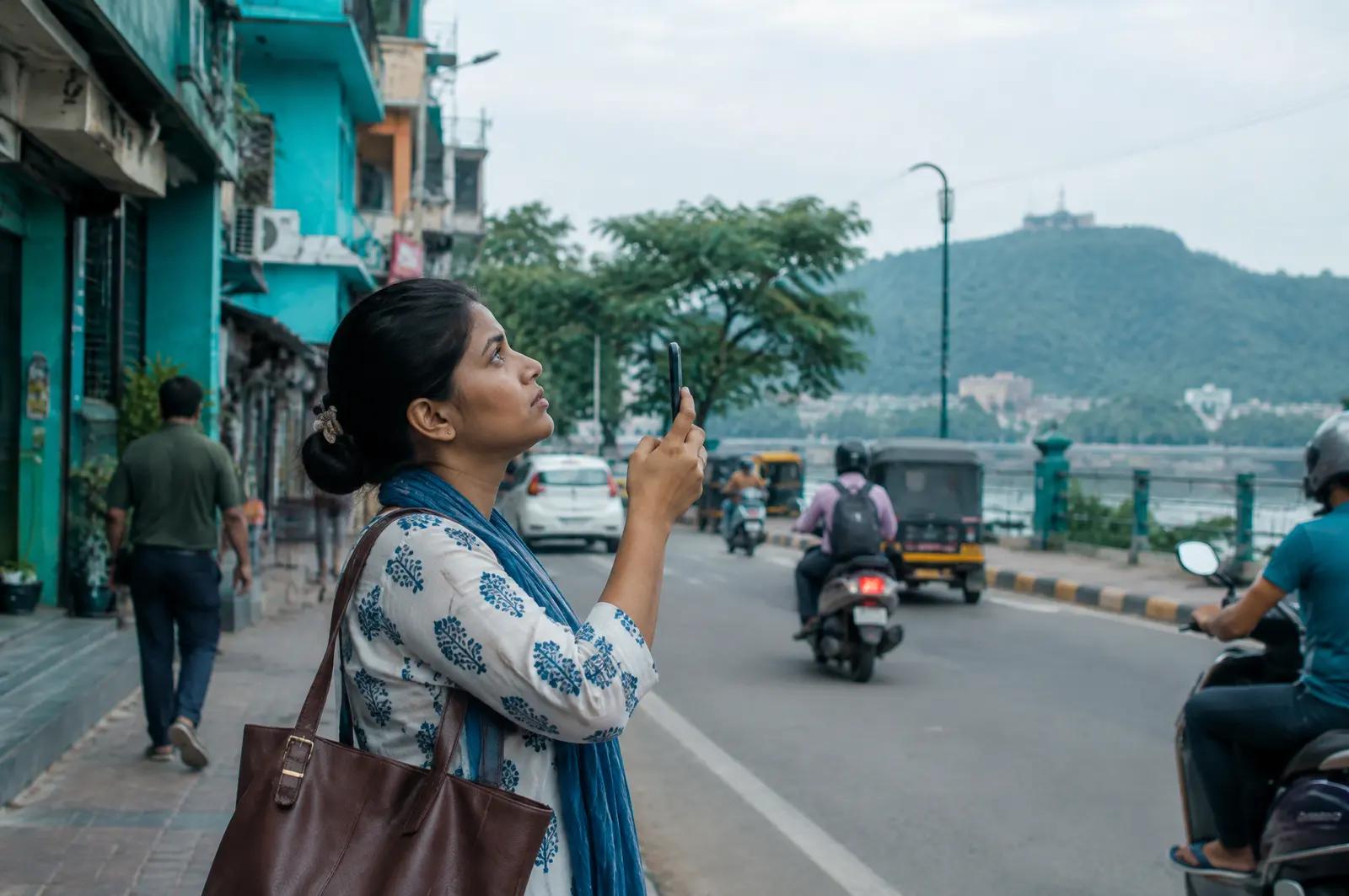
A customer in Guwahati looking up a nearby business on a phone
  • ganeshgurit assamese thali
    What they mean
    Assamese mix: “Assamese thali in Ganeshguri”
    What your profile must show
    The thali named with its dishes and price, a lunch window
  • hanh mangxo kot pam
    What they mean
    Assamese: “where can I get duck meat?”
    What your profile must show
    Duck dishes named with prices, hours, Assamese replies
  • paltan bazar e bhaat hotel
    What they mean
    Bengali: “rice-meal eatery in Paltan Bazar”, a cheap traveller’s lunch
    What your profile must show
    Rice plates named with prices, early opening, distance from the station
  • fancy bazar mein veg bhojanalaya
    What they mean
    Hindi: “vegetarian eatery in Fancy Bazar”
    What your profile must show
    The vegetarian attribute, lunch hours, the thali priced
  • pitha near me bihu
    What they mean
    A Bihu-season craving or a gift order
    What your profile must show
    Pitha varieties named in season, a post when they are ready
  • rooftop restaurant gs road
    What they mean
    A group or couple planning an evening
    What your profile must show
    Night photographs, alcohol and outdoor seating attributes, closing time
  • momos near gauhati university
    What they mean
    A student after something cheap and quick
    What your profile must show
    Momos named with prices, late hours

What makes Guwahati different

In short: What changes in Guwahati: Hills and corridors set the catchment · Waterlogging changes the day · Two Bihus and a Puja · Food from across the North-East.
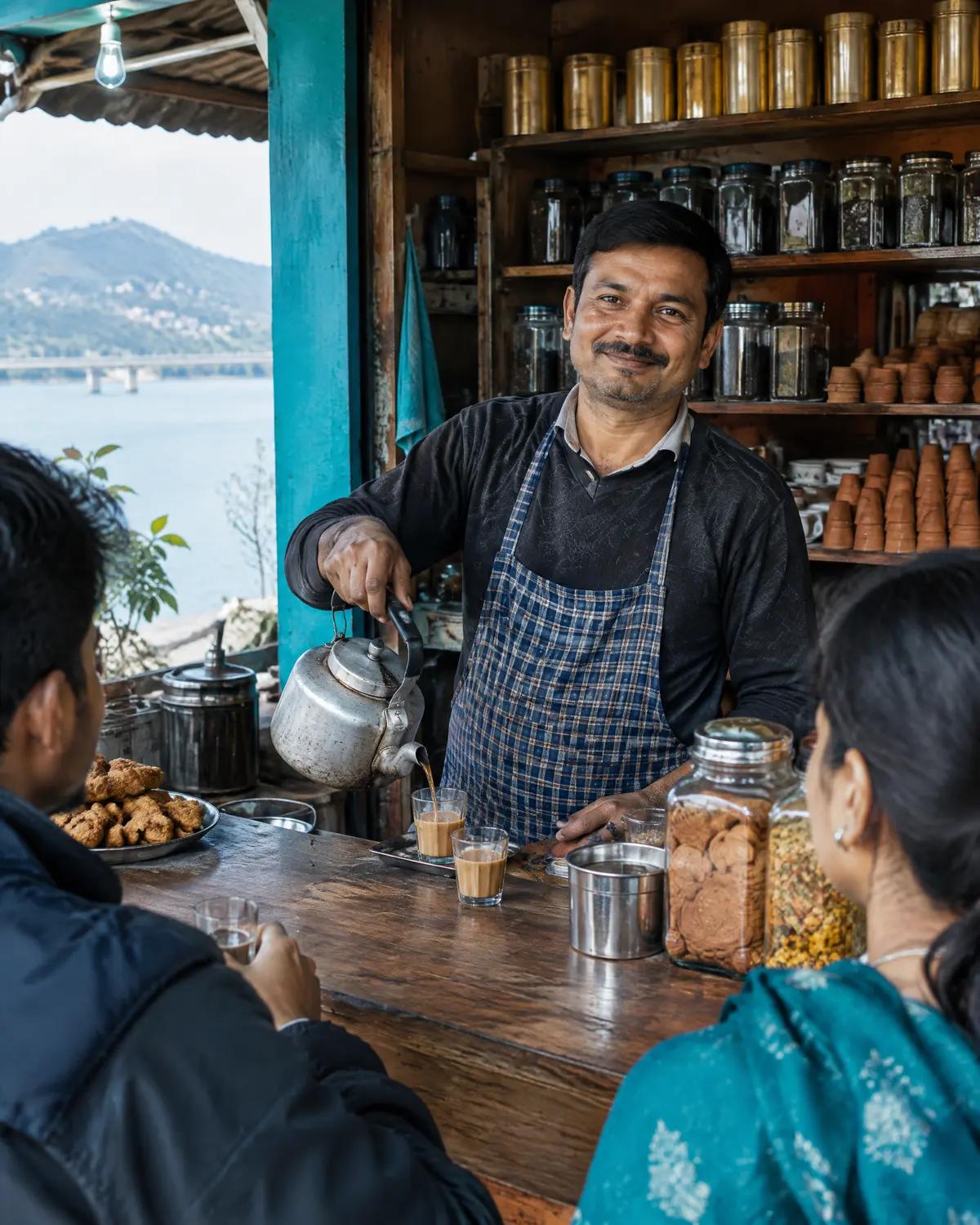
A local business owner in their shop in Guwahati

Hills and corridors set the catchment

Guwahati’s inner hills, the Brahmaputra and heavy traffic on GS Road funnel the city into a few routes, and diners will not cross several of them for dinner. A restaurant in Ganeshguri rarely reaches Maligaon, and one in Fancy Bazar rarely reaches Beltola. Name your road and nearest reference point — a tiniali, a bazar, a flyover — in the description and compete within your corridor.

Waterlogging changes the day

Heavy monsoon rain floods low-lying roads such as Anil Nagar, Nabin Nagar and stretches of Zoo Road within hours, and diners stay home. Change service options on those days to delivery or takeaway only, post that the kitchen is open, and enter special hours if you close. Diners who reach a flooded entrance or a shut door write reviews that outlast the season.

Two Bihus and a Puja

Magh Bihu in January and Bohag Bihu in April are when Assamese families feast at home and many restaurant staff travel to their villages; Durga Puja in the autumn does the opposite, with pandal crowds out late. Plan for both. Enter Bihu closures early, post pitha and festive dishes ahead, and extend Puja hours if you can staff them.

Food from across the North-East

Students and workers from Meghalaya, Nagaland, Manipur, Mizoram and Arunachal live in Guwahati and search for food from home: smoked pork, axone, fermented fish, thukpa. Restaurants that cook it should name dishes as diners from those states write them, not as generic tribal or Chinese food, and reply in English, which most of them use online.

The Guwahati restaurant calendar

In short: Demand in Guwahati moves with Magh Bihu (Jan), Bohag Bihu (Apr), Monsoon and waterlogging (May–Sep). Prepare your profile two to three weeks before each one.
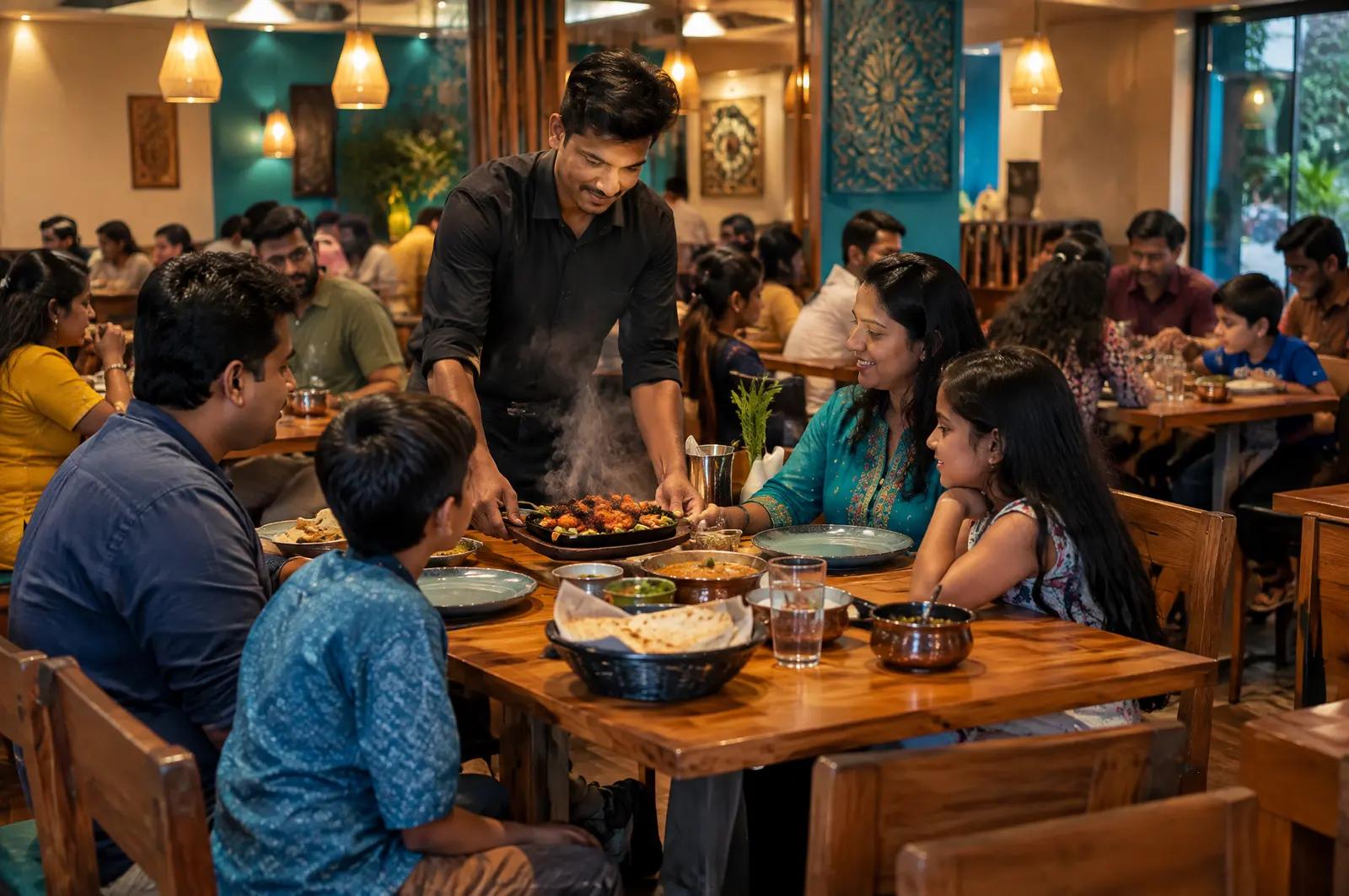
A busy family restaurant dining room in the evening, a waiter serving sizzling platters
  1. Magh BihuJan

    Uruka night and the feast day keep families at home, and many staff travel. Enter special hours early, post pitha and laru orders two weeks ahead, and expect busy days once the festival is over.

  2. Bohag BihuApr

    The Assamese New Year brings a week of celebrations and closures. Post a festive Assamese thali and pitha ahead, list each closed day under special hours, and reply in Assamese to festival reviews.

  3. Monsoon and waterloggingMay–Sep

    Heavy rain floods low roads and sends diners to delivery. Switch service options on waterlogged days, say in a post that the kitchen is running, and save photography for the clear spells in between.

  4. Ambubachi MelaJun

    Pilgrims and sadhus arrive at Kamakhya in large numbers while the temple is closed for its annual rite. Restaurants near the hill should post vegetarian meals, early hours and directions a week before.

  5. Durga PujaSep–Oct

    Pandal crowds fill the city late into the night. Extend hours if you can staff them, post the Puja menu a fortnight early, and show closures near the major pandals as special hours.

Measuring your reach across Guwahati

In short: Scan a 7×7 grid over 3 km around your location to see where you appear in the local pack and where a competitor beats you.

Example scan, Guwahati

Example

7×7 grid, 3 km radius, points about 1 km apart

Guwahati’s hills cut catchments short; a 3 km radius at 7×7 places points a kilometre apart and shows where your corridor ends. Centre it on the restaurant, scan an Assamese dish such as masor tenga alongside the cuisine, and watch for a hill or a crowded junction where the ranks fall away.

In the top three at 11 of 48 points

  • Top 3, the local pack11 points
  • Ranks 4 to 1017 points
  • Ranks 11 to 3012 points
  • Ranks 31 to 1008 points
  • Not in the results0 points
  • Your business, at the centre of the scan

Illustration. A real Web Sarathi scan plots your actual Google Maps position at every point, with the businesses ranking above you.

Grid ranking

Find out which streets you are actually invisible on

Searching from behind your own counter tells you nothing. Grid ranking measures your Maps position from dozens of points around the restaurant and returns a heat map of your real catchment.

  • See how far your visibility actually reaches, street by street
  • Track a dish or cuisine keyword over weeks instead of guessing
  • Compare honestly against the neighbour you assume is beating you
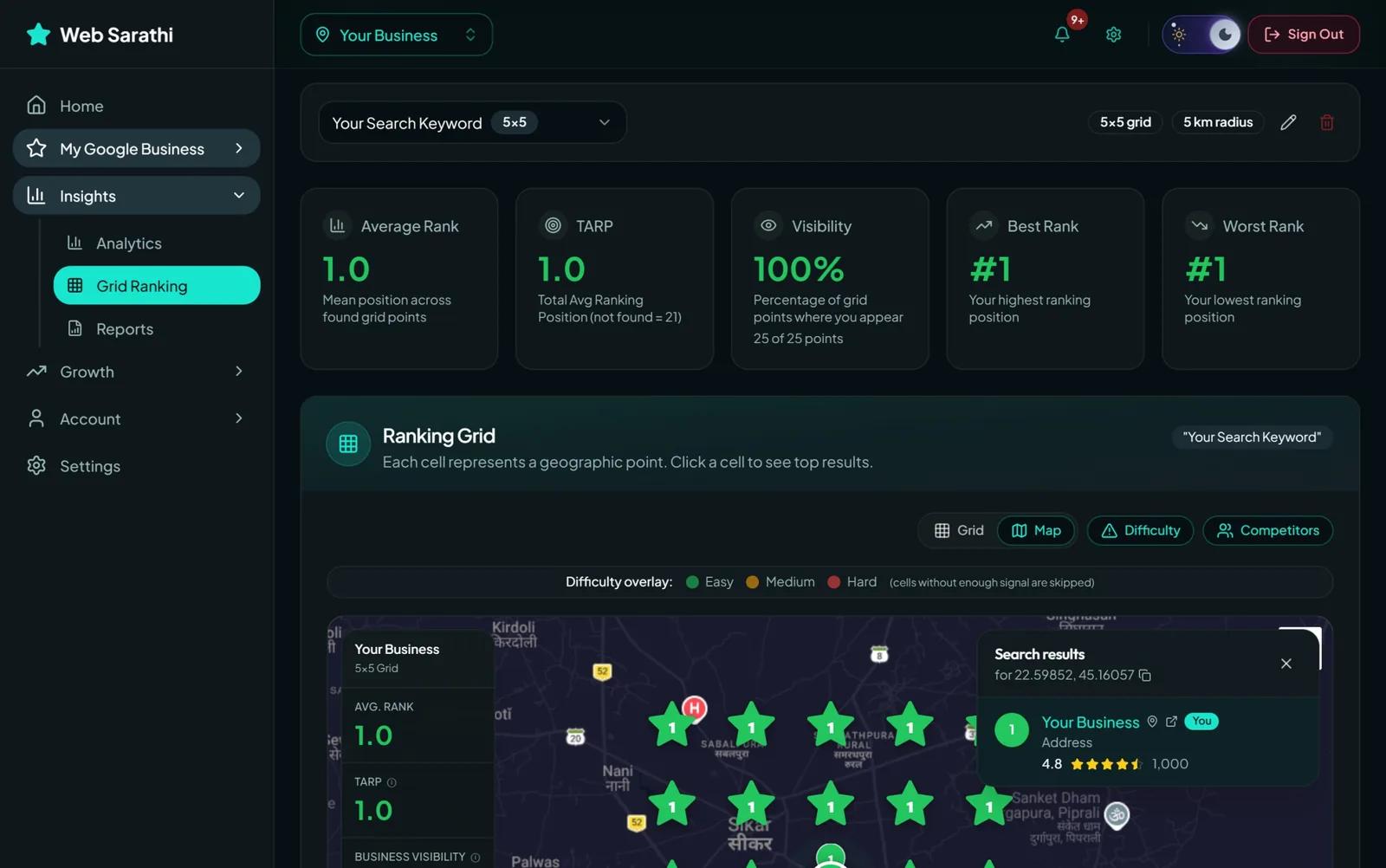
Grid ranking heat map showing Google Maps position across a neighbourhood

The restaurant playbook behind this page

In short: Everything on this page applies the national Restaurant SEO guide to Guwahati. These are its core rules.
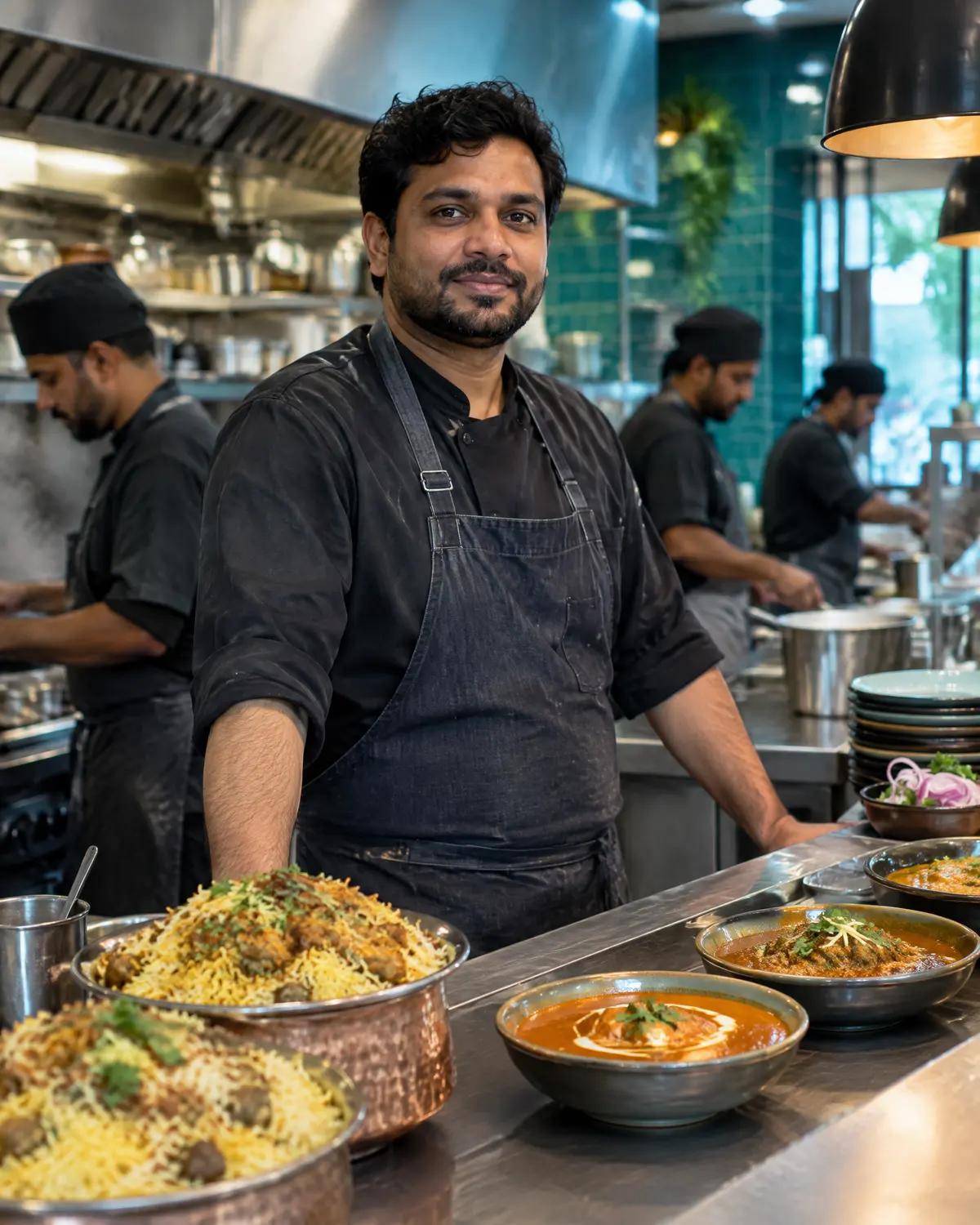
A chef-owner in a dark apron at the pass of a busy open restaurant kitchen
  1. An Indian restaurant’s real competitor is the aggregator app; a diner who walks in from Google Maps pays no commission, while an aggregator order commonly loses a quarter to a third of its value.

  2. Hours work as a filter, not a ranking factor: a restaurant shown as closed is removed from open-now results, so split lunch and dinner windows and enter festival closures as soon as they are decided.

  3. Put dishes, prices and diet attributes on the profile; a search for a specific dish such as thali, kothu parotta or filter coffee cannot match a restaurant that has never named it.

  4. Restaurants have a review-handling problem, not a collection problem: answer every review within hours, in the language it was written in, for the next fifty readers rather than the reviewer.

  5. A delivery-only brand can hold its own Google profile only with distinct branded packaging and its own website, and it must hide the kitchen address and set service areas instead.

Guwahati at a glance

Guwahati is the main commercial city of the North-East, and much of the region’s trade passes through it. Fancy Bazar and the older markets near the river handle wholesale goods, textiles, groceries and hardware for traders across Assam and neighbouring states, while Paltan Bazar is lined with hotels, travel agents and bus operators. GS Road, from Ulubari through Christian Basti and Ganeshguri to Six Mile, has become the main strip for showrooms, restaurants, clinics, coaching centres and salons, and newer apartment areas such as Beltola, Hatigaon and Lokhra add steady demand for everyday services.

The city sits between the Brahmaputra and a ring of hills, and several hills rise inside the city itself, so roads funnel traffic through a few busy corridors. Residents of Maligaon or Jalukbari rarely travel to Khanapara for routine needs, and North Guwahati, across the river, is reached mainly by bridge or ferry. Customers search in Assamese, Bengali, Hindi and English, and a profile that names its road or bazar clearly is easier to match with the way people search.

Hills inside the city, the Brahmaputra to the north and heavy traffic on GS Road and around Fancy Bazar and Paltan Bazar keep most customers within their own part of Guwahati.

Guwahati · 5 zones · 31 localities

Central and Old Guwahati

  • Fancy Bazar
  • Pan Bazar
  • Paltan Bazar
  • Uzan Bazar
  • Lakhtokia
  • Ambari

GS Road Corridor

  • Ulubari
  • Christian Basti
  • Bhangagarh
  • Ganeshguri
  • Dispur
  • Rukminigaon
  • Six Mile

East Guwahati

  • Chandmari
  • Silpukhuri
  • Zoo Road
  • Geetanagar
  • Noonmati
  • Narengi

South Guwahati

  • Beltola
  • Hatigaon
  • Kahilipara
  • Basistha
  • Lokhra
  • Khanapara

West Guwahati

  • Maligaon
  • Jalukbari
  • Adabari
  • Bharalumukh
  • Santipur
  • Kamakhya

Searched alongside the city

  • North Guwahati
  • Amingaon
  • Changsari
  • Sonapur
  • Jorabat

Restaurant SEO in Guwahati: questions owners ask

Should our menu use Assamese names or English descriptions?

Both: the Assamese name first, then a short English description. Guwahati diners search khar, masor tenga or hanh mangxo, while visitors understand sour fish curry or duck with ash gourd. Listing both matches both searches. Keep a price on each dish, and photograph the thali as it is served, with every bowl visible.

We close for three days at Bohag Bihu. What is the right way to show it?

Enter special hours for each closed day as soon as you decide, not the night before. Post a week ahead saying when you will reopen and which festive dishes you will serve afterwards. Diners who check Maps and see special hours trust the profile; those who find a shut door where Google said open leave the review that stays longest.

We are near Kamakhya. Should we stay open for Ambubachi Mela?

If you can serve vegetarian food reliably and staff the extra hours, yes. Pilgrims arrive from across India and search for meals near the hill in Hindi, Bengali and English. Post a week ahead with your hours, vegetarian dishes and directions, keep takeaway clear, and reply promptly to their reviews, because the next pilgrims read them before they set out.

We serve Naga and Khasi food. How do we reach people from those states?

Name the dishes as they would: smoked pork with axone, jadoh, dohneiiong, with short English descriptions. Say in the description which states’ food you cook. Diners from the North-East search specifically and judge by authenticity, so photographs of real plates and replies to their reviews matter. Regulars from those communities who review you bring others with them.

Which areas of Guwahati matter most for a restaurant business?

Start with GS Road (Christian Basti to Ganeshguri), Zoo Road and Chandmari and Fancy Bazar. In GS Road (Christian Basti to Ganeshguri): The city’s main dining strip, from cafés to family restaurants and bars; parking, recent photographs, the alcohol attribute and a pin that drops on your side of this wide, divided road decide most evening visits. Check your Google Maps position in each area separately, because ranking in one does not carry over to the next.

How do people in Guwahati search for a restaurant on Google?

They name the area as well as the service, in Assamese, Bengali and Hindi. Typical searches include “ganeshgurit assamese thali” and “hanh mangxo kot pam”. To win “ganeshgurit assamese thali”, your profile has to show the thali named with its dishes and price, a lunch window.

When is the busiest season for restaurant businesses in Guwahati?

Demand in Guwahati moves with Magh Bihu (Jan), Bohag Bihu (Apr) and Monsoon and waterlogging (May–Sep). Uruka night and the feast day keep families at home, and many staff travel. Enter special hours early, post pitha and laru orders two weeks ahead, and expect busy days once the festival is over.

How should a restaurant business in Guwahati measure its Google Maps ranking?

Scan a 7×7 grid over 3 km around your location rather than searching from your own premises. Guwahati’s hills cut catchments short; a 3 km radius at 7×7 places points a kilometre apart and shows where your corridor ends. Centre it on the restaurant, scan an Assamese dish such as masor tenga alongside the cuisine, and watch for a hill or a crowded junction where the ranks fall away.

How does Web Sarathi help a restaurant business in Guwahati?

Web Sarathi audits your Google Business Profile on day one, gives you a short daily task list of about ten minutes, collects reviews through a QR code, drafts replies in the reviewer’s own language — including Assamese and Bengali — and maps your ranking across Guwahati so you can see which areas you are winning. You can start with a free audit.
How Web Sarathi helps

Everything above, done in about ten minutes a day

Ranking across Guwahati comes down to a few things done steadily. Web Sarathi tells you which ones to do today, does the slow parts for you, and maps your position across Guwahati so you can see it working.

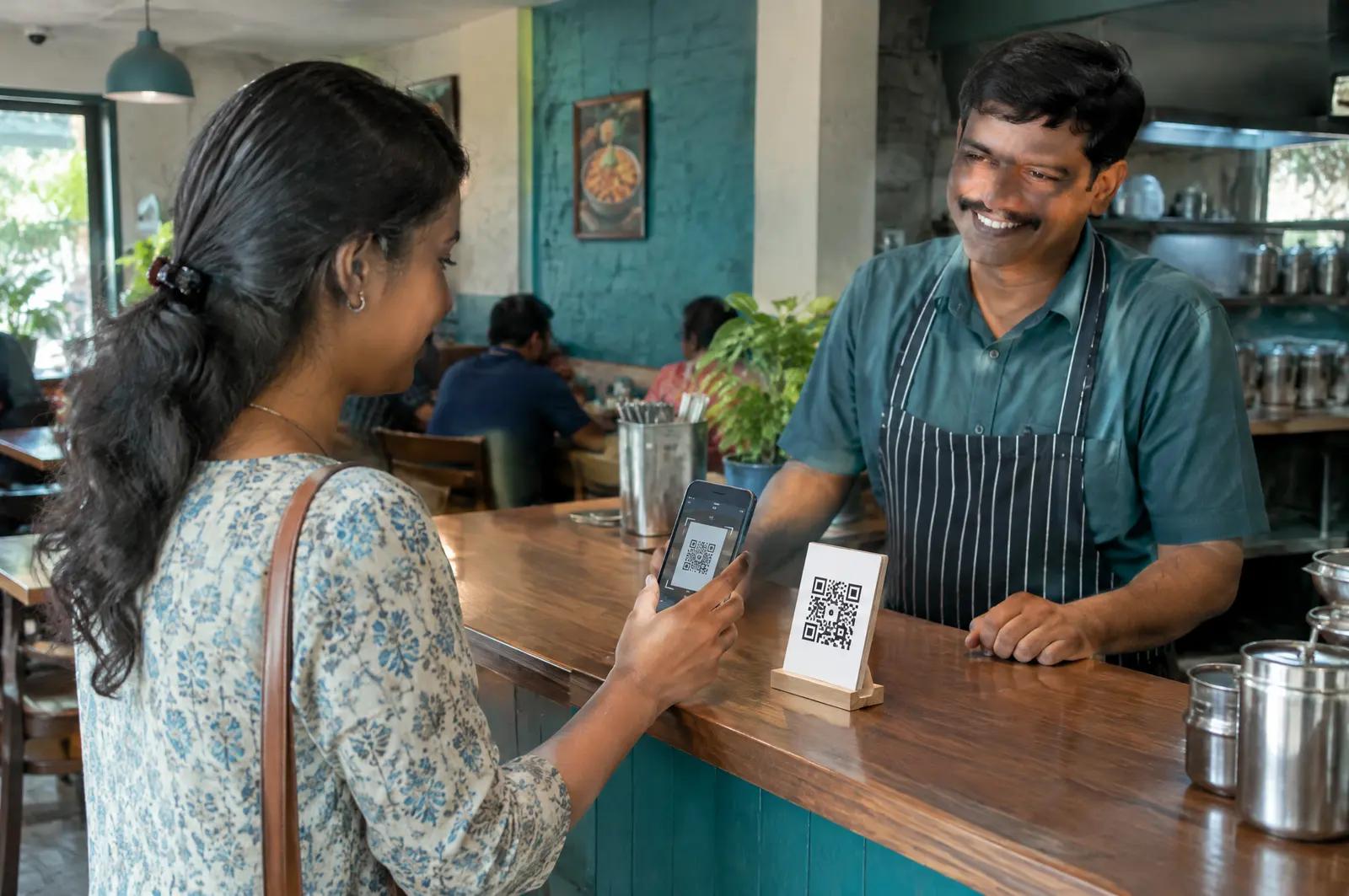
  • A customer scanning the review QR code at a restaurant counterReviews in seconds
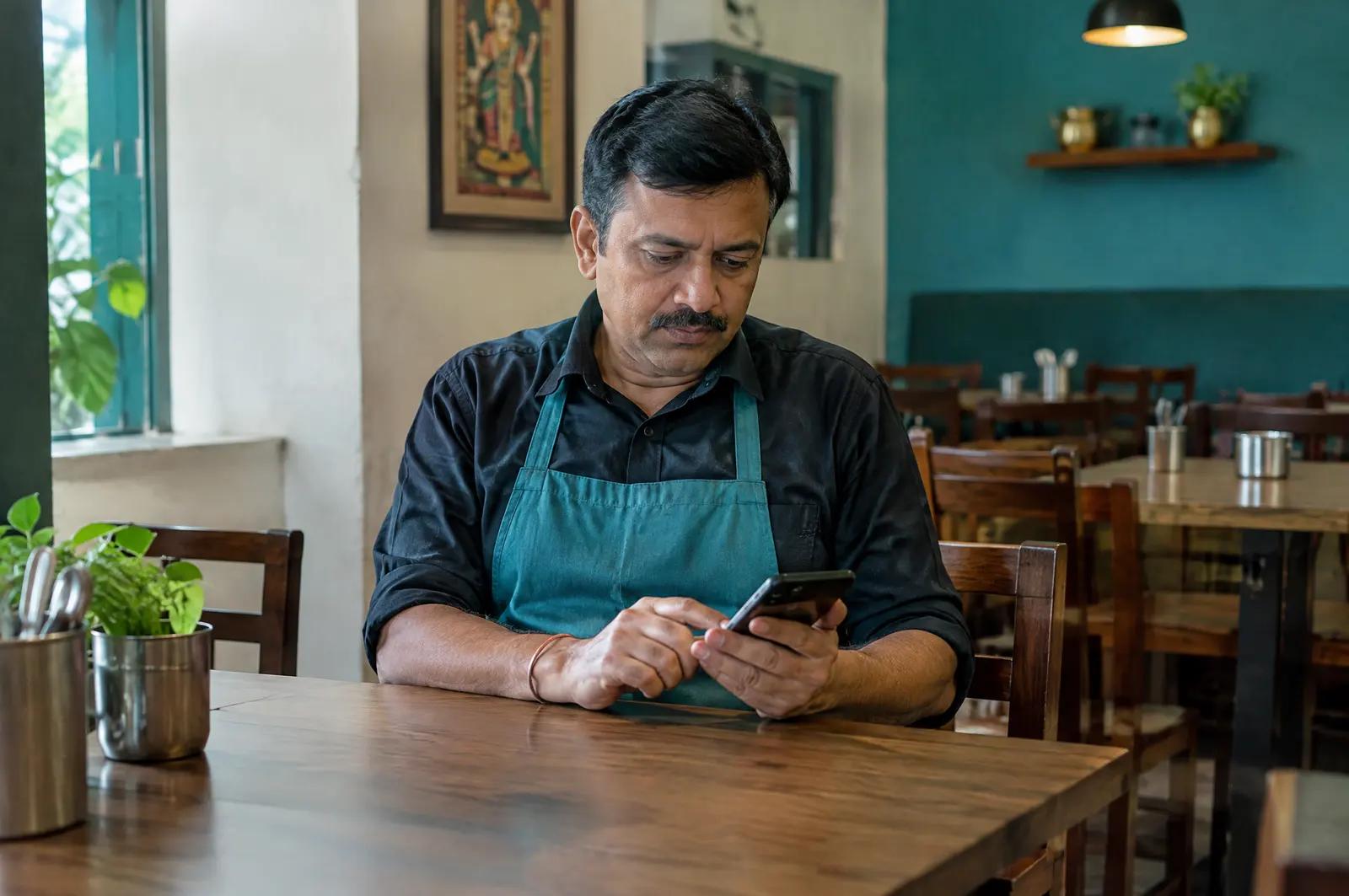
  • A restaurant business owner replying to reviews on a phoneReplies, steadily
  • A restaurant business owner photographing their work for a postReal photos, posted
  1. Audit and score

    Day one: more than 50 checks on your profile and a score out of 100, so you know exactly what is missing.

  2. Ten minutes a day

    A short daily task list — complete the profile first, then photos, posts, reviews and replies, in the right amounts.

  3. Reviews in seconds

    A QR code at the counter. Customers pick a suggested highlight, make it their own and post it from their Google account.

  4. Replies Google rewards

    One-click or automatic replies in the reviewer’s language, paced so the profile never looks automated.

  5. Posts and a live website

    Keyword-aware captions for your real photos, published to Google and to a website that updates itself every night.

  6. Rank map and protection

    Your Google Maps position street by street, the competitors beating you, and an alert when someone edits your profile.

Be one of the three businesses Google shows first.

Start with a free audit of your Google profile: where you rank on a map around your business, the competitors Google shows above you, and what your profile is missing, so you know exactly what to fix first. Then sign up, pick an onboarding slot, and our experts set your profile up with you on Google Meet. After that, about ten minutes a day.

No credit card Expert setup on Google Meet, then your 7-day free trial

Read the Restaurant SEO guide