Physiotherapy Clinic SEO · Delhi

Physiotherapy clinic SEO in Delhi: from the hospital corridor to the colony next door

Delhi has the country’s densest cluster of large public hospitals, and physiotherapy demand follows them. Patients come from across north India for surgery at AIIMS and Safdarjung, then need rehabilitation for weeks before they can travel home, while Delhi’s own families finish surgery at a private hospital and want the course continued in their colony.

Written by
Web Sarathi Local SEO Team
Last updated
Updated
Reading time
6 min read
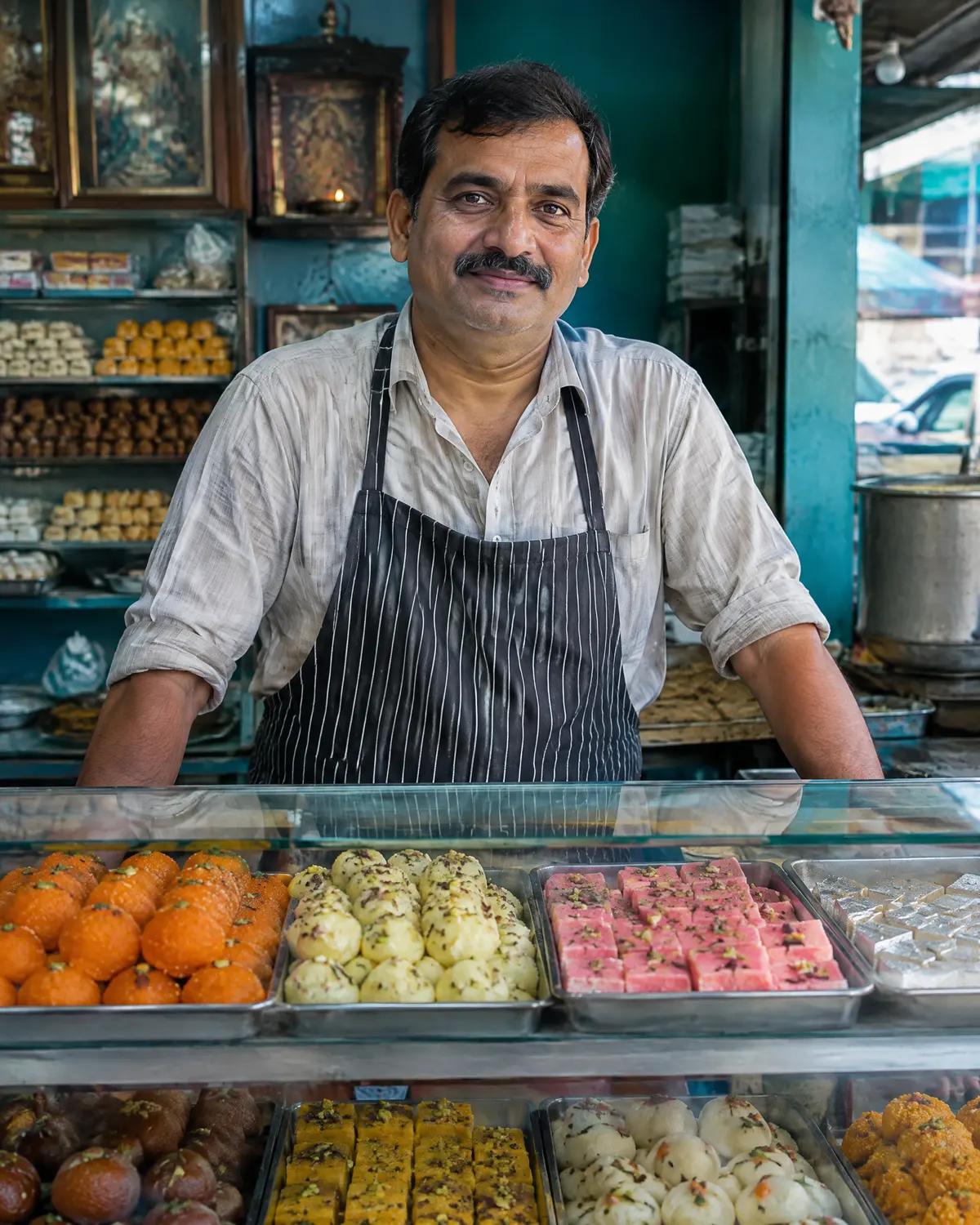
A physiotherapy business owner at work, looking at the camera
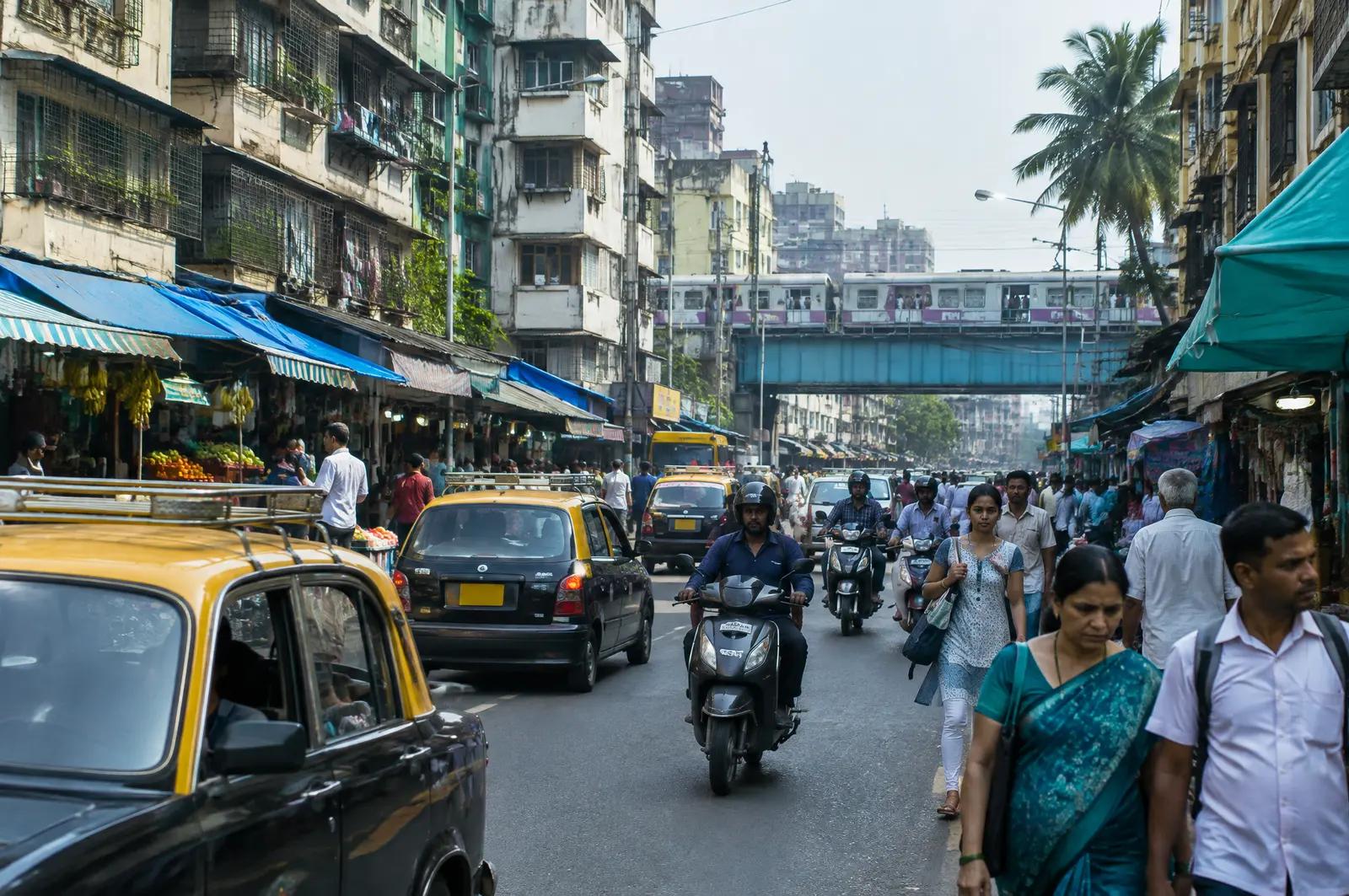
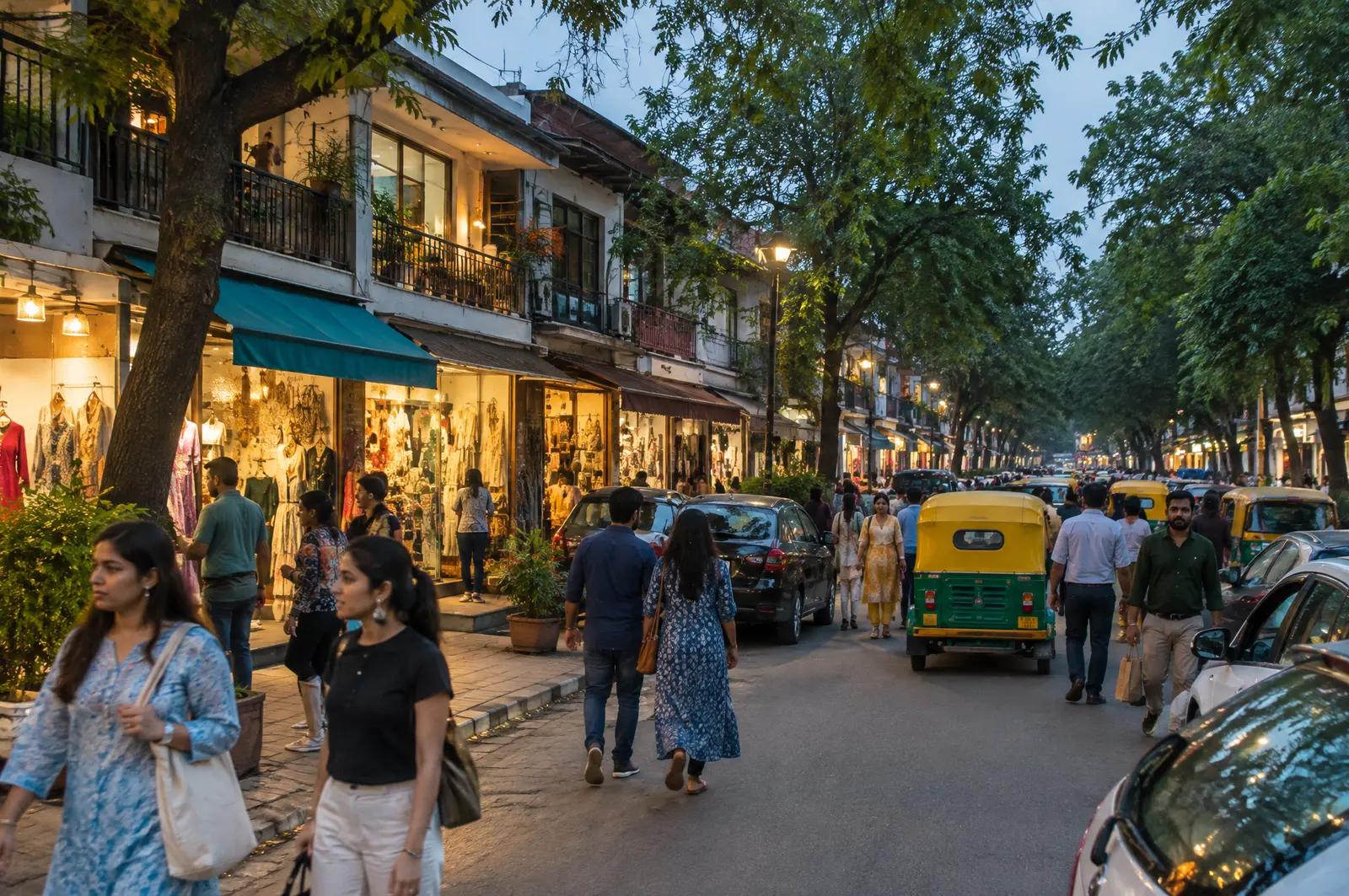
A commercial street in Delhi, Delhi, with local shops and traffic

Physiotherapy Clinic SEO · local report

Delhi

Delhi · also searched as New Delhi

Both groups search in Hindi as much as English, and neither types physiotherapy. They type kamar dard, ghutno ka dard, cervical, or nas dab gayi. A clinic whose services and description use that vocabulary, name the colony and the nearest Metro station, and say whether it visits homes is answering the question most Delhi patients are asking. Winter, when older patients stop going out, makes that home-visit half heavier here than in most cities.

Search languages
Hindi · English · Punjabi
Areas covered below
7 hotspots · 6 zones
Recommended scan
7×7 · 3 km
Key local dates
Summer heat · Delhi Half Marathon · Winter and smog

Physiotherapy Clinic SEO in Delhi: the short version

  1. Use the words Delhi patients use — cervical, slip disc, kamar dard — in your description alongside the clinical names, so both kinds of search can match.

  2. If you are near AIIMS or Safdarjung, publish a short-course option and a written home programme for outstation patients who must eventually travel home.

  3. Expect home-visit enquiries to peak in winter, when older patients stop going out; publish coverage by colony and the home rate before November.

  4. Name your Delhi council registration and any hospital experience in the description; patients cannot otherwise tell a qualified clinic from a massage centre.

Where physiotherapy demand concentrates in Delhi

In short: In Delhi, the areas that matter most for physiotherapy businesses are Green Park, Gautam Nagar and Yusuf Sarai, Lajpat Nagar and Defence Colony, Rohini and Pitampura and 4 more below. Rank in each one separately; a single search from your own counter tells you nothing about them.

Delhi · 7 areas to check one by one

  1. Green Park, Gautam Nagar and Yusuf Sarai

    Around AIIMS and Safdarjung, outstation patients and their families rent rooms during treatment and search for rehabilitation they can walk to between hospital follow-ups.

  2. Lajpat Nagar and Defence Colony

    Established South Delhi families with elderly parents generate knee replacement and arthritis courses, and expect qualifications and a home rate to be stated before they call.

  3. Rohini and Pitampura

    Large North-West Delhi residential sectors where most patients want a clinic in their own sector or the next, and Hindi symptom searches outnumber anything containing physiotherapy.

  4. Model Town

    The wrestling and athletics around Chhatrasal Stadium bring young athletes with shoulder, knee and back injuries who compare clinics on sports experience rather than distance.

  5. Dwarka

    Sector-numbered societies along the Blue Line, where patients type the sector into the search and many older residents need home visits inside the society.

  6. Mayur Vihar and Patparganj

    East Delhi society flats house office workers commuting to Noida and central Delhi, so evening slots and neck and back pain listed by name decide most choices.

  7. Rajouri Garden and Punjabi Bagh

    Settled West Delhi family neighbourhoods where knee pain and post-operative work are searched in Hindi and Punjabi, and patients compare two or three nearby clinics’ reviews.

How people in Delhi search for a physiotherapist

In short: People in Delhi search in Hindi, English, Punjabi, and they name the area, not just the service. Your profile has to match the words they actually type.

A customer in Delhi looking up a nearby business on a phone
  • ghutno ke dard ka ilaj rohini sector 7
    What they mean
    Hindi: “knee pain treatment in Rohini Sector 7”
    What your profile must show
    Knee pain and arthritis as named services, with the sector in the address
  • cervical ka ilaj mayur vihar phase 1
    What they mean
    Hindi mix: “treatment for cervical neck pain”
    What your profile must show
    Neck and cervical pain listed, with evening hours
  • nas dab gayi physiotherapy lajpat nagar
    What they mean
    Hindi: “a pressed nerve”, usually sciatica or a disc problem
    What your profile must show
    Sciatica and slip disc named, explained in plain language too
  • ghar par physiotherapy dwarka
    What they mean
    Hindi: “physiotherapy at home in Dwarka”
    What your profile must show
    Home visits as a service, Dwarka sectors named, and the home rate
  • physiotherapy near aiims for knee replacement
    What they mean
    An outstation family organising rehabilitation between follow-ups
    What your profile must show
    Post-operative rehabilitation, walking directions and a short-course option
  • wrestling injury physio model town
    What they mean
    A young athlete comparing on sports experience
    What your profile must show
    Sports rehabilitation, the injuries handled and practitioner experience
  • stroke rehabilitation at home pitampura
    What they mean
    A family arranging neuro care for someone who cannot travel
    What your profile must show
    Neurological rehabilitation and home visits, both named

What makes Delhi different

In short: What changes in Delhi: Outstation patients with a deadline · Winter keeps older patients indoors · Hindi words for clinical problems.

A local business owner in their shop in Delhi

Outstation patients with a deadline

Families who came to Delhi for surgery want rehabilitation close to the hospital and a plan for when they go home. A clinic near AIIMS or Safdarjung that states a typical course length, offers a written home programme for after departure and gives walking directions wins enquiries that generic listings lose.

Winter keeps older patients indoors

From late November, cold mornings and poor air keep many elderly patients at home, and families switch from clinic sessions to home visits. Publish home-visit coverage by colony, the separate home rate and realistic availability before the season starts, and keep visits clustered so a practitioner is not crossing the Ring Road between them.

Hindi words for clinical problems

Delhi patients say cervical for neck pain, slip disc for most back pain and nas dab gayi for nerve pain down the leg. Keep services under their clinical names, then use the everyday phrases in the description and posts, so a patient searching in either register finds a clinic that describes what they have.

The Delhi physiotherapy calendar

In short: Demand in Delhi moves with Summer heat (Apr–Jun), Delhi Half Marathon (Oct–Nov), Winter and smog (Nov–Jan). Prepare your profile two to three weeks before each one.
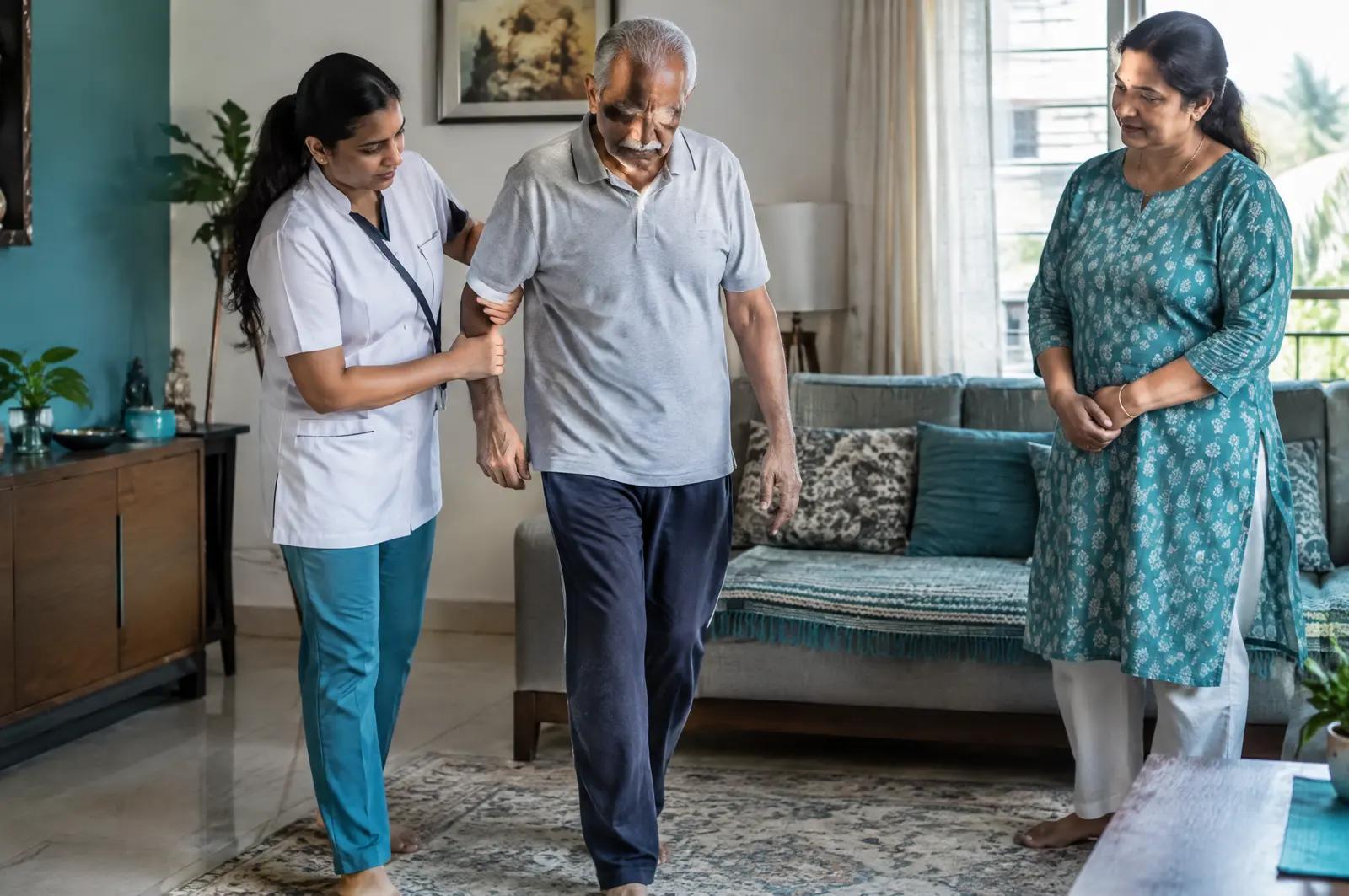
A physiotherapist guiding an elderly man through a walking exercise at home
  1. Summer heatApr–Jun

    Afternoon attendance falls as temperatures climb. Move sessions towards early morning and evening, publish the changed hours, and post exercises patients can continue indoors between visits.

  2. Delhi Half MarathonOct–Nov

    Runners training through autumn bring knee, shin and hip complaints. List running injuries under sports rehabilitation in September, and post practical warm-up and recovery advice while training peaks.

  3. Winter and smogNov–Jan

    Home-visit demand peaks as older patients stay indoors. Confirm the colonies you cover, the home rate and weekly availability on the profile, and add a post explaining how home sessions work.

  4. Wedding seasonNov–Feb

    Patients pause courses for family weddings and travel. Agree a restart date at the last session before the break, call on that date, and keep hours accurate on wedding-heavy weekends.

Measuring your reach across Delhi

In short: Scan a 7×7 grid over 3 km around your location to see where you appear in the local pack and where a competitor beats you.

Example scan, Delhi

Example

7×7 grid, 3 km radius, points about 1 km apart

A Delhi clinic’s patients usually come from its own cluster of colonies, and 3 km at 7×7 puts points a kilometre apart across that cluster. Centre it on the clinic and watch for the edge at the Ring Road or the river; run a separate scan over the colonies your home visits target.

In the top three at 14 of 48 points

  • Top 3, the local pack14 points
  • Ranks 4 to 1014 points
  • Ranks 11 to 308 points
  • Ranks 31 to 1004 points
  • Not in the results8 points
  • Your business, at the centre of the scan

Illustration. A real Web Sarathi scan plots your actual Google Maps position at every point, with the businesses ranking above you.

Grid ranking

Home visits only work when they cluster

A practitioner can see six patients at the clinic in a morning and three at home, and the three have to be near each other. That makes visibility in specific residential pockets worth far more than visibility in general.

  • Measure rank at particular points rather than across the city
  • Find the societies and colonies where you do not appear at all
  • Track condition and speciality keywords separately, since they differ
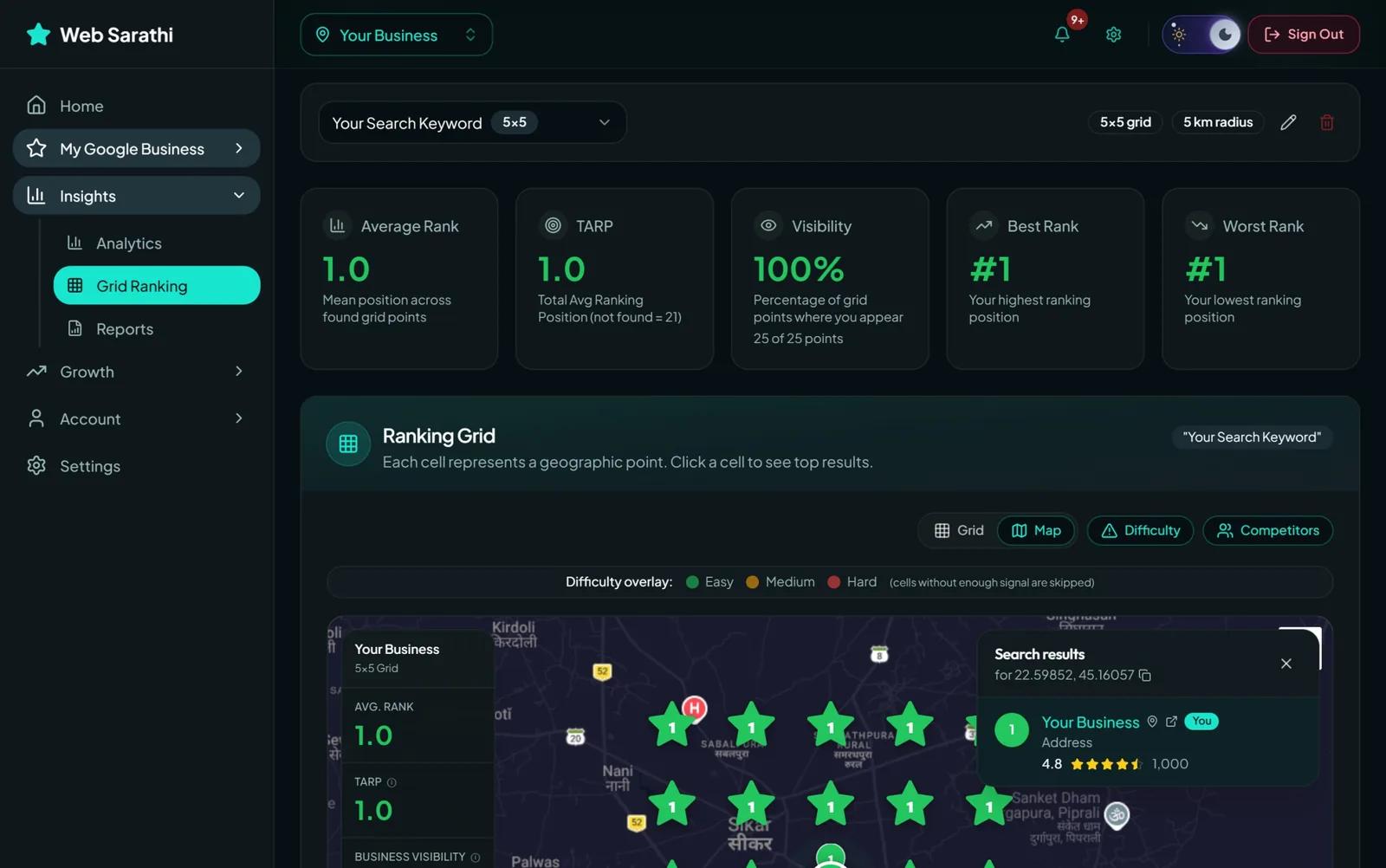
Grid ranking heat map showing Google Maps position across a neighbourhood

The physiotherapy playbook behind this page

In short: Everything on this page applies the national Physiotherapy Clinic SEO guide to Delhi. These are its core rules.

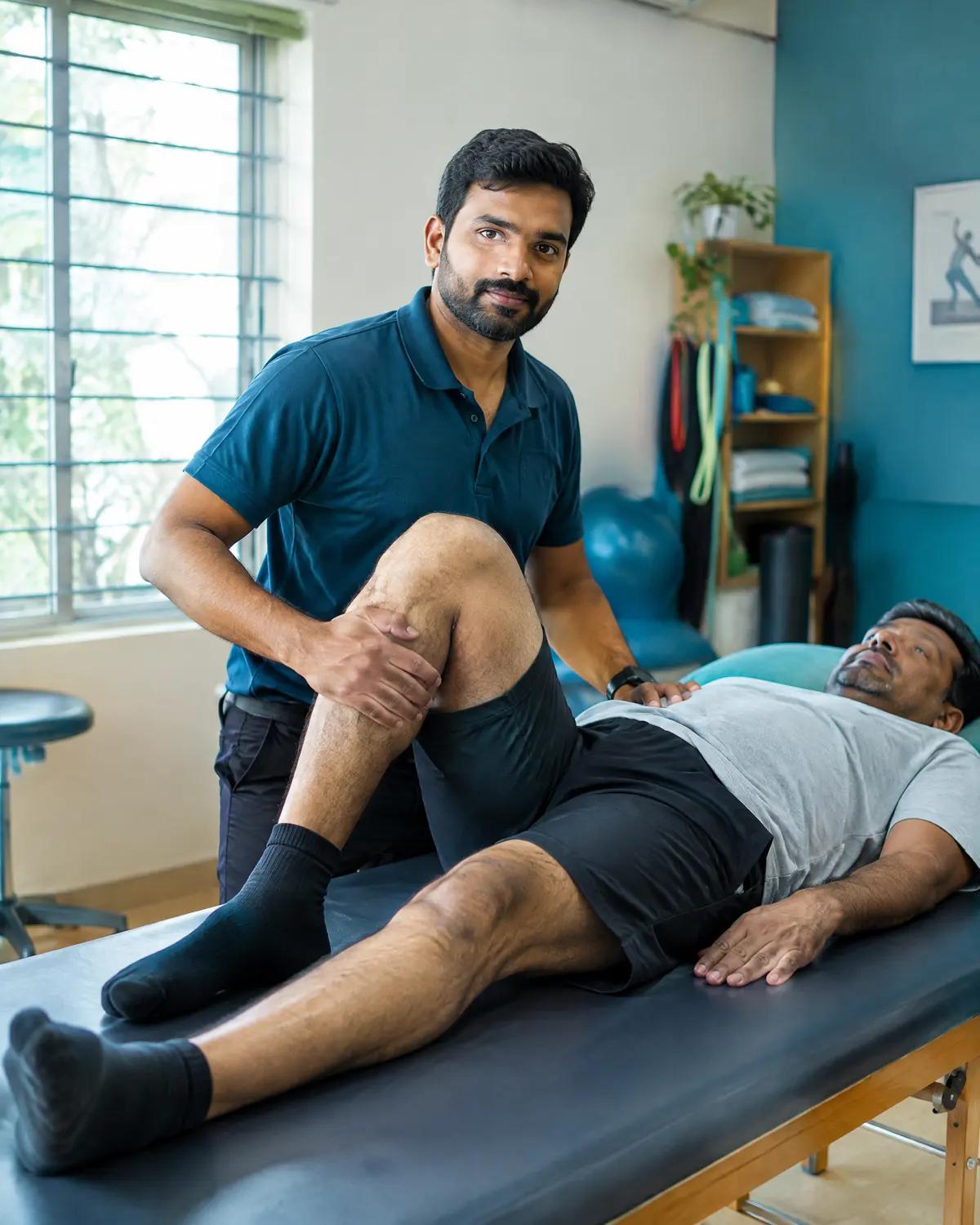
A physiotherapist in a bright clinic with treatment tables behind her
  1. Doctor referrals are the best channel a physiotherapy clinic has, but each one is a single consultant’s habit; search visibility is the insurance for the month that habit ends.

  2. Patients search their pain, not your profession, so write the services list as complaints — back pain, sciatica, frozen shoulder, knee pain, post-operative rehabilitation — rather than as techniques.

  3. Publish your BPT or MPT, university, state council registration and years in practice in the description, and photograph clinical equipment, because patients are trying to tell you apart from a massage centre.

  4. Keep the clinic address visible and carry home visits in the fields: a named service, the localities you cover by name, and a home-visit rate published separately from the clinic rate.

  5. A course runs ten to twenty sessions and dropout peaks around session four, so state the course length at the first visit and make the review request a fixed part of discharge.

Delhi at a glance

Delhi is a city of markets. Most residential colonies have a market of their own, and the bigger shopping hubs range from the wholesale lanes of Chandni Chowk, Sadar Bazaar and Karol Bagh to Lajpat Nagar, Kamla Nagar and Rajouri Garden, and the more upmarket centres of South Delhi such as Khan Market, Greater Kailash and Hauz Khas. Local businesses depend heavily on the families living close to their market, and clinics, salons, coaching centres, gyms and restaurants tend to cluster in the same market blocks, so competition is often visible on a single street.

The city is spread out, split by the Yamuna and crossed by heavy arterial roads, and that shapes who appears in a “near me” search. East Delhi residents rarely cross the river for routine services, and people in Dwarka or Rohini usually look close to home. The Metro has widened the catchment of businesses near major stations, which is why many customers add a station, block or market name to their search. Gurugram and Noida behave as separate markets even though many residents commute between them and Delhi every day.

The Yamuna splits East Delhi from the rest of the city, and congestion on the Ring Road and Outer Ring Road keeps most customers within their own part of town, with Metro stations stretching that range for businesses close to them.

Delhi · 6 zones · 35 localities

Central and Old Delhi

  • Connaught Place
  • Karol Bagh
  • Chandni Chowk
  • Paharganj
  • Daryaganj

North and North-West Delhi

  • Civil Lines
  • Kamla Nagar
  • Model Town
  • Pitampura
  • Rohini
  • Shalimar Bagh
  • Ashok Vihar

South Delhi

  • Greater Kailash
  • Hauz Khas
  • Saket
  • Malviya Nagar
  • Lajpat Nagar
  • Defence Colony
  • Green Park

West Delhi

  • Rajouri Garden
  • Janakpuri
  • Punjabi Bagh
  • Tilak Nagar
  • Vikaspuri
  • Paschim Vihar

South-West Delhi

  • Dwarka
  • Palam
  • Mahipalpur
  • Najafgarh

East Delhi

  • Laxmi Nagar
  • Preet Vihar
  • Mayur Vihar
  • Patparganj
  • Shahdara
  • Krishna Nagar

Searched alongside the city

  • Ghaziabad
  • Faridabad
  • Sonipat

Physiotherapy Clinic SEO in Delhi: questions owners ask

We are close to AIIMS. How do we reach outstation patients before they leave Delhi?

Make the profile answer their real question: can rehabilitation start now and continue after they go home? Name post-operative and neurological rehabilitation, state a typical course length, describe the written home programme you give at discharge, and include walking directions from the hospital gates. Families compare two or three listings on a phone in a waiting area; specific answers win.

Most of our patients say cervical or slip disc. Should those be our service names?

Keep the clinical names as services, such as neck and cervical pain, slip disc treatment and sciatica, because each is a distinct search with its own demand. Then use the everyday Hindi phrasing in the description and posts. That covers both registers without putting keywords anywhere Google treats as misleading, such as the business name.

Should we offer home visits across the whole of South Delhi?

Only if you can serve it, which few clinics can. Home visits pay when they cluster, and Delhi traffic punishes scattered routes. Name the colonies you can reach several times a week, such as Defence Colony, Lajpat Nagar and Jangpura, publish the home rate and any travel charge, and decline the rest honestly.

A reviewer wrote that our physiotherapist did nothing for their back. How do we answer?

Calmly, briefly and without confirming they were a patient or discussing any treatment. Say you are sorry to read about the experience, that you take feedback seriously, and ask them to contact the clinic directly. Clinical details belong in a private conversation, and other patients reading the reply judge the tone, not the argument.

Which areas of Delhi matter most for a physiotherapy business?

Start with Green Park, Gautam Nagar and Yusuf Sarai, Lajpat Nagar and Defence Colony and Rohini and Pitampura. In Green Park, Gautam Nagar and Yusuf Sarai: Around AIIMS and Safdarjung, outstation patients and their families rent rooms during treatment and search for rehabilitation they can walk to between hospital follow-ups. Check your Google Maps position in each area separately, because ranking in one does not carry over to the next.

How do people in Delhi search for a physiotherapist on Google?

They name the area as well as the service, in Hindi, English and Punjabi. Typical searches include “ghutno ke dard ka ilaj rohini sector 7” and “cervical ka ilaj mayur vihar phase 1”. To win “ghutno ke dard ka ilaj rohini sector 7”, your profile has to show knee pain and arthritis as named services, with the sector in the address.

When is the busiest season for physiotherapy businesses in Delhi?

Demand in Delhi moves with Summer heat (Apr–Jun), Delhi Half Marathon (Oct–Nov) and Winter and smog (Nov–Jan). Afternoon attendance falls as temperatures climb. Move sessions towards early morning and evening, publish the changed hours, and post exercises patients can continue indoors between visits.

How should a physiotherapy business in Delhi measure its Google Maps ranking?

Scan a 7×7 grid over 3 km around your location rather than searching from your own premises. A Delhi clinic’s patients usually come from its own cluster of colonies, and 3 km at 7×7 puts points a kilometre apart across that cluster. Centre it on the clinic and watch for the edge at the Ring Road or the river; run a separate scan over the colonies your home visits target.

How does Web Sarathi help a physiotherapy business in Delhi?

Web Sarathi audits your Google Business Profile on day one, gives you a short daily task list of about ten minutes, collects reviews through a QR code, drafts replies in the reviewer’s own language — including Hindi and English — and maps your ranking across Delhi so you can see which areas you are winning. You can start with a free audit.

How Web Sarathi helps

Everything above, done in about ten minutes a day

Ranking across Delhi comes down to a few things done steadily. Web Sarathi tells you which ones to do today, does the slow parts for you, and maps your position across Delhi so you can see it working.

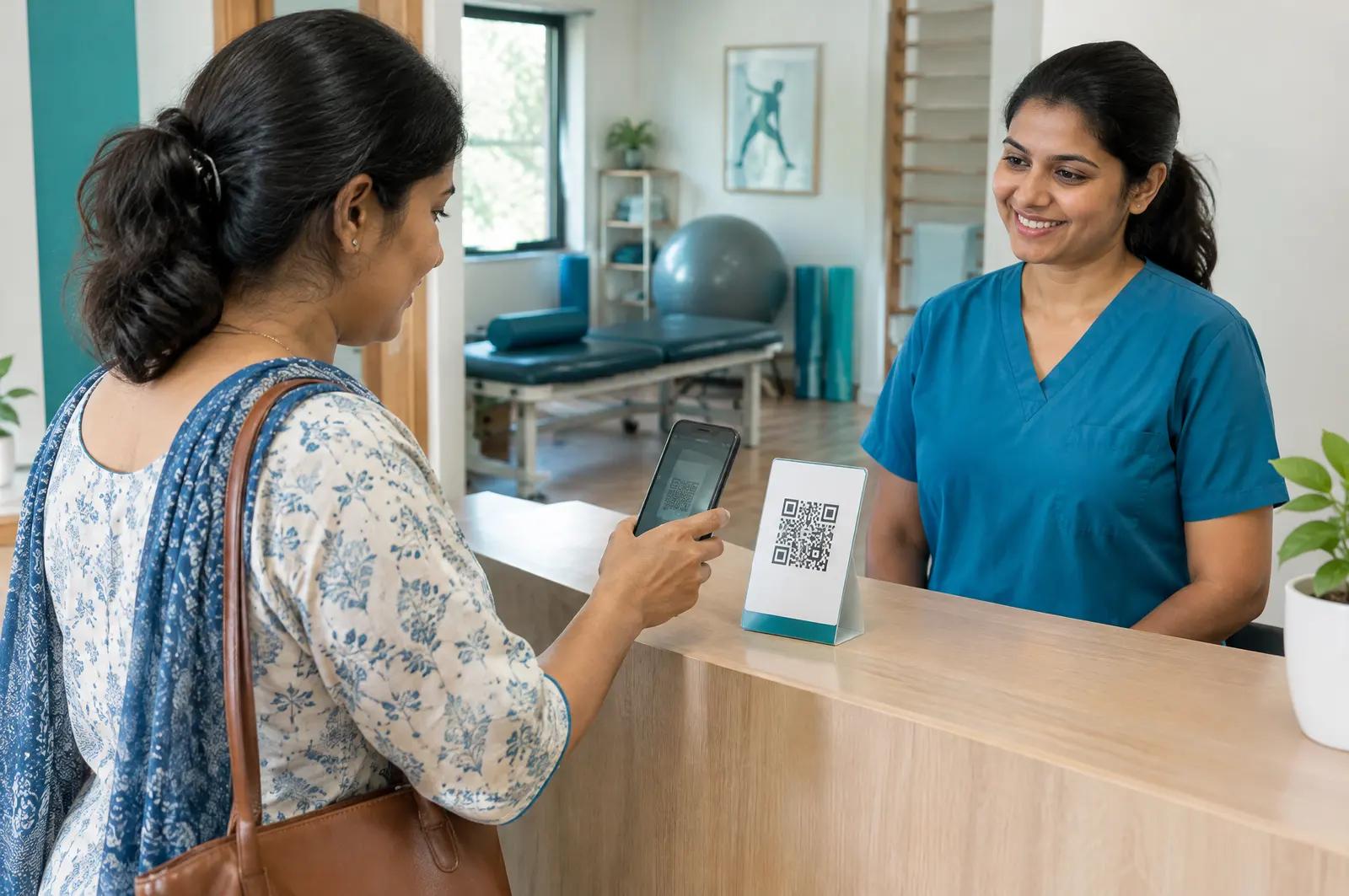
  • A customer scanning the review QR code at a physiotherapy counterReviews in seconds
  • A physiotherapy business owner replying to reviews on a phoneReplies, steadily
  • A physiotherapy business owner photographing their work for a postReal photos, posted
  1. Audit and score

    Day one: more than 50 checks on your profile and a score out of 100, so you know exactly what is missing.

  2. Ten minutes a day

    A short daily task list — complete the profile first, then photos, posts, reviews and replies, in the right amounts.

  3. Reviews in seconds

    A QR code at the counter. Customers pick a suggested highlight, make it their own and post it from their Google account.

  4. Replies Google rewards

    One-click or automatic replies in the reviewer’s language, paced so the profile never looks automated.

  5. Posts and a live website

    Keyword-aware captions for your real photos, published to Google and to a website that updates itself every night.

  6. Rank map and protection

    Your Google Maps position street by street, the competitors beating you, and an alert when someone edits your profile.

Other businesses in Delhi

Local SEO guides for other industries in Delhi.

Physiotherapy Clinic SEO in other cities

Be one of the three businesses Google shows first.

Start with a free audit of your Google profile: where you rank on a map around your business, the competitors Google shows above you, and what your profile is missing, so you know exactly what to fix first. Then sign up, pick an onboarding slot, and our experts set your profile up with you on Google Meet. After that, about ten minutes a day.

No credit card Expert setup on Google Meet, then your 7-day free trial

Read the Physiotherapy Clinic SEO guide