Hotel SEO · Delhi

Hotel SEO in Delhi: winning the gateway search before the traveller reaches the city

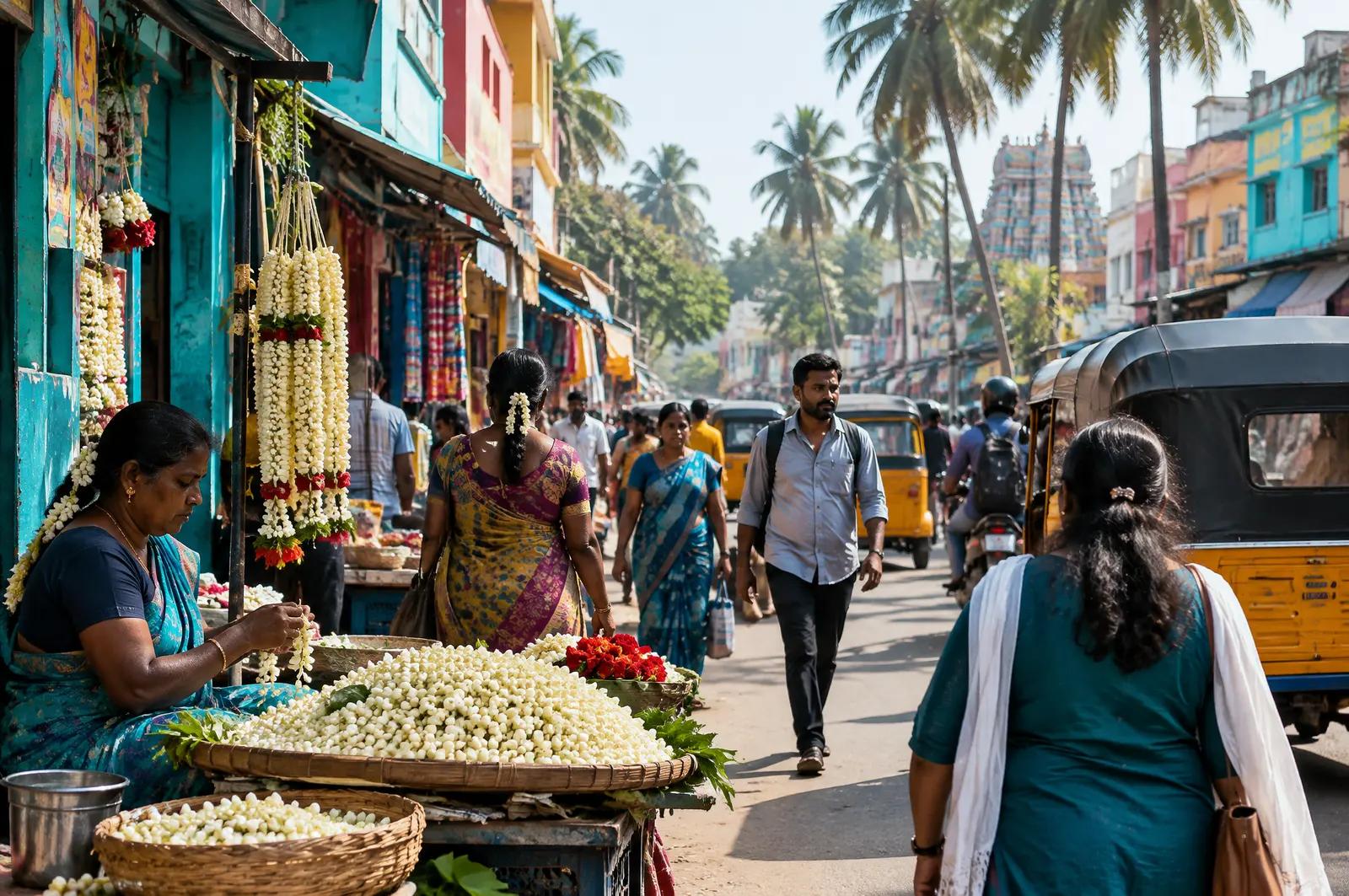
Delhi’s hotel market is organised around the ways people arrive. Aerocity and Mahipalpur serve the airport, Paharganj and Karol Bagh serve New Delhi railway station, the lanes around AIIMS fill with families attending a patient, and Dwarka and Pragati Maidan fill whenever Yashobhoomi or Bharat Mandapam has an event. A Delhi traveller rarely searches for the city. They search for the gateway, and Google matches them to the hotels it can tie to it.

Written by
Web Sarathi Local SEO Team
Last updated
Updated
Reading time
6 min read
A hotel business owner at work, looking at the camera
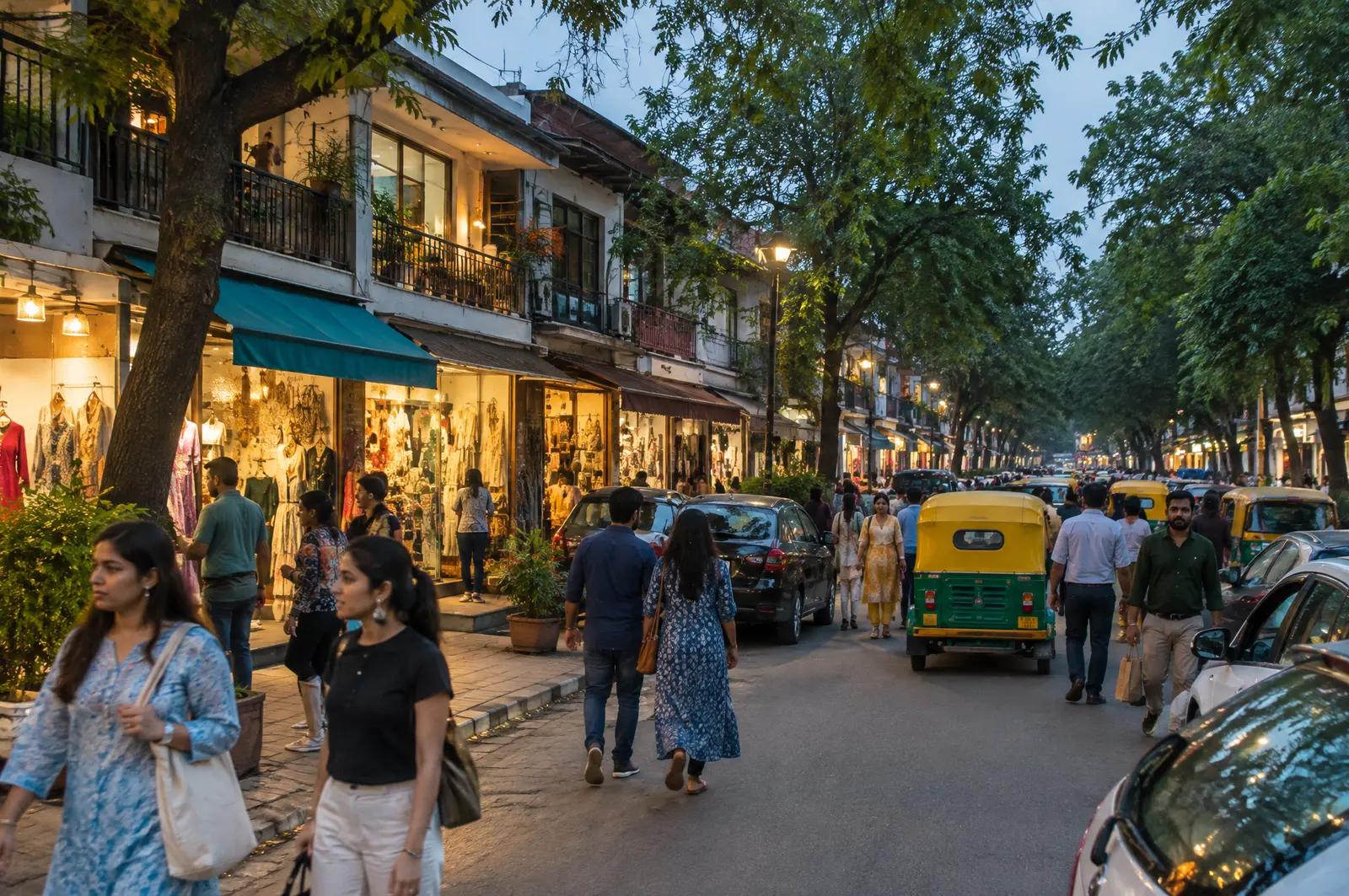
A commercial street in Delhi, Delhi, with local shops and traffic

Hotel SEO · local report

Delhi

Delhi · also searched as New Delhi

Those clusters compete inside themselves rather than with each other. A Paharganj hotel is up against the neighbours on its own lane, not against Aerocity, and the deciding fields are the honest ones: a photograph of the actual room, a check-in time that suits a midnight train, and a direct rate the guest can see beside the marketplace price.

Search languages
Hindi · English · Punjabi
Areas covered below
7 hotspots · 6 zones
Recommended scan
7×7 · 3 km
Key local dates
Republic Day and the trade-fair season · Summer lull for leisure · Dussehra, Diwali and Chhath

Hotel SEO in Delhi: the short version

  1. Pick the gateway your guests arrive through, whether the airport, New Delhi station, AIIMS or a convention centre, and name it with travel time in your description and posts.

  2. In Paharganj and Karol Bagh the rival is next door, so clear room photographs, honest check-in times and a visible direct rate decide the booking.

  3. Winter fog delays flights and trains through December and January; keep the front-desk number answered at night, because stranded passengers search for the nearest room.

  4. Festival travel through New Delhi and Anand Vihar peaks around Diwali and Chhath; station-area hotels should post availability two to three weeks ahead.

Where hotel demand concentrates in Delhi

In short: In Delhi, the areas that matter most for hotel businesses are Aerocity and Mahipalpur, Paharganj, Karol Bagh and 4 more below. Rank in each one separately; a single search from your own counter tells you nothing about them.

Delhi · 7 areas to check one by one

  1. Aerocity and Mahipalpur

    The airport hotel district; transit passengers and early flyers search from the terminal or the cab, so terminal names, airport transfer and round-the-clock check-in decide most bookings.

  2. Paharganj

    Directly opposite New Delhi railway station, with budget and mid-range hotels side by side; backpackers and train passengers compare galleries and prices, so labelled room photographs and a visible direct rate matter.

  3. Karol Bagh

    Family travellers, shoppers and wedding guests choose it for the market and the Blue Line; parking, family rooms and lift access are the attributes these guests filter on.

  4. Green Park, Gautam Nagar and Yusuf Sarai

    The guest houses around AIIMS and Safdarjung Hospital serve patients’ families on long stays; weekly terms, walking distance to the gate and meals carry these searches.

  5. Dwarka

    Yashobhoomi in Sector 25 and the nearby airport bring delegates and transit guests; travellers search by sector and Metro station, so both belong in the description.

  6. Connaught Place

    Business visitors and tourists use it as a base for ministries, sightseeing and events at Bharat Mandapam; the walking time to Rajiv Chowk Metro answers their first question.

  7. Hazrat Nizamuddin and Jangpura

    Passengers for long-distance trains from Hazrat Nizamuddin station and visitors to the dargah want rooms within walking distance; an early check-in policy and a route from the station help.

How people in Delhi search for a hotel

In short: People in Delhi search in Hindi, English, Punjabi, and they name the area, not just the service. Your profile has to match the words they actually type.
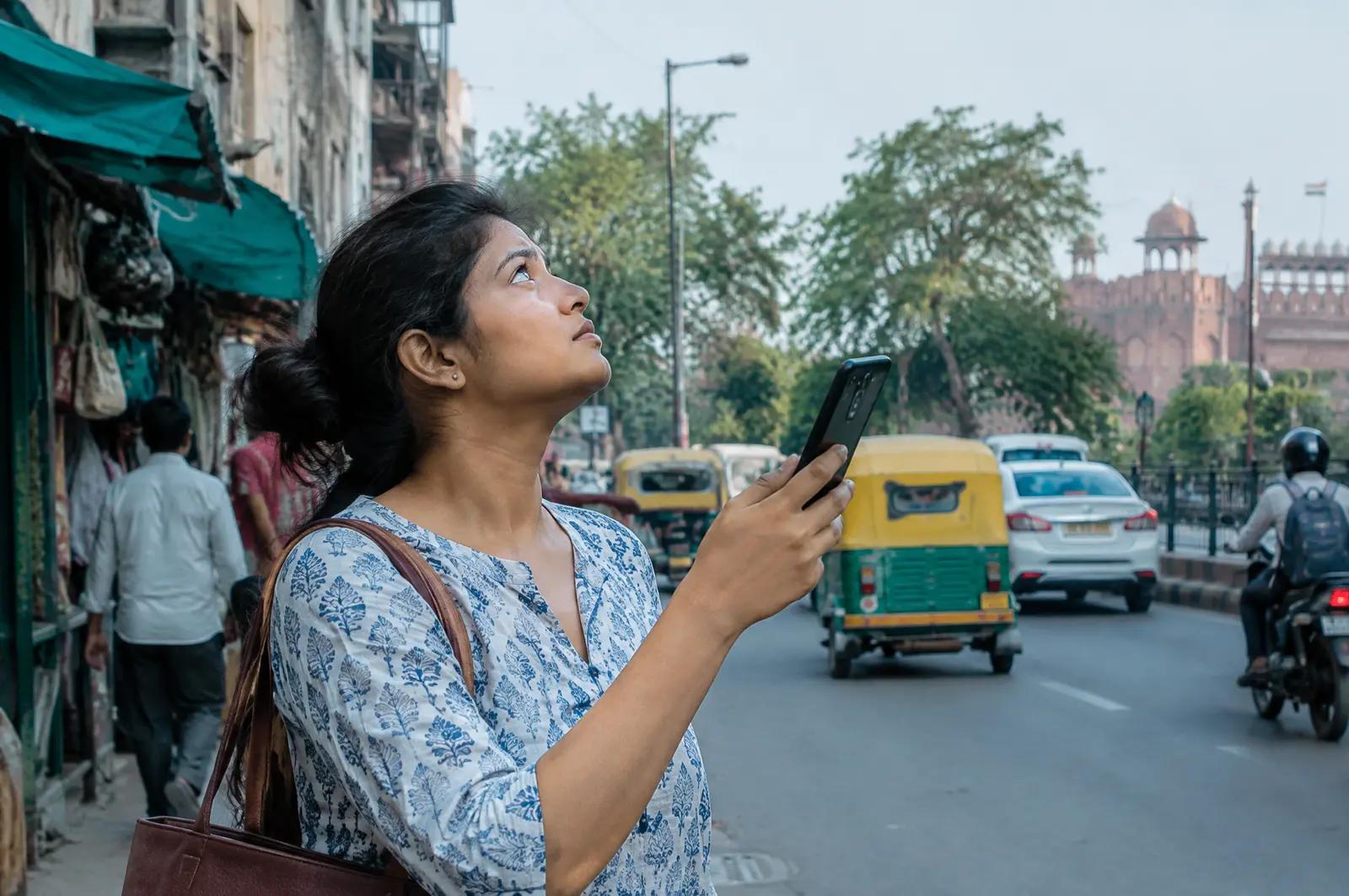
A customer in Delhi looking up a nearby business on a phone
  • hotel near igi airport terminal 3 with pickup
    What they mean
    A flyer arriving late or leaving before dawn
    What your profile must show
    Terminal 3 named, transfer details and check-in times that cover the night
  • new delhi railway station ke paas hotel
    What they mean
    Hindi: “hotel near New Delhi railway station”
    What your profile must show
    The walking route from the Paharganj side and check-in times for early and late trains
  • aiims ke paas guest house monthly
    What they mean
    Hindi: “guest house near AIIMS, monthly”, a patient’s family on a long stay
    What your profile must show
    Weekly or monthly terms, walking time to the gate and plain room photographs
  • hotel near yashobhoomi dwarka sector 25
    What they mean
    A delegate attending an event at the convention centre
    What your profile must show
    Sector, Metro stop, drive time to the venue and workspace attributes
  • karol bagh mein family room hotel
    What they mean
    Hindi mix: “family room hotel in Karol Bagh”
    What your profile must show
    A family-room category photographed and labelled, and parking stated
  • budget hotel paharganj main bazar
    What they mean
    A backpacker comparing prices lane by lane
    What your profile must show
    Honest galleries for each room type and a direct rate in the booking row

What makes Delhi different

In short: What changes in Delhi: Each gateway is its own market · Fog changes the night shift · Summer empties leisure, not business.
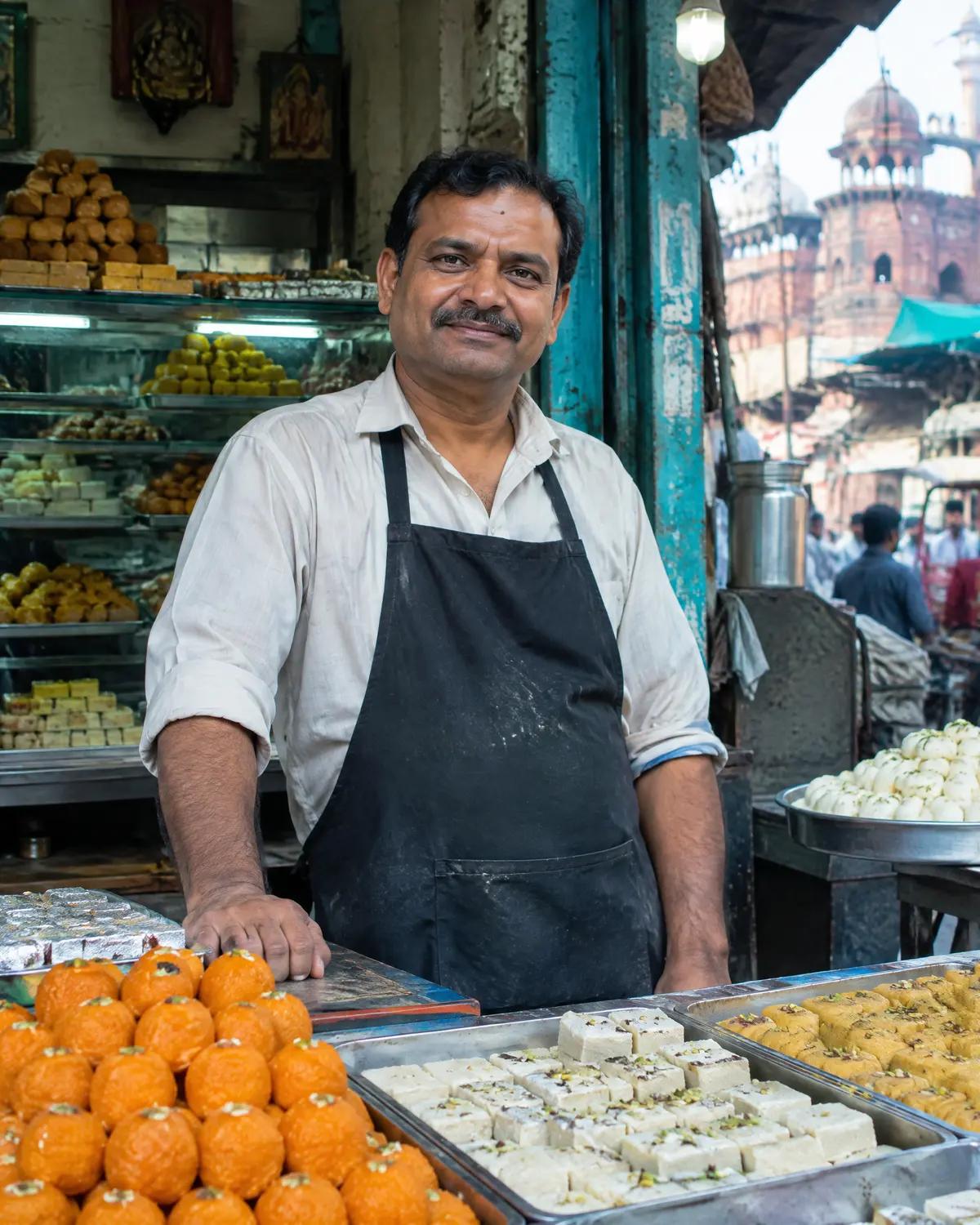
A local business owner in their shop in Delhi

Each gateway is its own market

Aerocity, Paharganj and the AIIMS lanes do not compete with one another; a guest arriving on the morning train will not look at airport hotels. Decide which gateway your rooms realistically serve, name it with travel time in the description, and measure your rank around that point rather than across all of Delhi.

Fog changes the night shift

From December into January, fog delays and cancels flights and trains, and passengers suddenly staying another night search for the nearest room, often after midnight. Hotels near the airport and the stations that answer the phone, show accurate night check-in and keep a direct rate visible take those bookings.

Summer empties leisure, not business

May and June heat thins tourist demand, while ministries, hospitals and exhibitions keep business and medical travel steady. Use the quieter leisure weeks to reshoot rooms, complete attributes such as air conditioning, parking and accessibility, and reply to the review backlog before the autumn season.

The Delhi hotel calendar

In short: Demand in Delhi moves with Republic Day and the trade-fair season (Jan–Feb), Summer lull for leisure (May–Jun), Dussehra, Diwali and Chhath (Oct–Nov). Prepare your profile two to three weeks before each one.
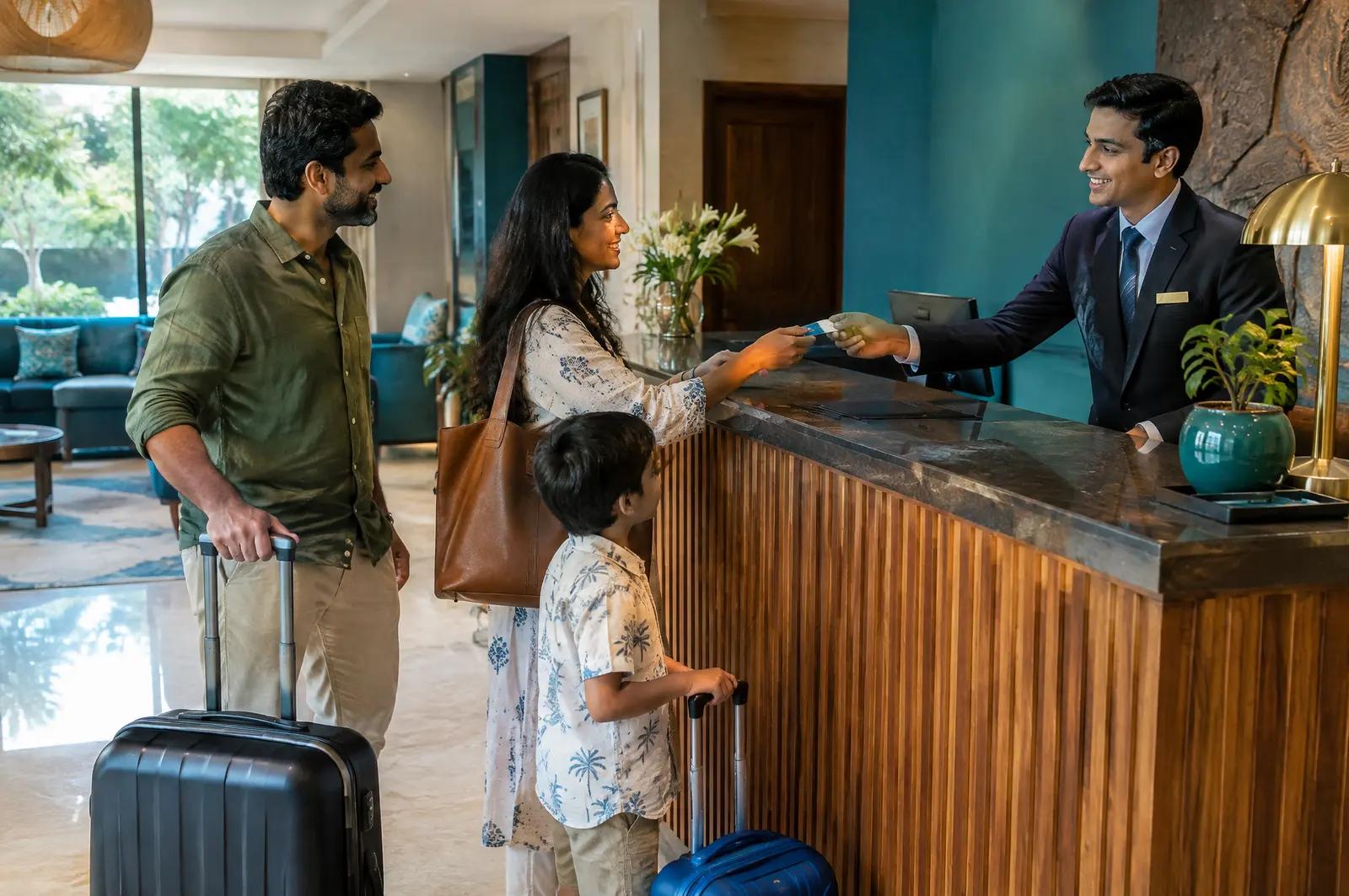
A family checking out at a boutique hotel reception, the manager handing back a key card
  1. Republic Day and the trade-fair seasonJan–Feb

    Security closures around central Delhi in late January change access for Connaught Place hotels, and large exhibitions fill Pragati Maidan and Dwarka. Post access routes ahead of the closures and event-week rates a month before each fair.

  2. Summer lull for leisureMay–Jun

    Tourist demand dips while medical and business stays continue. Reshoot rooms, finish the attribute list and clear review replies, and post weekday rates for the travellers still coming.

  3. Dussehra, Diwali and ChhathOct–Nov

    Very large numbers move through New Delhi and Anand Vihar stations. Station-area hotels should post festival-week check-in arrangements and keep the direct rate live two to three weeks ahead.

  4. Weddings and fogNov–Feb

    Wedding guests book blocks near farmhouses and banquet halls while fog strands travellers at night. Keep the phone answered after midnight, post a route for wedding-block enquiries, and reply to group reviews promptly.

Measuring your reach across Delhi

In short: Scan a 7×7 grid over 3 km around your location to see where you appear in the local pack and where a competitor beats you.

Example scan, Delhi

Example

7×7 grid, 3 km radius, points about 1 km apart

Delhi hotels compete inside their cluster, so 3 km at 7×7, with points a kilometre apart, is enough. The scan is centred on your property; track the gateway phrase, such as “hotel near new delhi railway station”, and check whether you hold the station side or only your own lane.

In the top three at 14 of 48 points

  • Top 3, the local pack14 points
  • Ranks 4 to 1014 points
  • Ranks 11 to 308 points
  • Ranks 31 to 1004 points
  • Not in the results8 points
  • Your business, at the centre of the scan

Illustration. A real Web Sarathi scan plots your actual Google Maps position at every point, with the businesses ranking above you.

Grid ranking

Your real position, measured from where guests actually search

The result you see from reception is the least useful data point available to you. Grid ranking measures your Maps position from dozens of points across the region your guests search from, and returns it as a heat map you can read at a glance.

  • See exactly which parts of your catchment you are invisible in
  • Track a destination keyword over time instead of guessing
  • Compare your coverage against the property that keeps outranking you
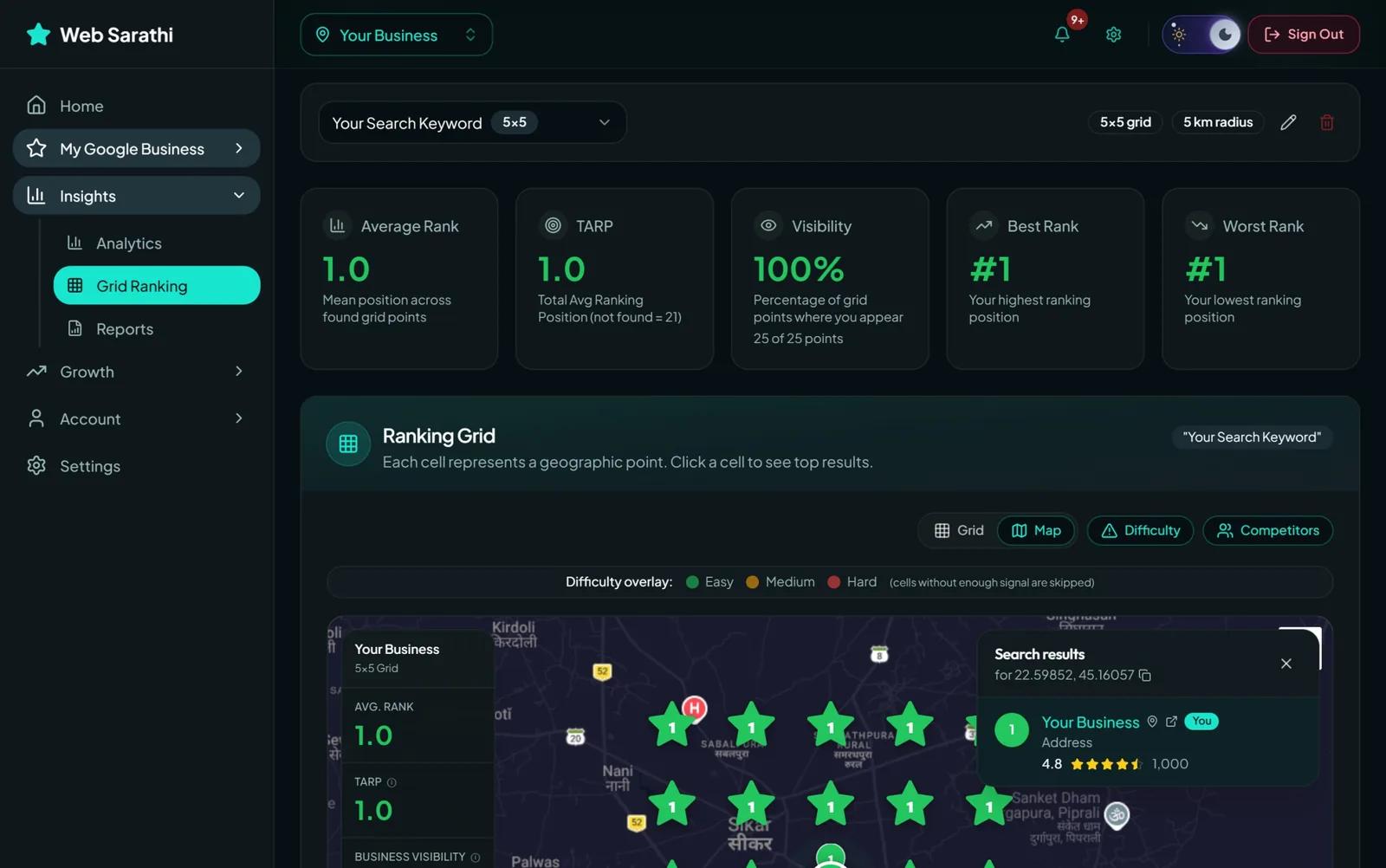
Grid ranking heat map showing Google Maps position measured across a region

The hotel playbook behind this page

In short: Everything on this page applies the national Hotel SEO guide to Delhi. These are its core rules.

The owner of a boutique heritage hotel at a carved wooden reception desk in a sunlit courtyard
  1. Marketplace commission typically takes 12–25% of an Indian room night, while a direct booking costs a 2–3% gateway fee. That margin, not a ranking position, is what hotel search work wins back.

  2. Google shows hotels in a travel module with dates, prices and filters rather than the ordinary local pack, so structured property data outweighs keywords and a blank attribute can exclude you entirely.

  3. Free booking links put your direct rate beside marketplace rates at no commission, most valuably on searches for your own name. They need a connected booking engine, honest rate parity and correct taxes.

  4. Fill every hotel attribute and the check-in and check-out times honestly: each blank box is a filtered search you have opted out of, and an overclaimed amenity returns as a one-star review.

  5. Ask every guest for a Google review at check-out, with a QR code on the desk, whichever channel they booked through, because marketplace reviews only ever come from that marketplace’s own bookings.

Delhi at a glance

Delhi is a city of markets. Most residential colonies have a market of their own, and the bigger shopping hubs range from the wholesale lanes of Chandni Chowk, Sadar Bazaar and Karol Bagh to Lajpat Nagar, Kamla Nagar and Rajouri Garden, and the more upmarket centres of South Delhi such as Khan Market, Greater Kailash and Hauz Khas. Local businesses depend heavily on the families living close to their market, and clinics, salons, coaching centres, gyms and restaurants tend to cluster in the same market blocks, so competition is often visible on a single street.

The city is spread out, split by the Yamuna and crossed by heavy arterial roads, and that shapes who appears in a “near me” search. East Delhi residents rarely cross the river for routine services, and people in Dwarka or Rohini usually look close to home. The Metro has widened the catchment of businesses near major stations, which is why many customers add a station, block or market name to their search. Gurugram and Noida behave as separate markets even though many residents commute between them and Delhi every day.

The Yamuna splits East Delhi from the rest of the city, and congestion on the Ring Road and Outer Ring Road keeps most customers within their own part of town, with Metro stations stretching that range for businesses close to them.

Delhi · 6 zones · 35 localities

Central and Old Delhi

  • Connaught Place
  • Karol Bagh
  • Chandni Chowk
  • Paharganj
  • Daryaganj

North and North-West Delhi

  • Civil Lines
  • Kamla Nagar
  • Model Town
  • Pitampura
  • Rohini
  • Shalimar Bagh
  • Ashok Vihar

South Delhi

  • Greater Kailash
  • Hauz Khas
  • Saket
  • Malviya Nagar
  • Lajpat Nagar
  • Defence Colony
  • Green Park

West Delhi

  • Rajouri Garden
  • Janakpuri
  • Punjabi Bagh
  • Tilak Nagar
  • Vikaspuri
  • Paschim Vihar

South-West Delhi

  • Dwarka
  • Palam
  • Mahipalpur
  • Najafgarh

East Delhi

  • Laxmi Nagar
  • Preet Vihar
  • Mayur Vihar
  • Patparganj
  • Shahdara
  • Krishna Nagar

Searched alongside the city

  • Ghaziabad
  • Faridabad
  • Sonipat

Hotel SEO in Delhi: questions owners ask

We are in Paharganj. How do we stand out from the hotels on either side?

Be the listing a guest can judge without calling. Inside a cluster distance is equal, so photographs, check-in times and price decide it. Label every room category, show the actual room rather than the lobby, and get your direct rate into the booking row at parity with the marketplaces. Then answer every review, especially the critical ones, because guests here read them closely.

Does an Aerocity hotel compete with hotels in Mahipalpur?

For airport searches, yes. A traveller typing hotel near Delhi airport sees both, and the price filter decides which are compared. Mahipalpur properties win on rate and Aerocity on proximity and facilities, so state your drive time to each terminal honestly, keep transfer details current, and fill every attribute a transit guest filters on.

Fog strands guests every winter. Should we post about it?

Yes, briefly and practically. A December post saying you accept late-night check-ins, with the front-desk number, is exactly what a stranded passenger looks for. Keep hours accurate and the phone answered overnight, and if your rate changes on fog nights, make sure the direct rate in Google’s booking row matches what the desk will charge.

Do Republic Day closures affect our listing?

They affect access, not ranking. Security arrangements in late January close roads around central Delhi and change routes from the stations and the airport. Post a short note a week ahead explaining how guests can reach you, keep the phone answered, and set special hours if your restaurant or front desk changes them for the day.

Which areas of Delhi matter most for a hotel business?

Start with Aerocity and Mahipalpur, Paharganj and Karol Bagh. In Aerocity and Mahipalpur: The airport hotel district; transit passengers and early flyers search from the terminal or the cab, so terminal names, airport transfer and round-the-clock check-in decide most bookings. Check your Google Maps position in each area separately, because ranking in one does not carry over to the next.

How do people in Delhi search for a hotel on Google?

They name the area as well as the service, in Hindi, English and Punjabi. Typical searches include “hotel near igi airport terminal 3 with pickup” and “new delhi railway station ke paas hotel”. To win “hotel near igi airport terminal 3 with pickup”, your profile has to show terminal 3 named, transfer details and check-in times that cover the night.

When is the busiest season for hotel businesses in Delhi?

Demand in Delhi moves with Republic Day and the trade-fair season (Jan–Feb), Summer lull for leisure (May–Jun) and Dussehra, Diwali and Chhath (Oct–Nov). Security closures around central Delhi in late January change access for Connaught Place hotels, and large exhibitions fill Pragati Maidan and Dwarka. Post access routes ahead of the closures and event-week rates a month before each fair.

How should a hotel business in Delhi measure its Google Maps ranking?

Scan a 7×7 grid over 3 km around your location rather than searching from your own premises. Delhi hotels compete inside their cluster, so 3 km at 7×7, with points a kilometre apart, is enough. The scan is centred on your property; track the gateway phrase, such as “hotel near new delhi railway station”, and check whether you hold the station side or only your own lane.

How does Web Sarathi help a hotel business in Delhi?

Web Sarathi audits your Google Business Profile on day one, gives you a short daily task list of about ten minutes, collects reviews through a QR code, drafts replies in the reviewer’s own language — including Hindi and English — and maps your ranking across Delhi so you can see which areas you are winning. You can start with a free audit.

How Web Sarathi helps

Everything above, done in about ten minutes a day

Ranking across Delhi comes down to a few things done steadily. Web Sarathi tells you which ones to do today, does the slow parts for you, and maps your position across Delhi so you can see it working.

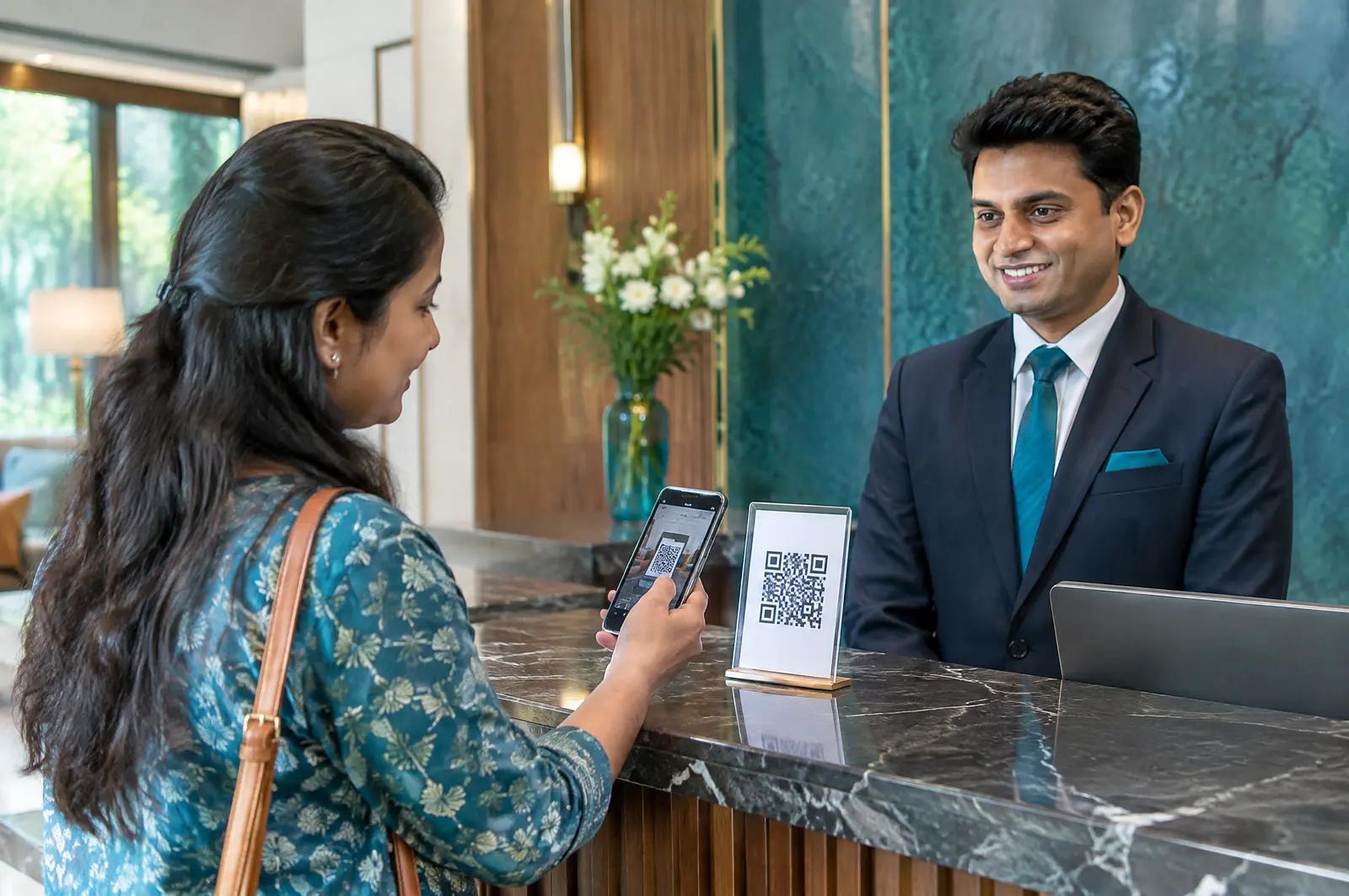
  • A customer scanning the review QR code at a hotel counterReviews in seconds
  • A hotel business owner replying to reviews on a phoneReplies, steadily
  • A hotel business owner photographing their work for a postReal photos, posted
  1. Audit and score

    Day one: more than 50 checks on your profile and a score out of 100, so you know exactly what is missing.

  2. Ten minutes a day

    A short daily task list — complete the profile first, then photos, posts, reviews and replies, in the right amounts.

  3. Reviews in seconds

    A QR code at the counter. Customers pick a suggested highlight, make it their own and post it from their Google account.

  4. Replies Google rewards

    One-click or automatic replies in the reviewer’s language, paced so the profile never looks automated.

  5. Posts and a live website

    Keyword-aware captions for your real photos, published to Google and to a website that updates itself every night.

  6. Rank map and protection

    Your Google Maps position street by street, the competitors beating you, and an alert when someone edits your profile.

Other businesses in Delhi

Local SEO guides for other industries in Delhi.

Be one of the three businesses Google shows first.

Start with a free audit of your Google profile: where you rank on a map around your business, the competitors Google shows above you, and what your profile is missing, so you know exactly what to fix first. Then sign up, pick an onboarding slot, and our experts set your profile up with you on Google Meet. After that, about ten minutes a day.

No credit card Expert setup on Google Meet, then your 7-day free trial

Read the Hotel SEO guide