Hotel SEO · Surat

Hotel SEO in Surat: the trader’s hotel, chosen by the market rather than the map

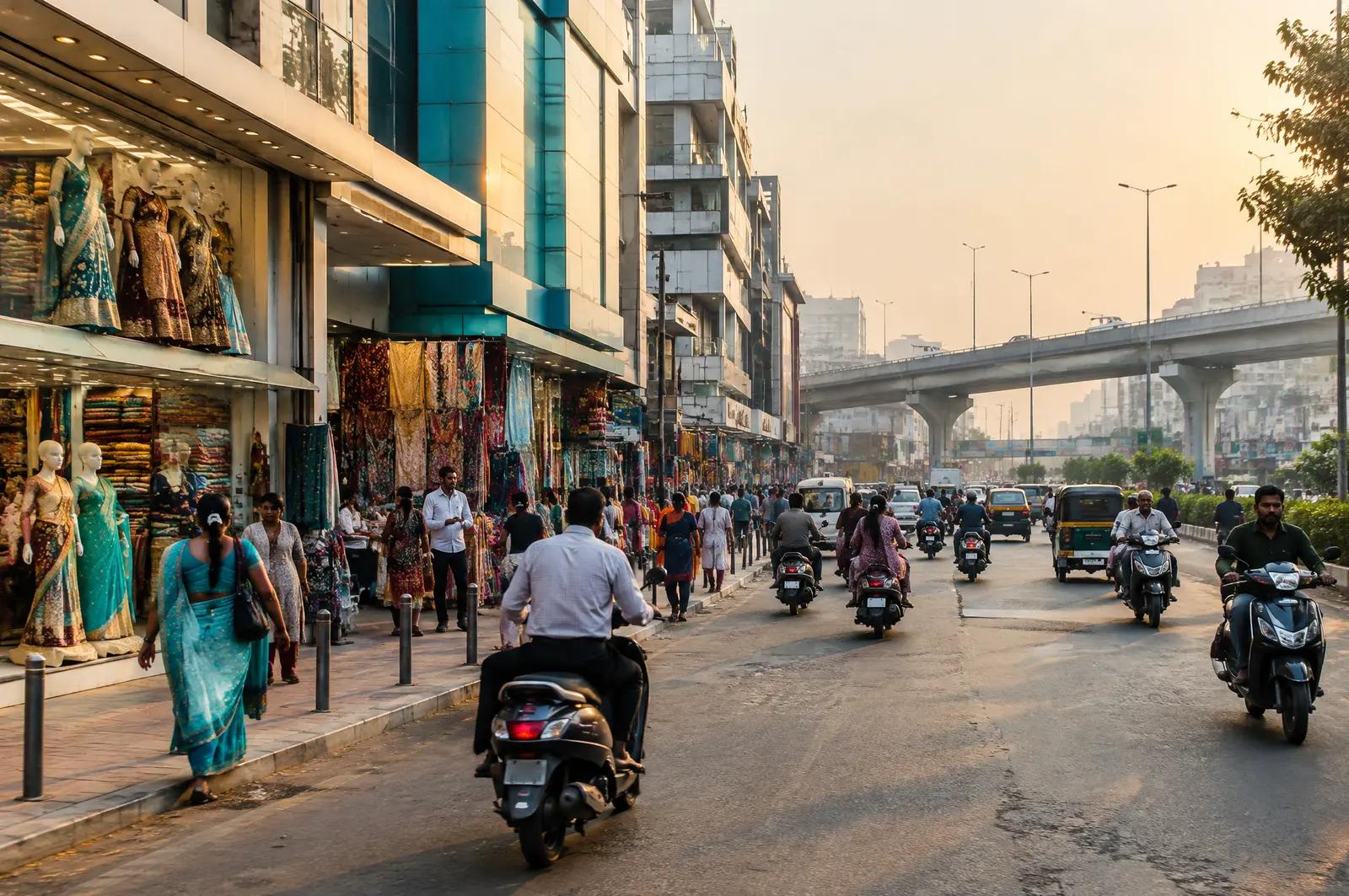
Surat’s hotel guests mostly come to trade. Textile buyers from across India visit the wholesale markets along the Ring Road, diamond buyers and brokers visit Varachha, Mahidharpura and the bourse at Khajod, and engineers and contractors work in the Hazira industrial belt. They come for two or three nights, often repeatedly through the year, and choose a hotel by the market or plant they must reach early in the morning.

Written by
Web Sarathi Local SEO Team
Last updated
Updated
Reading time
6 min read
The owner of a boutique heritage hotel at a carved wooden reception desk in a sunlit courtyard
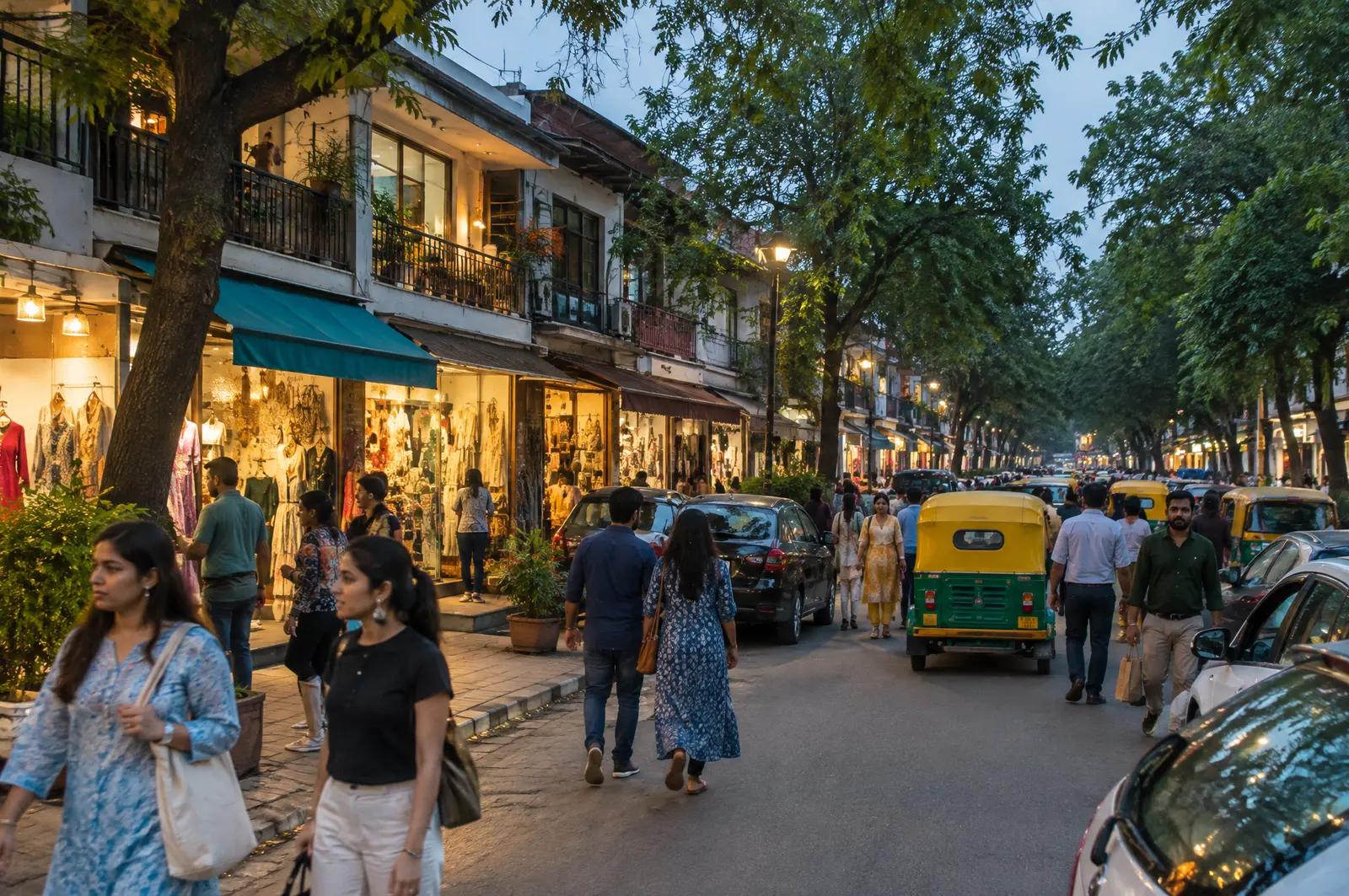
A commercial street in Surat, Gujarat, with local shops and traffic

Hotel SEO · local report

Surat

Gujarat

That makes Surat a weekday city with a working traveller: clean rooms, early breakfast, parking, a GST invoice and a short drive matter more than décor. Many visiting traders search and review in Hindi rather than Gujarati. And the calendar has a gap most cities lack: the diamond and textile trades slow sharply around Diwali, which empties business hotels just as the rest of India travels.

Search languages
Gujarati · Hindi · English
Areas covered below
7 hotspots · 6 zones
Recommended scan
7×7 · 3 km
Key local dates
Uttarayan · Monsoon · Navratri

Hotel SEO in Surat: the short version

  1. Name the textile market, diamond area or Hazira plant you are near, with the morning drive time; Surat business guests search by where they trade.

  2. Many visiting traders write in Hindi; reply in the language each guest used, and keep check-in and parking details plain enough to need no translation.

  3. Plan for the Diwali slowdown in the trades by posting family and festival stays for those weeks, rather than waiting for business guests to return.

  4. Fill the attributes a working traveller filters on, such as parking, breakfast, Wi-Fi and a desk, and keep check-in times right for early trains.

Where hotel demand concentrates in Surat

In short: In Surat, the areas that matter most for hotel businesses are Ring Road textile markets, Varachha and Katargam, Khajod and Vesu and 4 more below. Rank in each one separately; a single search from your own counter tells you nothing about them.

Surat · 7 areas to check one by one

  1. Ring Road textile markets

    Traders visiting the wholesale textile markets want rooms a short ride away; Hindi searches, early breakfast, parking and GST invoicing decide repeat business.

  2. Varachha and Katargam

    The diamond trade’s home ground; brokers and buyers want quiet rooms close to the offices, and reviews mentioning security and early check-in carry weight.

  3. Khajod and Vesu

    The diamond bourse and the newer towers of Vesu bring corporate visitors; modern rooms, workspace attributes and the drive time to the bourse matter here.

  4. Surat station

    Rail passengers and traders arriving overnight search near the station; walking routes, early check-in and honest budget-room photographs carry these searches.

  5. Athwa, Ghod Dod Road and Piplod

    Central business hotels near offices and restaurants; corporate guests and wedding families both stay here, so separate packages and photographs for each make sense.

  6. Hazira Road

    Engineers and contractors at the port and industrial belt book long stays; weekly terms, laundry and parking for work vehicles matter more than a central address.

  7. Dumas Road and the airport

    Hotels near the airport take early flyers and weekend visitors to Dumas beach; airport transfers and weekend posts suit both guests.

How people in Surat search for a hotel

In short: People in Surat search in Gujarati, Hindi, English, and they name the area, not just the service. Your profile has to match the words they actually type.

A customer in Surat looking up a nearby business on a phone
  • ring road textile market ke paas hotel
    What they mean
    Hindi: “hotel near the Ring Road textile market”
    What your profile must show
    Drive time to the markets, early breakfast and parking
  • varachha ma hotel
    What they mean
    Gujarati: “hotel in Varachha”
    What your profile must show
    Quiet rooms photographed by category and early check-in stated
  • surat station pase hotel
    What they mean
    Gujarati: “hotel near Surat station”
    What your profile must show
    The walking route from the station and check-in for overnight arrivals
  • hotel near diamond bourse khajod
    What they mean
    A corporate visitor to the bourse
    What your profile must show
    Drive time to the bourse and workspace attributes
  • hazira hotel monthly stay
    What they mean
    A contractor on a long assignment
    What your profile must show
    Long-stay terms, laundry and vehicle parking
  • hotel near surat airport dumas road
    What they mean
    An early flyer or a weekend visitor
    What your profile must show
    Drive time to the terminal and weekend packages

What makes Surat different

In short: What changes in Surat: Trade sets the address · The Diwali slowdown · Hindi and Gujarati both matter.
A local business owner in their shop in Surat

Trade sets the address

A textile buyer and a diamond broker want different parts of the city, and Hazira contractors want neither. Decide which trade your guests come for, say so with the morning drive time in the description, and let repeat guests’ reviews mention the markets naturally. Ranking well near Varachha says little about the Ring Road.

The Diwali slowdown

The diamond and textile trades take an extended break around Diwali, and business visitors stop coming for those weeks. Rather than going quiet, post family stays, festival packages and weekend offers for people visiting relatives, and use the slow days to reshoot rooms and complete attributes.

Hindi and Gujarati both matter

Visiting traders from Rajasthan, Uttar Pradesh, Bihar and Maharashtra often search and review in Hindi, while local families use Gujarati. Reply in the language each guest used, keep landmark names as people type them, and make check-in times and parking details clear enough that nobody has to call to understand them.

The Surat hotel calendar

In short: Demand in Surat moves with Uttarayan (Jan), Monsoon (Jun–Sep), Navratri (Sep–Oct). Prepare your profile two to three weeks before each one.

A family checking out at a boutique hotel reception, the manager handing back a key card
  1. UttarayanJan

    Kite-flying days slow business travel for a few days. Post festival-week availability for visiting families, and use the quieter days to work through the review backlog.

  2. MonsoonJun–Sep

    Heavy rain can flood low-lying roads near the Tapi. Keep phone lines answered, post access advice on rain days, and use the slower weeks to reshoot rooms and fill attributes.

  3. NavratriSep–Oct

    Garba nights bring visitors from nearby towns and wedding-season shoppers into the city. Post festival packages, late dining hours, parking details and the drive to the main garba grounds two to three weeks ahead.

  4. Diwali and Chandi PadvoOct–Nov

    Trade slows as markets and diamond units break for the festival. Post family and festival packages, update restaurant hours if they change, and keep your direct rate visible for travellers visiting family.

  5. Trade returns, weddings beginNov–Feb

    Business picks up after the break and weddings fill banquet halls. Post a back-to-business note when the markets reopen, publish group terms for wedding blocks, and keep breakfast and parking attributes current.

Measuring your reach across Surat

In short: Scan a 7×7 grid over 3 km around your location to see where you appear in the local pack and where a competitor beats you.

Example scan, Surat

Example

7×7 grid, 3 km radius, points about 1 km apart

Surat business guests want a short morning drive, so 3 km at 7×7, points a kilometre apart, shows whether you reach the market or offices you serve. The scan is centred on your hotel; track the market or area phrase your guests use, and expect the Tapi to mark a hard edge.

In the top three at 14 of 48 points

  • Top 3, the local pack14 points
  • Ranks 4 to 1014 points
  • Ranks 11 to 308 points
  • Ranks 31 to 1004 points
  • Not in the results8 points
  • Your business, at the centre of the scan

Illustration. A real Web Sarathi scan plots your actual Google Maps position at every point, with the businesses ranking above you.

Grid ranking

Your real position, measured from where guests actually search

The result you see from reception is the least useful data point available to you. Grid ranking measures your Maps position from dozens of points across the region your guests search from, and returns it as a heat map you can read at a glance.

  • See exactly which parts of your catchment you are invisible in
  • Track a destination keyword over time instead of guessing
  • Compare your coverage against the property that keeps outranking you
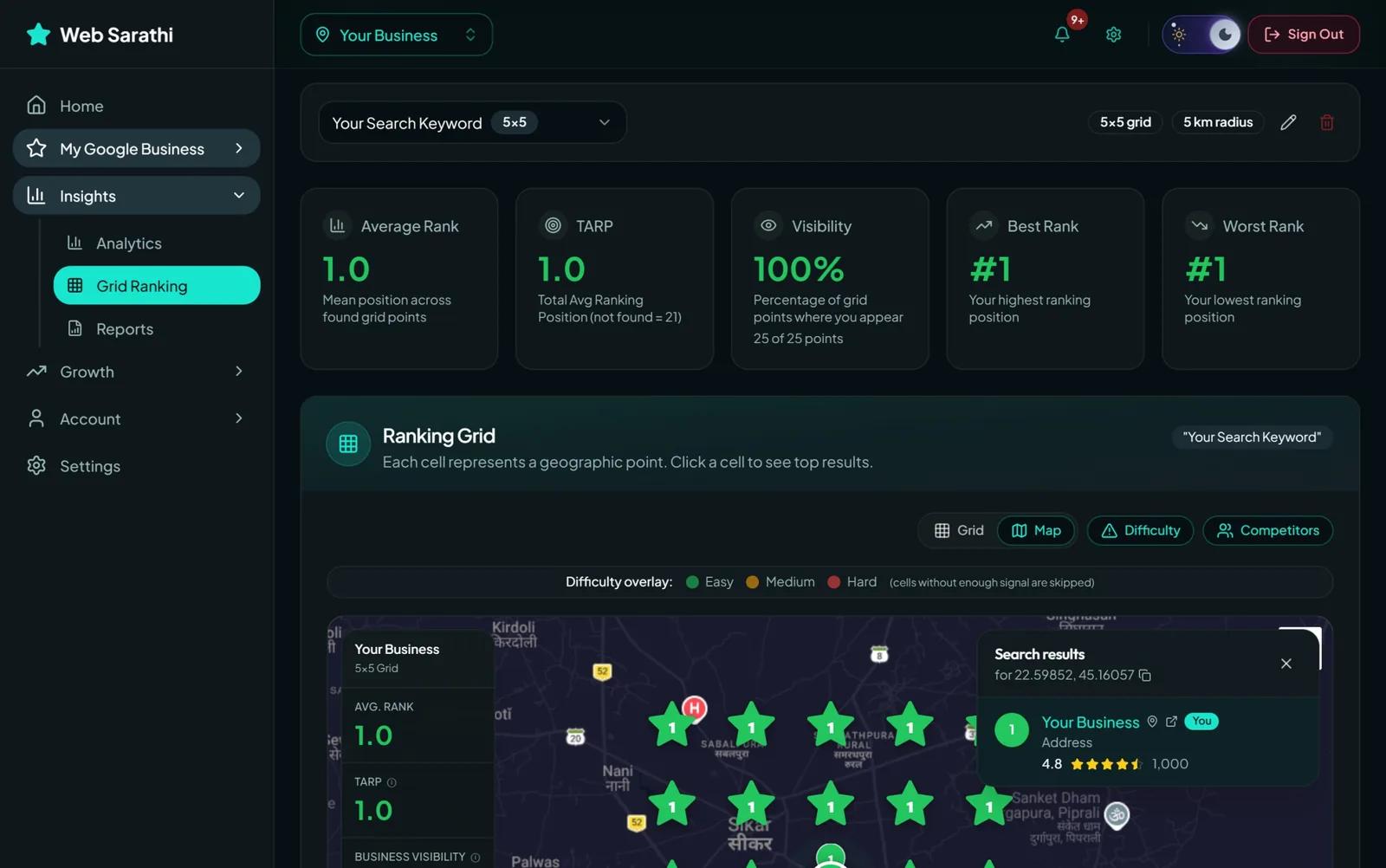
Grid ranking heat map showing Google Maps position measured across a region

The hotel playbook behind this page

In short: Everything on this page applies the national Hotel SEO guide to Surat. These are its core rules.

A hotel business owner at work, looking at the camera
  1. Marketplace commission typically takes 12–25% of an Indian room night, while a direct booking costs a 2–3% gateway fee. That margin, not a ranking position, is what hotel search work wins back.

  2. Google shows hotels in a travel module with dates, prices and filters rather than the ordinary local pack, so structured property data outweighs keywords and a blank attribute can exclude you entirely.

  3. Free booking links put your direct rate beside marketplace rates at no commission, most valuably on searches for your own name. They need a connected booking engine, honest rate parity and correct taxes.

  4. Fill every hotel attribute and the check-in and check-out times honestly: each blank box is a filtered search you have opted out of, and an overclaimed amenity returns as a one-star review.

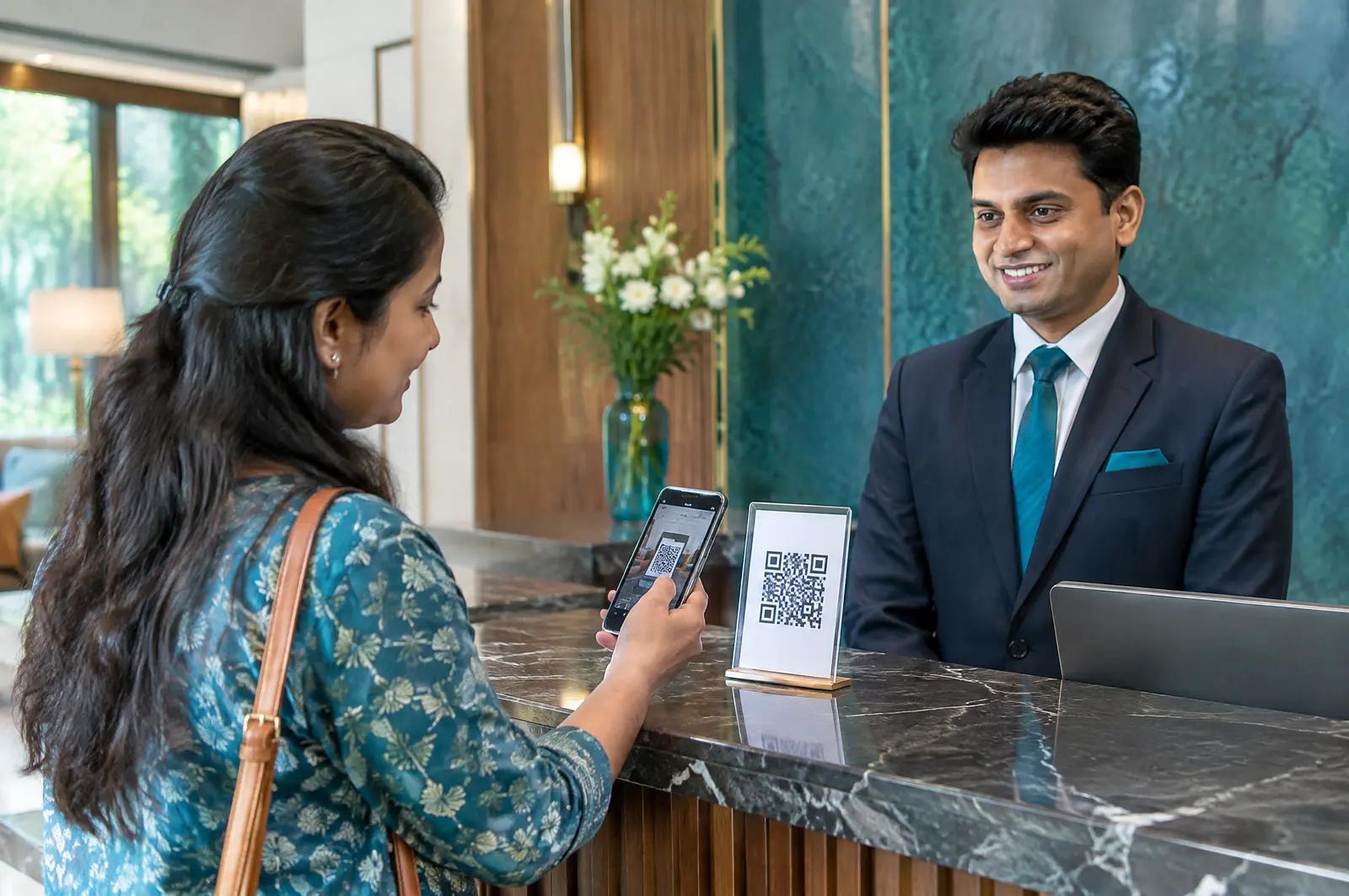
  5. Ask every guest for a Google review at check-out, with a QR code on the desk, whichever channel they booked through, because marketplace reviews only ever come from that marketplace’s own bookings.

Surat at a glance

Surat’s economy is built on diamonds and textiles, and both shape its local market. Diamond cutting and trading are concentrated around Varachha, Katargam and Mahidharpura, and textile wholesale runs through the markets along the Ring Road, which bring traders, workers and buyers from across the country. Residential growth has pushed west and south-west, so Adajan, Piplod, Vesu, Athwa and City Light now hold much of the city’s newer retail, dining, healthcare and fitness businesses.

The Tapi river separates Adajan, Rander and Pal from the old city, and people on either side tend to look for services nearby. Varachha and Katargam behave very differently from Vesu or Adajan: the older areas are dense, with long-standing shops and loyal customers, while the newer western areas have more apartment residents who pick businesses through Google search and reviews. Customers commonly search in Gujarati and English, and Hindi is widely used by workers who have moved to Surat from other states.

The Tapi separates Adajan, Rander and Pal from the old city, and traffic on its bridges and on the Ring Road keeps most customers on their own side of town.

Surat · 6 zones · 28 localities

Old City

  • Chowk Bazaar
  • Nanpura
  • Gopipura
  • Mahidharpura
  • Salabatpura

East Surat

  • Varachha
  • Mota Varachha
  • Kapodra
  • Sarthana
  • Puna

North Surat

  • Katargam
  • Ved Road
  • Amroli
  • Utran

West Surat

  • Adajan
  • Rander
  • Pal
  • Jahangirpura

South-West Surat

  • Athwa
  • Ghod Dod Road
  • City Light
  • Piplod
  • Vesu
  • Althan

South Surat

  • Udhna
  • Pandesara
  • Bhestan
  • Limbayat

Searched alongside the city

  • Hazira
  • Kamrej
  • Olpad
  • Sachin

Hotel SEO in Surat: questions owners ask

Most of our guests are repeat traders. Do reviews still matter?

Yes, because the new trader searching from another state has never heard of you and reads them before booking. Ask every guest at check-out, regulars included, with a QR code on the desk, and reply to each review briefly. A steady run of recent reviews from people who came for the same market is exactly what a first-time visitor wants to see.

Should we mention monthly rates for Hazira contractors?

Say that you take long stays and how to ask about them; the description is the right place. Contractors compare weekly cost, laundry, parking and meals, so mention those and photograph a room as it will be lived in. If your rates appear in Google’s booking row, make sure the nightly figure there matches what the desk quotes.

Business stops at Diwali. What should we post?

Post for the guests who do travel then: families visiting relatives, wedding guests and weekend visitors. A festival package with clear dates and inclusions, photographs of family rooms and accurate restaurant hours keep the profile active. Then post again when the markets reopen, so returning traders can see you are ready for them.

Is Dumas beach demand worth chasing for a city hotel?

Only at weekends, and only if you are on the Dumas Road side. Families from the city and nearby towns book short stays there, so post weekend packages on Wednesdays, photograph the rooms that suit families, and state the drive to the beach. A Ring Road hotel is better spending the same effort on traders.

Which areas of Surat matter most for a hotel business?

Start with Ring Road textile markets, Varachha and Katargam and Khajod and Vesu. In Ring Road textile markets: Traders visiting the wholesale textile markets want rooms a short ride away; Hindi searches, early breakfast, parking and GST invoicing decide repeat business. Check your Google Maps position in each area separately, because ranking in one does not carry over to the next.

How do people in Surat search for a hotel on Google?

They name the area as well as the service, in Gujarati, Hindi and English. Typical searches include “ring road textile market ke paas hotel” and “varachha ma hotel”. To win “ring road textile market ke paas hotel”, your profile has to show drive time to the markets, early breakfast and parking.

When is the busiest season for hotel businesses in Surat?

Demand in Surat moves with Uttarayan (Jan), Monsoon (Jun–Sep) and Navratri (Sep–Oct). Kite-flying days slow business travel for a few days. Post festival-week availability for visiting families, and use the quieter days to work through the review backlog.

How should a hotel business in Surat measure its Google Maps ranking?

Scan a 7×7 grid over 3 km around your location rather than searching from your own premises. Surat business guests want a short morning drive, so 3 km at 7×7, points a kilometre apart, shows whether you reach the market or offices you serve. The scan is centred on your hotel; track the market or area phrase your guests use, and expect the Tapi to mark a hard edge.

How does Web Sarathi help a hotel business in Surat?

Web Sarathi audits your Google Business Profile on day one, gives you a short daily task list of about ten minutes, collects reviews through a QR code, drafts replies in the reviewer’s own language — including Gujarati and Hindi — and maps your ranking across Surat so you can see which areas you are winning. You can start with a free audit.
How Web Sarathi helps

Everything above, done in about ten minutes a day

Ranking across Surat comes down to a few things done steadily. Web Sarathi tells you which ones to do today, does the slow parts for you, and maps your position across Surat so you can see it working.

  • A customer scanning the review QR code at a hotel counterReviews in seconds
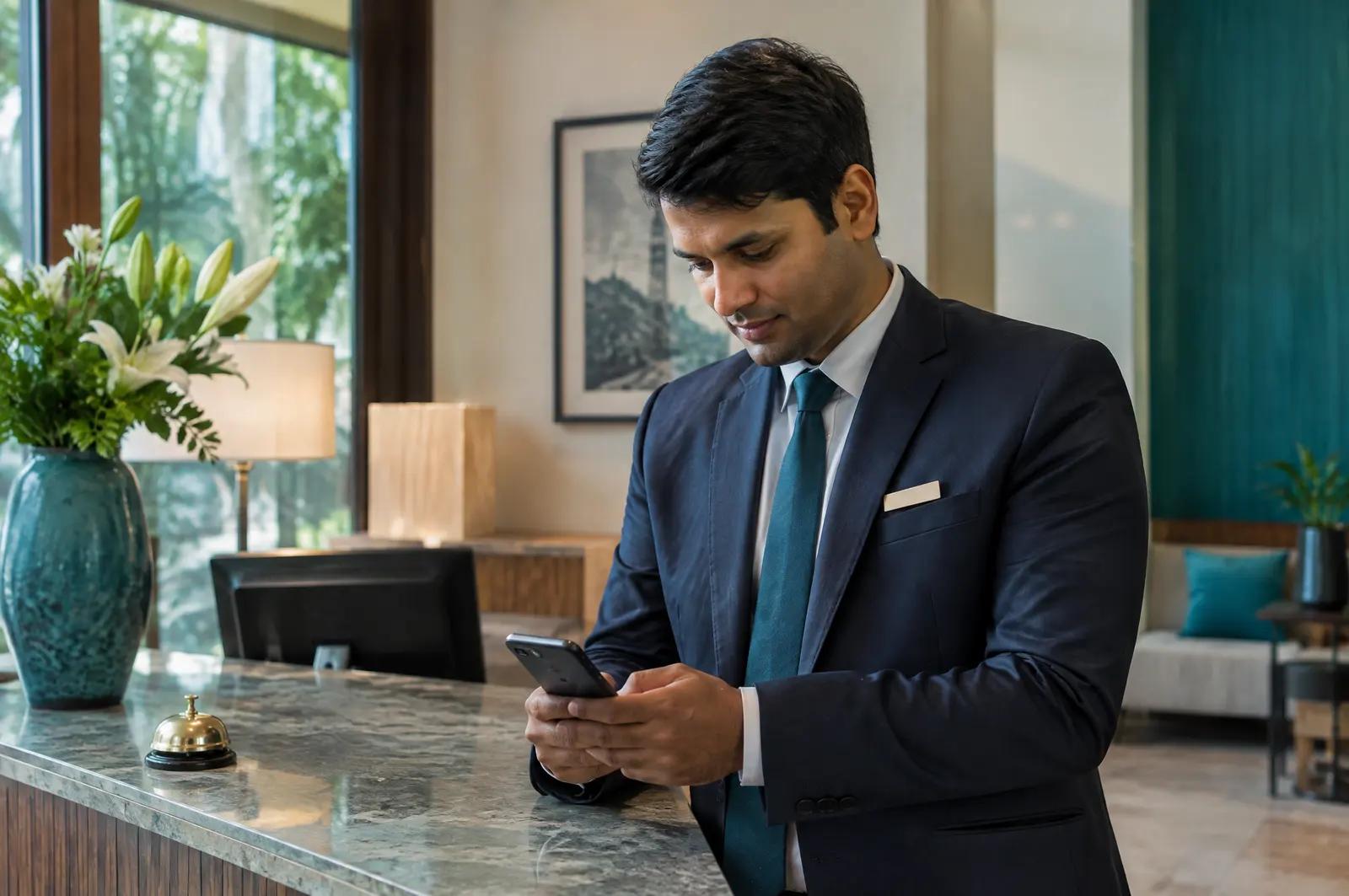
  • A hotel business owner replying to reviews on a phoneReplies, steadily
  • A hotel business owner photographing their work for a postReal photos, posted
  1. Audit and score

    Day one: more than 50 checks on your profile and a score out of 100, so you know exactly what is missing.

  2. Ten minutes a day

    A short daily task list — complete the profile first, then photos, posts, reviews and replies, in the right amounts.

  3. Reviews in seconds

    A QR code at the counter. Customers pick a suggested highlight, make it their own and post it from their Google account.

  4. Replies Google rewards

    One-click or automatic replies in the reviewer’s language, paced so the profile never looks automated.

  5. Posts and a live website

    Keyword-aware captions for your real photos, published to Google and to a website that updates itself every night.

  6. Rank map and protection

    Your Google Maps position street by street, the competitors beating you, and an alert when someone edits your profile.

Other businesses in Surat

Local SEO guides for other industries in Surat.

Be one of the three businesses Google shows first.

Start with a free audit of your Google profile: where you rank on a map around your business, the competitors Google shows above you, and what your profile is missing, so you know exactly what to fix first. Then sign up, pick an onboarding slot, and our experts set your profile up with you on Google Meet. After that, about ten minutes a day.

No credit card Expert setup on Google Meet, then your 7-day free trial

Read the Hotel SEO guide